


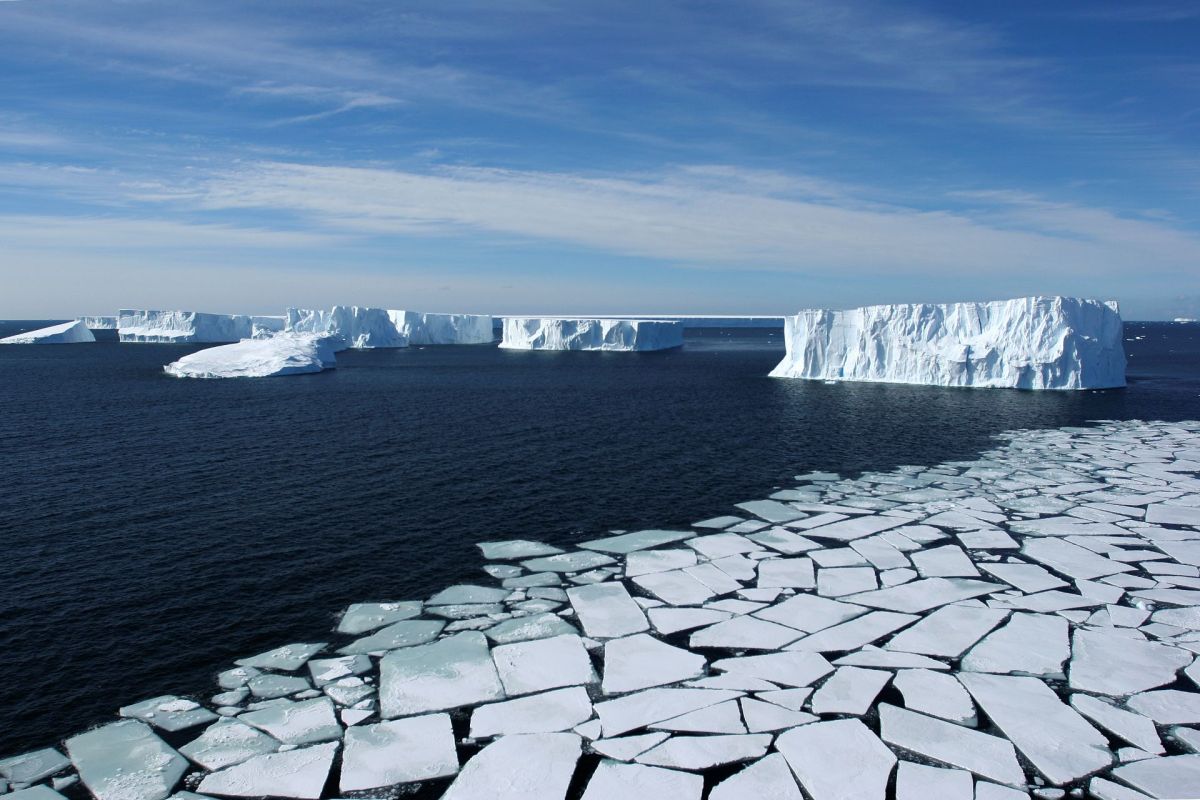
Scientists say winter conditions in Antarctica's Ross Sea are becoming more turbulent, a shift that is making the usual onset of sea-ice formation arrive later.
Stormier weather in one of the world's most important polar research regions can disrupt science operations and offer another sign of how shifting climate patterns are affecting even the coldest parts of the planet.
What's happening?
According to new research from the University of Otago-Ōtākou Whakaihu Waka, winter storms in the southwestern Ross Sea have become stronger, more frequent, and less consistent over roughly the past 60 years, reported Phys.org.
To examine that pattern, the team used weather-station records of air pressure and temperature from 1964 through 2024, with the findings published in Geophysical Research Letters.
The data also pointed to larger year-to-year swings, with especially stormy winters at times giving way to unusually calm ones within a couple of years.
Lead author Antonia Radlwimmer, who carried out the work during a Ph.D. in Otago's Department of Physics, said severe storm seasons in 2019, 2022, and 2024 noticeably postponed fast-ice formation in the southern sound, where that sea ice is attached to land, ice shelves, or grounded icebergs.
TCD Picks » Quince Spotlight
💡These best-sellers from Quince deliver affordable, sustainable luxury for all




Greg Leonard, a co-author from Otago's School of Surveying, said satellite imagery was used to show how fast ice was affected.
"Intense winter storms led to a reduction in fast-ice thickness in spring and early summer because the ice forms later and has less time to thicken," Leonard said.
Why does it matter?
In Antarctica, sea ice is more than a seasonal feature — it also serves as a working platform for field science.
Radlwimmer explained, "Spring and early summer is when we conduct field operations. Therefore, the ice we operate on is thinner than it would have been without the storms."
Those safety concerns are especially significant in McMurdo Sound, which links the Ross Sea and the McMurdo Ice Shelf, because it contains both New Zealand's Scott Base and the United States' McMurdo Station, the largest research facility on the continent.
If sea ice becomes too thin, it can no longer safely support major field camps.
More broadly, worsening extreme weather can threaten lives and livelihoods by damaging critical infrastructure, disrupting transportation and supply chains, and increasing risks for workers and communities.
Whether it comes in the form of flooding, heat waves, hurricanes, or increasingly volatile polar storms, extreme weather can endanger public health, undermine safety, and create costly economic setbacks that reach far beyond the areas directly impacted.
Sea ice plays a major role in Earth's climate system.
Changes in when and how it forms can affect ecosystems, ocean circulation, and scientists' ability to closely monitor the region.
What's being done?
Researchers are continuing to study the relationship between storminess and sea-ice conditions using both long-term weather records and satellite imagery.
This type of monitoring helps scientists understand not only whether storms are changing, but also how those changes affect the thickness and stability of the ice later in the season.
The study also highlighted a growing blind spot in winter observations.
Radlwimmer said researchers cannot start monitoring winter sea ice until later in the year, leaving much of the midwinter activity that could help explain these changes unobserved.
Better remote sensing and other cold-season monitoring tools could help researchers collect data without relying as heavily on stable surface conditions.
"Spring and early summer is when we conduct field operations. Therefore, the ice we operate on is thinner than it would have been without the storms," Radlwimmer said. "It would be great to develop more monitoring techniques that work in early and midwinter, even if there isn't safe sea-ice cover to base them on."

Get TCD's free newsletters for easy tips, smart advice, and a chance to earn $5,000 toward home upgrades. To see more stories like this one, change your Google preferences here.






