


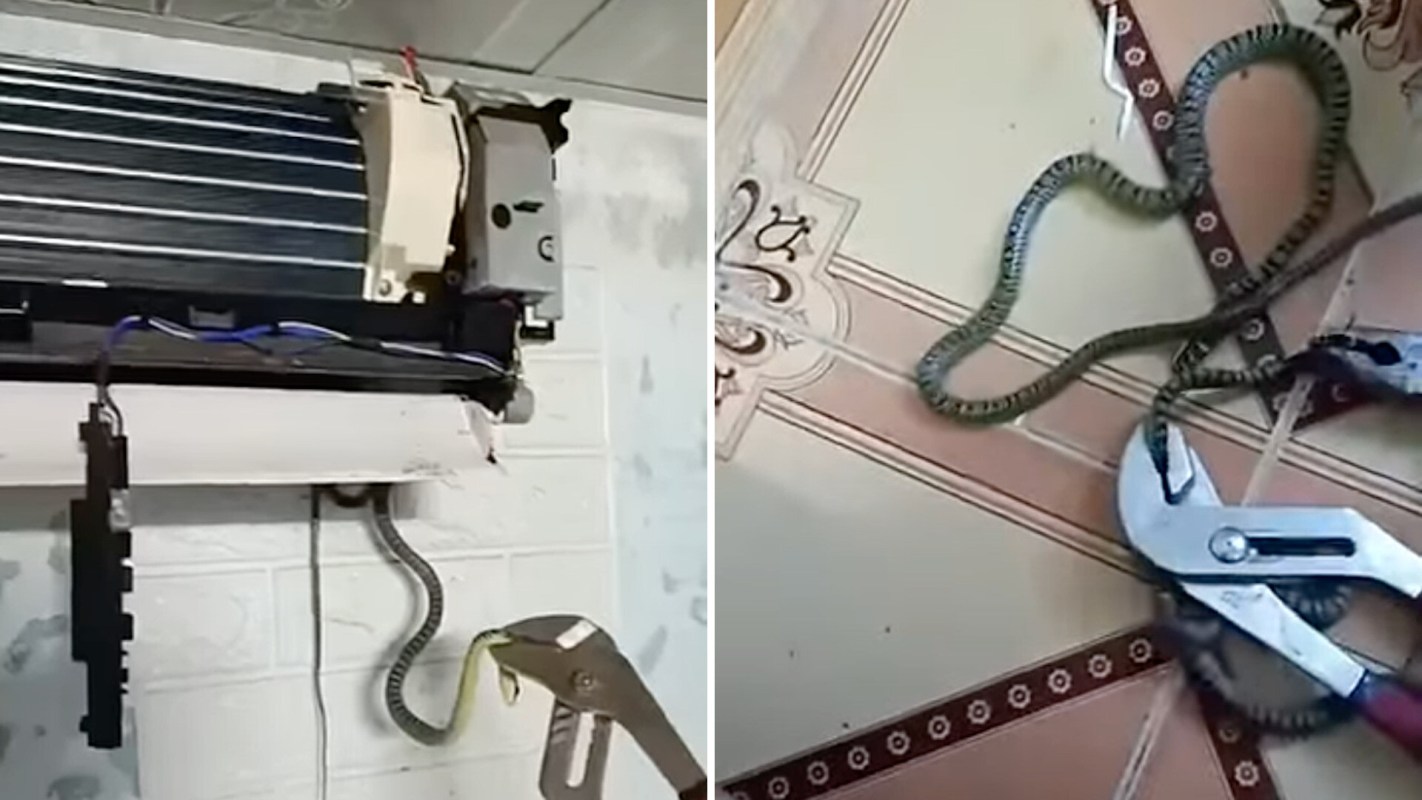
A routine air-conditioner service call in Vietnam turned into a scare when a technician opened a noisy bedroom unit and found not one snake inside, but four.
The discovery turned a simple repair visit into an unexpected wildlife encounter inside a bedroom appliance.
What happened?
On June 4, Quyen, a 32-year-old AC technician from Duc Pho Ward, Quang Ngai Province, was called to a home in Mo Duc Commune after the owner reported strange sounds coming from a bedroom air conditioner, DTiNews reported. After turning on the system and narrowing the noise to the indoor unit, he removed the outer cover to see what was inside.
When he looked in, he could see part of a snake extending out while the rest of its body was hidden deeper in the machine.
"I was startled when I spotted the tail of a snake sticking out, while its head remained deep inside the unit," Quyen said. "That was what had been causing the strange noises."
After pulling out the first snake with pliers, he realized the air conditioner was also hiding three more.
TCD Picks » Quince Spotlight
💡These best-sellers from Quince deliver affordable, sustainable luxury for all




He said the snakes were rat snakes, a non-venomous species that are skilled at climbing walls, and estimated each one at about 24 to 28 inches (60 to 70 centimeters) long.
"The homeowner had wallpaper on the walls, which may have made it easier for the snakes to climb up and enter the air conditioner to escape the heat," Quyen said.
This rare sighting was the first of its kind for even an experienced professional who dealt with other animals finding themselves in these machines. "I often find mice inside air conditioning units, but this is the first time I've come across an entire nest of snakes," he said.
Why does it matter?
Even though Quyen said the snakes were non-venomous, finding multiple reptiles wrapped around internal AC components could create safety concerns for both homeowners and animals, damage equipment, and expose technicians or residents to danger if they reach into a unit without knowing what is inside.
Air conditioners provide dark, enclosed spaces that may appeal to animals seeking shelter, while wall materials, gaps, and other features of a home can be access routes. Unusual wildlife encounters are not always random and can be shaped, in part, by the environments people construct.
BBC Future has reported on how human activity can influence encounters between people and wild animals. In this case, the snakes were not "attacking" anyone, but the incident brought wildlife directly into daily life inside a home.
What can I do?
If an air conditioner starts making odd noises, avoid opening it yourself unless you can do so safely and know what to look for. Calling a trained technician reduces the risk of injury and can help prevent further damage to the system.
Sealing gaps near wall-mounted units, checking where piping enters the home, and keeping the area around the unit clean may make it less attractive to animals seeking shelter.
Routine inspections catch not only mechanical problems but also signs of pests or nesting animals before they become a bigger issue.
Wildlife may use the same structures people rely on for comfort, especially when those structures offer shade, cover, or relief from the heat.

Get TCD's free newsletters for easy tips, smart advice, and a chance to earn $5,000 toward home upgrades. To see more stories like this one, change your Google preferences here.






