


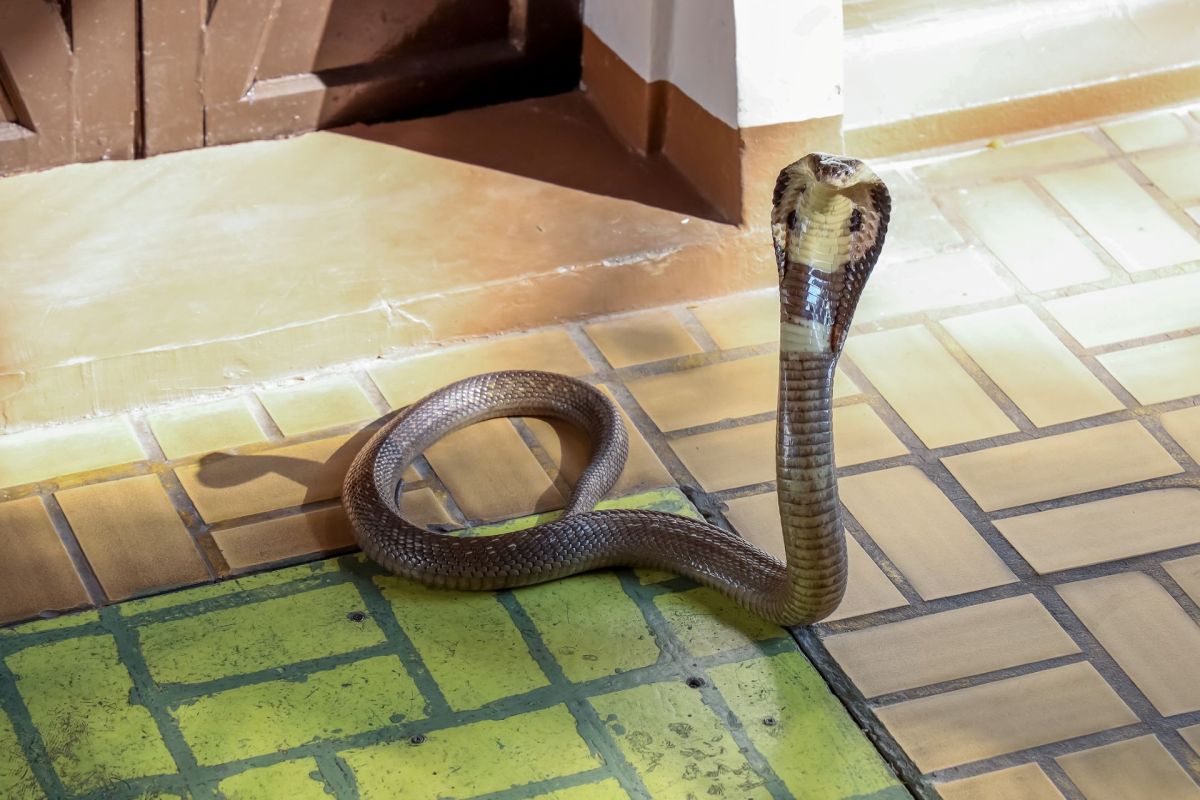
Footage from a hotel in southern Thailand is leaving viewers unsettled after a couple reportedly discovered a large cobra lurking near their bed before sunrise.
The incident took place in Krabi.
What happened?
According to The Free Press Journal, the second guest initially treated the commotion as just being startled from a bad dream or some other misunderstanding. Only moments later did they realize why their partner had suddenly woken up and run from the room in a panic at about 5 a.m.
The threat soon became unmistakable: There was a snake inside the room. Reports said the cobra was discovered near the bed and later found hidden underneath it.
A professional snake catcher was then called in, and video of the removal later spread online. In the footage, the handler searches the room before locating the reptile, which was estimated to be about 5 feet long.
The cobra appeared highly defensive, reportedly hissing and lunging as it was captured. A video of the frightening encounter was shared on the social platform X, as noted by The Free Press Journal.
TCD Picks » Quince Spotlight
💡These best-sellers from Quince deliver affordable, sustainable luxury for all




What the hell is this?!
— Pure Guava (@pureguava10300) March 28, 2026
A couple checked into a hotel in Krabi. Around 5 AM, one partner suddenly got up, ran out of the room crying and shouting that there was a snake on the bed—right by their head.
The partner sleeping in the other bed first thought it was a ghost or… pic.twitter.com/SeX5QYxr1m
Why does it matter?
The incident highlights a major concern when traveling: As human development pushes deeper into natural habitat, encounters between people and wild animals can become more common.
That does not mean snakes enter human spaces without cause. In many cases, animals are responding to shrinking habitat, changes in land use, or easy access to shelter. Research and reporting have noted that human activity often plays a major role in driving these dangerous encounters, as discussed in this BBC Future explainer.
Wildlife risks are not limited to forests or hiking trails. Tropical destinations, especially those near dense vegetation or water, can be prone to animals getting inside hotels, going close to roads, and other buildings.
Fear-driven reactions can lead to unnecessary harm when wildlife is found in human spaces, even when trained responders could remove the animal safely without harming it.
What can I do?
Travelers do not need to panic, but taking simple precautions can help, especially in regions known for snakes or other wildlife. A quick room check upon arrival — including around beds, curtains, balconies, and bathroom corners — can help prevent a nerve-wracking encounter.
Keeping doors closed, cleaning up food scraps, and alerting staff immediately if anything seems unusual are also safety measures. If an animal is spotted, the safest response is to leave it alone, keep a safe distance, and contact hotel management or local wildlife responders as soon as possible.
Hotels and tourism operators can help as well by sealing gaps, maintaining landscaping, training staff, and keeping emergency wildlife contacts readily available. Those measures can protect both guests and animals.
The Krabi incident also carries a practical lesson: When people travel through biodiverse regions, respecting local wildlife — and preparing for the unexpected — is part of staying safe.
One of the hotel guests reportedly shouted in terror: "A snake, there's a snake slithering across my neck, a black cobra!" In this case, that split-second warning may have helped prevent a far more dangerous outcome.

Get TCD's free newsletters for easy tips, smart advice, and a chance to earn $5,000 toward home upgrades. To see more stories like this one, change your Google preferences here.







