


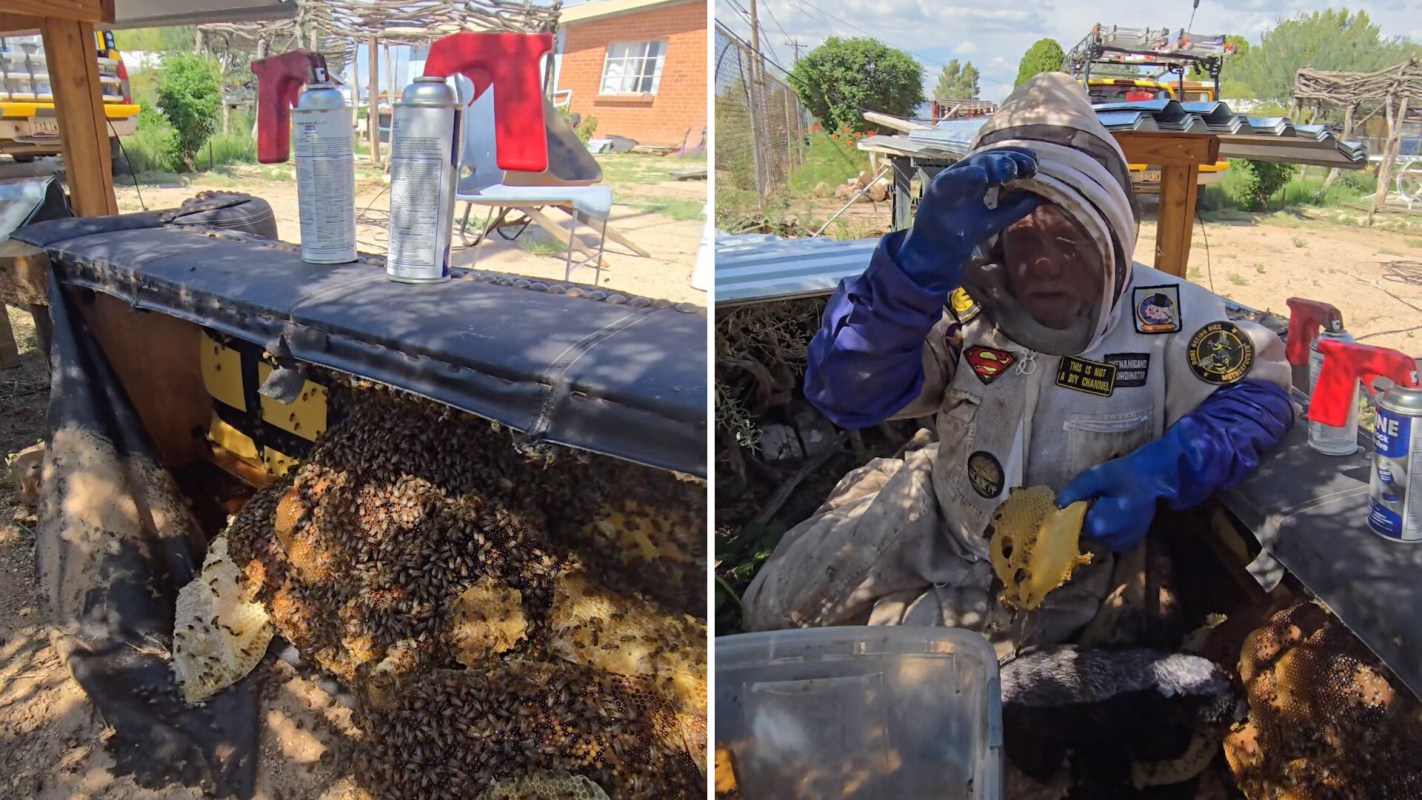
A yardwork job in Arizona turned dangerous after a man using a weed whacker outside appears to have accidentally stirred up a large colony of invasive Africanized honey bees living inside it.
Footage posted by a bee removal specialist captured both the aftermath of the attack and the removal of what he estimated was a hive made of 100,000 bees.
What happened?
Inside the outdoor love seat, the colony had filled the furniture with dense comb.
According to the specialist Killer Bee Guy (@KillerBeeGuy), the bees had probably occupied the piece for a long time. He also pointed to multiple queen cells, which he said suggested the hive was both very large and actively reproducing.
@killerbeeguy What a mess! #killerbeeguy #invasivespecies #killerbee #honeybee ♬ original sound - killer bee guy
He said the homeowner, identified only as Ronaldo, was weed-whacking when the bees swarmed. A neighbor reportedly hosed him off afterward, and the specialist said he took "30 or 40" stings.
At one point in the footage, the remover looks over the scene and says, "What a mess." He added that the colony had been far more aggressive the day before than it was during the filmed removal.
TCD Picks » Quince Spotlight
💡These best-sellers from Quince deliver affordable, sustainable luxury for all




So even with the bees appearing calmer by the time the crew arrived, the team still treated the hive as an immediate hazard for nearby people, dogs, and other wildlife.
Why does it matter?
Human spaces can unintentionally create ideal shelter for wildlife.
In this case, an abandoned piece of outdoor furniture became a ready-made nesting cavity, and a noisy landscaping tool appears to have triggered the colony's defensive response.
That overlap between human activity and animal behavior is a major reason these conflicts happen. As a BBC Future look at why wild animals attack humans explains, attacks are often tied to stress, disturbance, and shrinking separation between people and wildlife.
A hidden hive in a backyard is a clear example of that tension. Yard work, pets, children, and neighbors can all be put at risk if a colony is nesting in furniture, sheds, walls, or other sheltered spaces.
The specialist said the concern went beyond people and pets, arguing that these invasive bees also compete with native bees for resources.
What's being done?
The crew in the video puts on protective gear, breaks apart the infested furniture, and treats the area so the colony does not rebound.
He warns viewers not to attempt this on their own, saying, "This is not a DIY channel." Some viewers disagreed with that approach. One commenter wrote, "I don't think you should kill them."
The specialist's view, however, was that the colony had already shown dangerous behavior and was too risky to leave in place.
Inspect old furniture and unused yard items before mowing or trimming around them, watch for concentrated bee traffic in and out of holes or gaps, and keep pets and children away if you suspect a hive.
If invasive bees are nesting close to a home or have already attacked, the safest move is to call a licensed professional.
"We cannot allow this. We don't care about the honey. We're here to save the day," the specialist said. "These bees are bad, and we don't need them. Let's save America's native bees."

Get TCD's free newsletters for easy tips, smart advice, and a chance to earn $5,000 toward home upgrades. To see more stories like this one, change your Google preferences here.







