


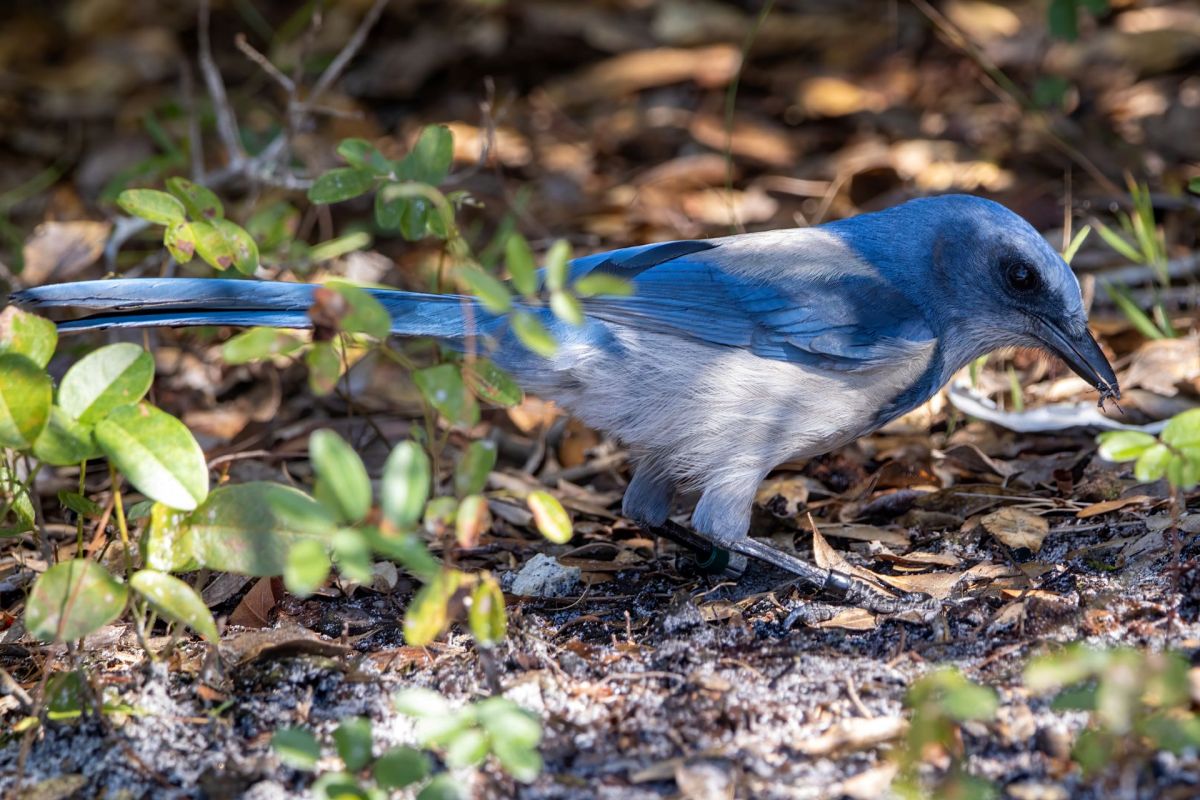
Florida scrub-jays, whose numbers in the state have fallen sharply over the past century, are showing signs of recovery at one Florida site.
At Wingate Creek State Park, a restoration program has produced 56 breeding pairs, with conservationists trying to raise that total to 100.
What's happening?
A yearslong project carried out by conservationists working with the Mosaic Company is driving the recovery, WFLA reported.
The birds need low, open habitat and build nests close to the ground in recently burned areas. Over the last 100 years, expanding agriculture and development wiped out much of that habitat, and the species lost at least 90% of its population, the station reported.
Florida scrub-jays tend to remain near where they hatched instead of traveling far. In fragmented habitat, that limited movement makes it difficult for separated populations to reconnect.
Raoul Boughton, Mosaic's senior manager of ecology and wildlife, has worked on the effort for more than 20 years. According to WFLA, he said the team has reached 56 breeding pairs at Wingate Creek State Park and relocated nearly 50 birds from other parts of Florida to help form a larger, more stable population.
TCD Picks » Quince Spotlight
💡These best-sellers from Quince deliver affordable, sustainable luxury for all




"It has a high risk of going extinct in many places if we don't do it — and actually it already has in many places," Boughton said.
Why does it matter?
The Florida scrub-jay's greatest challenge is not just low numbers — it is isolation. A fragmented landscape can trap birds in small pockets, leaving them vulnerable for generations.
Reaching 100 breeding pairs would create a stronger population that is better positioned to endure for decades.
What's being done?
The effort at Wingate Creek State Park centers on restoring the habitat scrub-jays need and moving birds from other areas to increase both numbers and genetic strength.
Bringing in nearly 50 birds from elsewhere in Florida helps create a larger cluster instead of leaving the park with only a small group.
The team is now aiming for 100 breeding pairs, a level Boughton said could help reinforce the species into the next century, according to WFLA.
As Boughton put it, "It's rare. It's like a diamond, if you want to call it that."

Get TCD's free newsletters for easy tips, smart advice, and a chance to earn $5,000 toward home upgrades. To see more stories like this one, change your Google preferences here.






