


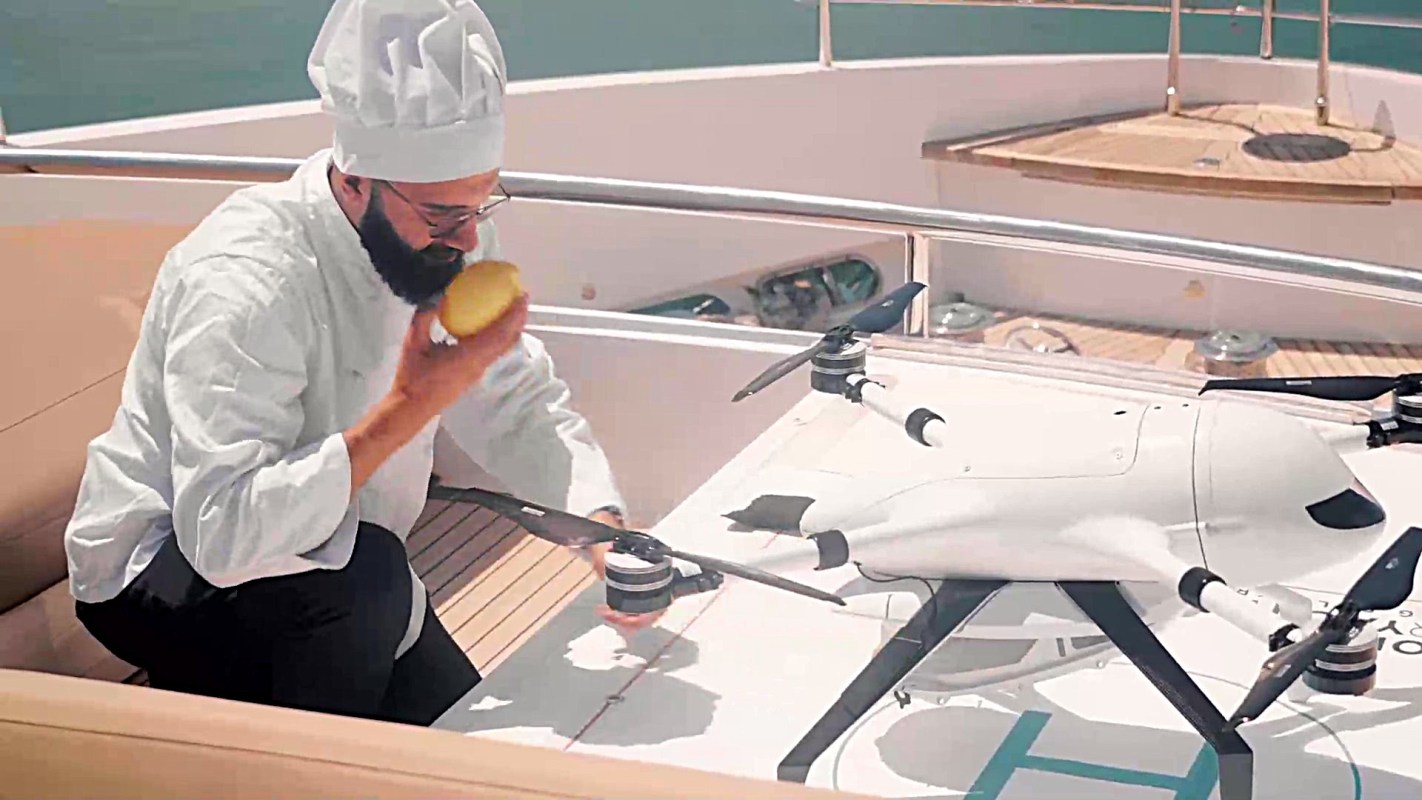
Starting in August on France's Riviera, an electric drone service has said it can fly forgotten items such as a phone charger — or luxury provisions like caviar — out to yachts at anchor in less than 15 minutes.
What's happening?
According to Luxurylaunches, the drone company Flyde plans to begin electric drone deliveries from Juan-les-Pins to yachts anchored off Port Gallice.
Because the marina is officially limited to vessels up to 141 feet, many larger superyachts stay farther out in the bay and depend on smaller boats to move supplies back and forth. Flyde's new drone service aims to offer an alternative.
Luxurylaunches explained that, after several years of testing, Flyde's custom aircraft — built by French aerospace drone maker CAVOK Engineering — is designed to carry as much as 18 pounds at a time. During a flight, the drone will deliver supplies to a boat by hovering above it and lowering the cargo with a motorized winch.
That means forgotten electronics, medicine, groceries, and spare parts can be delivered without sending a smaller watercraft into the harbor.
Luxurylaunches reported that orders will be placed through Flyde's platform, with drones traveling about 37 miles per hour to waters near the Lérins Islands and up toward Cannes. The service will start on a Thursday-through-Saturday schedule before expanding to additional summer days.
TCD Picks » Quince Spotlight
💡These best-sellers from Quince deliver affordable, sustainable luxury for all




Flyde has also sharply lowered the advertised cost. A delivery once promoted at over $450 is now expected to cost about $57.
Why does it matter?
The service is an example of how far luxury convenience can go, with electric aircraft delivering chargers, skincare, and premium food to some of the world's wealthiest boat owners.
While innovations like this can reduce the fuel-related pollution from small boat trips to shore, they still support yachts that generate significant pollution while serving a relatively small number of passengers. A tool developed for superyachts can seem excessive, or even frustrating, when viewed through that lens.
However, the same lower-emission logistics model could eventually help reduce wasteful short-distance trips in ports, island communities, and other marine settings where boats are regularly used for quick supply runs.
Cleaner delivery systems could also serve communities in ways that reduce noise, fuel use, and unnecessary traffic.
What's being done?
According to Luxurylaunches, Flyde said safety is central to how the service will operate.
A local remote pilot will handle harbor takeoff before linking to operators in Lyon, where the automated route will be overseen.
The drop-off process is meant to avoid a deck landing. Instead, the drone remains overhead and lowers the package by winch.
That approach could be useful in tight, busy anchorages where landing space is limited and conditions can change quickly.
For now, the service remains a niche option for luxury vessels, and the company is also preparing a second Riviera base in Cannes-Mandelieu.

Get TCD's free newsletters for easy tips, smart advice, and a chance to earn $5,000 toward home upgrades. To see more stories like this one, change your Google preferences here.






