


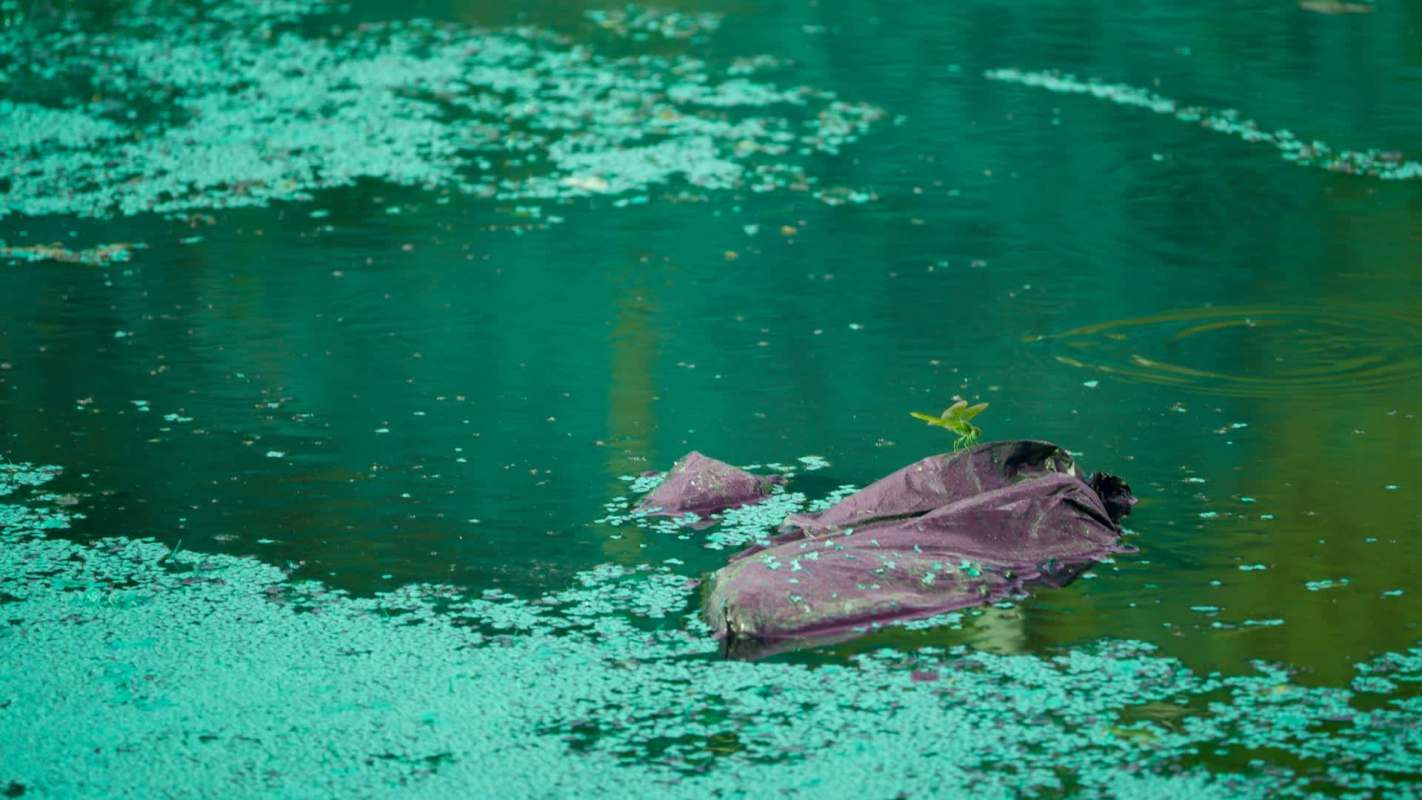
Every summer, algal blooms can transform lakes and rivers into thick, green soup. Now, researchers in South Korea say those same conditions may also help plastic bags break down faster into microplastics, linking two major pollution problems in a troubling new way.
What's happening?
Using water from Duck Pond on the KAIST campus in a lab setup meant to mimic nutrient-driven bloom conditions, researchers tested how low-density polyethylene, or LDPE — the material used in many shopping bags — changed in the water over time. They found that bloom conditions sped up the plastic's early-stage weathering.
Under those nutrient-rich conditions, thicker biofilms built up on the plastic, Phys.org reported. Those slimy layers contained cyanobacteria and other microbes that seemed to speed up oxidation and the appearance of tiny cracks.
The team also used tools including Fourier-transform infrared spectroscopy and scanning electron microscopy to verify that the plastic surface had changed in ways that made it more susceptible to later fragmentation — which can eventually turn into microplastics.
Why does it matter?
Microplastics are already showing up in waterways, food systems, and even human bodies, raising concerns about health and environmental impacts over time. This study suggests polluted water may do more than simply carry plastic waste — it may also help create more of it.
Communities rely on lakes and rivers for recreation, fishing, and drinking water. Algal blooms already make waterways harder and riskier to use, and if they also speed plastic breakdown, they could make cleanup efforts even more difficult and further harm local ecosystems.
TCD Picks » Quince Spotlight
💡These best-sellers from Quince deliver affordable, sustainable luxury for all




Warmer temperatures and runoff can make algal blooms more frequent, meaning climate change could indirectly intensify microplastic pollution as well.
What's being done?
The takeaway is that algal blooms and plastic waste may need a shared response. Researchers say environmental managers should account for the ways one problem can amplify the other instead of handling them as separate issues.
That could mean stronger efforts to reduce nutrient runoff from fertilizers and wastewater while also cutting the amount of disposable plastic that reaches rivers and lakes in the first place. Better monitoring of bloom-prone waters could also help officials identify places where plastic is likely to fragment more quickly.
The findings may also help guide future research into the "plastisphere," the microbial community that forms on plastic surfaces and can increase the spread of microplastics, seeing how those hidden ecosystems influence pollution in the real world.
As Myung put it, "As algal blooms become more frequent because of climate change, we expect this work to provide an important scientific basis for integrated environmental management strategies that consider water quality management and plastic waste management together."

Get TCD's free newsletters for easy tips, smart advice, and a chance to earn $5,000 toward home upgrades. To see more stories like this one, change your Google preferences here.






