


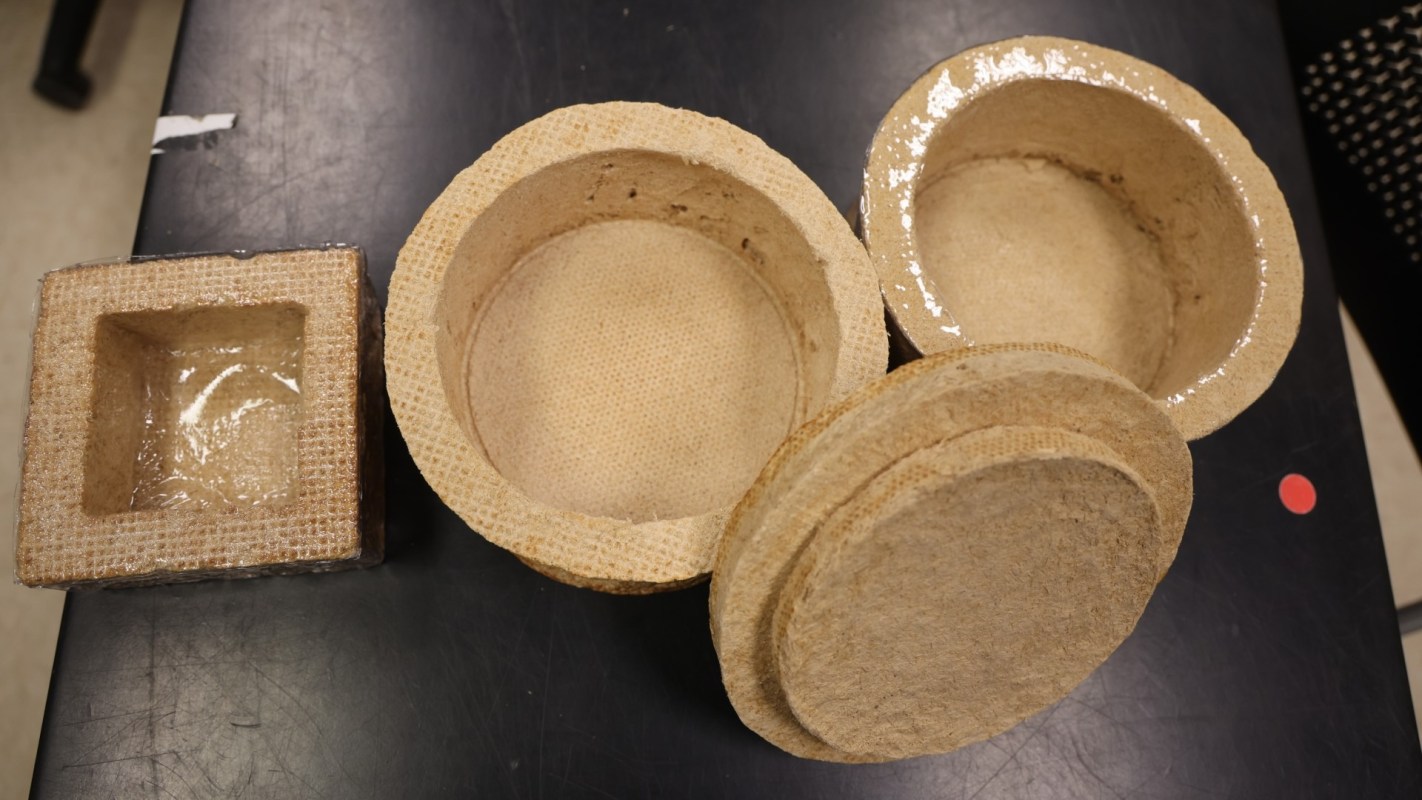
Imagine pulling a cold drink from a cooler on a sweltering day. Someday, the insulation doing the work could come from wood instead of petroleum.
A University of Maine graduate student developed a wood-based foam for beverage coolers that comes surprisingly close to matching polyurethane, the material most conventional coolers rely on.
What's happening?
Quazeem Tiamiyu, a master's student in the School of Forest Resources and a graduate research assistant with the Laboratory of Renewable Nanomaterials, is developing insulation foam from wood fiber and cellulose nanofibrils.
As UMaine News reported, the walls of standard coolers are usually insulated with polyurethane foam. It works well, but it is petroleum-based, nonrenewable, slow to decompose, and made from raw ingredients that can be hazardous before processing.
"Polyurethane foam's raw chemicals are highly toxic and carcinogenic. For people that work with it, it has also been reported to cause respiratory disease and skin irritation," Tiamiyu said.
To make the alternative material, Tiamiyu and his colleagues combined cellulose nanofibrils with wood fiber, finely ground wood flour, and a surfactant that helps create volume. He blends the mixture, pours it into molds shaped like cooler inserts, removes the water, dries the foam, and then places it inside a plastic shell.
TCD Picks » Quince Spotlight
💡These best-sellers from Quince deliver affordable, sustainable luxury for all




Initial testing has been promising, with the material coming close to polyurethane on insulation performance. "We actually found that we can compete with polyurethane foam. They have a close insulation property," Tiamiyu said, per UMaine News.
Why does it matter?
Polyurethane helps keep food and drinks cold, but it is made from fossil fuel-based chemicals and can contribute to pollution when discarded. Replacing even some of it with a renewable material could reduce dependence on virgin petrochemicals and make manufacturing safer for workers who handle the raw ingredients.
Tiamiyu's foam is already approaching polyurethane in thermal performance. A similar insulation ability would make it easy to replace existing materials without sacrificing function.
The work also points to a high-value use for byproducts from Maine's lumber mills, giving underused wood-based materials another potential market.
What's being done?
Tiamiyu said several practical issues still need to be solved before a wood-based cooler could be produced at scale.
Durability is one of the main concerns. UMaine News said that if the foam is crushed or otherwise damaged, its insulating ability drops, so the team is working to make it strong enough for everyday use.
Manufacturing is another challenge. Polyurethane can be injected as a liquid directly into a cooler shell, while this wood-based foam must be made through a wet process, dried, and then fitted into place or encapsulated.
Tiamiyu plans to conduct ice-retention testing to see how the material performs beyond thermal conductivity measurements alone.
The university could also help with scaling. Its Process Development Center can continuously produce cellulose nanofibrils at pilot scale, which could help move the material closer to commercial use.
Tiamiyu also wants to explore making the material remoldable. "If that is possible, the ready foam can be shipped, and the manufacturers can put it in water and mold it however they want," he said.

Get TCD's free newsletters for easy tips, smart advice, and a chance to earn $5,000 toward home upgrades. To see more stories like this one, change your Google preferences here.






