


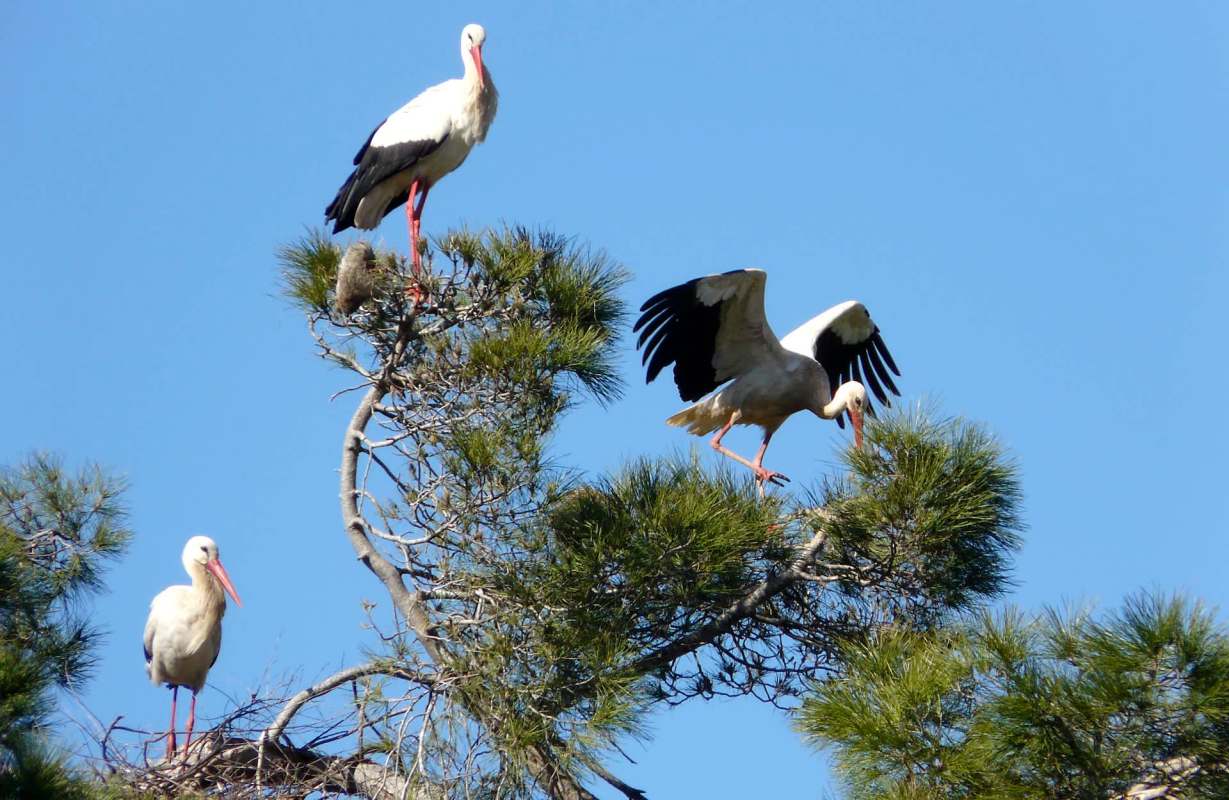
Willington Wetlands in Derbyshire, England, has received three juvenile white storks. According to The Guardian, conservationists hope this will help bring the species back to England's Midlands after an absence of more than 600 years.
What happened?
Three young white storks have been introduced to a specially built enclosure at a restored wetland reserve in Derbyshire while they adjust to their surroundings, The Guardian reported.
The birds include one male, one female and a third whose sex is still unknown. Their arrival is part of a bid to restore a species that vanished from the Midlands in the 14th century because of habitat loss and hunting.
After years spent restoring the site, Katie Last, living landscape officer for Derbyshire Wildlife Trust, said seeing the birds there was a major moment.
"It feels absolutely incredible," she said. "To see white storks back at Willington feels like a real milestone."
Because white storks tend to gather where other storks are already present, the trust wants this trio to serve as a "magnet flock."
TCD Picks » Quince Spotlight
💡These best-sellers from Quince deliver affordable, sustainable luxury for all




The idea is that birds already moving through the Trent Valley will be more likely to pause, remain in the area, and eventually breed.
How can this help the environment?
Once a gravel pit, Willington Wetlands now spans 100 acres of wet grassland, reed beds and open pools that will support the storks. Wetlands can also bolster ecological resilience and give local people closer contact with wildlife.
Derbyshire Wildlife Trust has also reintroduced beavers there, which have helped shape what Last called a "fluid, dynamic wetland habitat."
Last also said that storks are a part of folklore in England. Bringing them back can create a stronger sense of culture for people around Derbyshire.
What's being done?
Before arriving in Derbyshire, the birds were bred at Celtic Rewilding's facility in Staffordshire.
Their new enclosure has been designed for protection. It protects against foxes and minks, and fine netting can keep out smaller birds and lower the risk of avian flu.
The birds will be watched carefully as they settle in, and more storks could be added later if the initial release goes well.
The project also plans to add artificial nesting platforms in existing trees to encourage other storks passing through the area to stay.
Backed by £309,000 (about $411,838) from the Veolia Environmental Trust through the Landfill Communities Fund, the project aims to support more than the return of one bird species.
Rachel Bennett, director of wilder landscapes and wilder communities at Derbyshire Wildlife Trust, said the project is looking at the bigger picture.
"Success means thriving wetlands, more wildlife across the landscape, and communities that feel connected to nature and invested in its future," Bennett told The Guardian.

Get TCD's free newsletters for easy tips, smart advice, and a chance to earn $5,000 toward home upgrades. To see more stories like this one, change your Google preferences here.







