


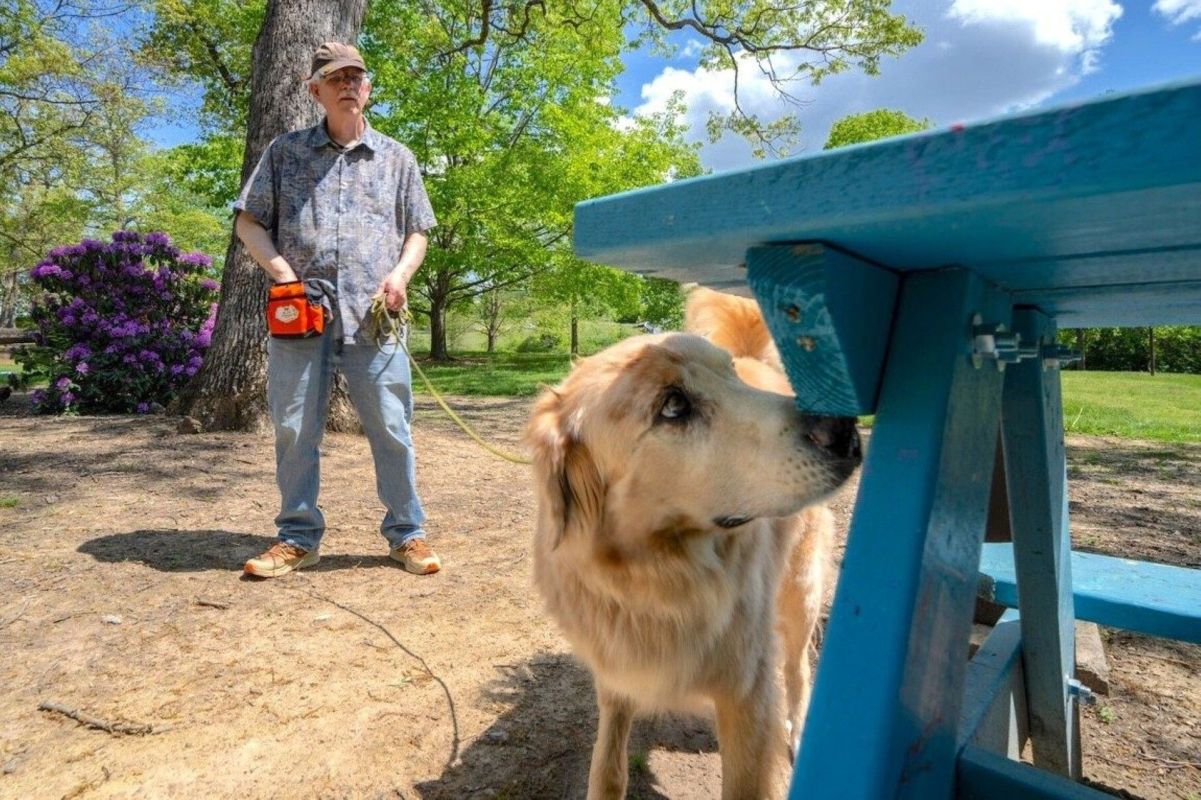
A Virginia program is turning everyday pets into unlikely protectors of vineyards and farms. Dogs like Fozzie, an 11-year-old Labrador mix, are being trained to sniff out spotted lanternfly egg masses before these invasive insects hatch and spread further around the country.
For wine growers and farmers across the eastern United States, these good boys and girls could become an important first line of defense for their crops.
What's happening?
Dogs and their owners in Virginia are being enlisted in a citizen-science project to hunt for spotted lanternfly egg masses hidden in fields and dense vegetation, BBC Future reported. Run through Virginia Tech with help from Texas Tech, the effort relies on canine noses to pick up what people often fail to notice.
After arriving on imported cargo, the spotted lanternfly first showed up in the United States in the 2010s and has since spread to 19 states and Washington, D.C. Native to China and Vietnam, the insect feeds on more than 70 plant species.
Julie Urban, associate research professor in entomology at Penn State University, told the BBC, "Spotted lanternflies are good hitchhikers," adding, "They can hang on at high speeds."
Results from a 2025 Virginia Tech study cited by BBC Future suggest owner-trained pet dogs can be highly useful: in controlled scent-recognition tests, they correctly identified spotted lanternfly egg masses 82% of the time, and in field trials they did so 61% of the time.
TCD Picks » Quince Spotlight
💡These best-sellers from Quince deliver affordable, sustainable luxury for all




Why does it matter?
Seeing them splattered across car windshields can make spotted lanternflies seem like just another seasonal annoyance, but the damage they cause is much more serious. They feed on plant sap and leave behind honeydew that can trigger thick black sooty mold, harming fruit quality and surrounding vegetation.
The financial and ecological toll is already significant. The insects' harmful effect on many different types of plants threatens farms people depend on for food — spanning from vineyards and orchards to hardwood forests and urban ecosystems. They can even cause grape crop losses as high as 90%, and the pesky insects cost Pennsylvania's logging and agriculture industries an estimated $50 million each year.
The risk isn't just seen in Pennsylvania. Researchers estimate New York's grape industry could lose more than $14 million during the first three years of an invasion, while Virginia could face $324 million in annual losses if the spread is not contained.
A continued push west would be even more concerning. BBC Future noted that California accounts for 95% of U.S. wine exports, and the country's grape and wine industry generates $320 billion a year. Strategic efforts to decrease the spotted lanternfly can help the economy and protect the food we eat — one high school student developed innovative solar-powered technology that lures lanternflies and kills them with an electric shock.
What's being done?
The effort could give ordinary pet owners a way to help. Erica Feuerbacher, a professor of applied animal behavior and welfare at Virginia Tech, wondered, "Wouldn't it be fun if I could contribute to solving environmental issues while I'm playing with my dog?"
So far, 80 volunteer dog-handler teams have passed the program's certification test, and more than 50 have completed field trials. The dogs are trained by pairing the smell of lanternfly egg masses with their favorite treat, making the process fun for the dogs while still very useful for protecting native plants and the ecosystem.
Since the approach doesn't require expensive professional detection dogs, it is more accessible and much cheaper. Feuerbacher told the BBC, "Any breed can be an olfactory detection dog," and "there's data suggesting that pugs can outperform German shepherds on some tasks."
People without trained dogs can still help by destroying spotted lanternflies on sight and reporting infestations locally.
"If we get enough of these teams together, we can have a big impact," Feuerbacher said. And as Urban put it: "If you don't kill it, you'll carry it," adding that "Stomping spotted lanternflies buys important time for these other solutions to improve."

Get TCD's free newsletters for easy tips, smart advice, and a chance to earn $5,000 toward home upgrades. To see more stories like this one, change your Google preferences here.






