


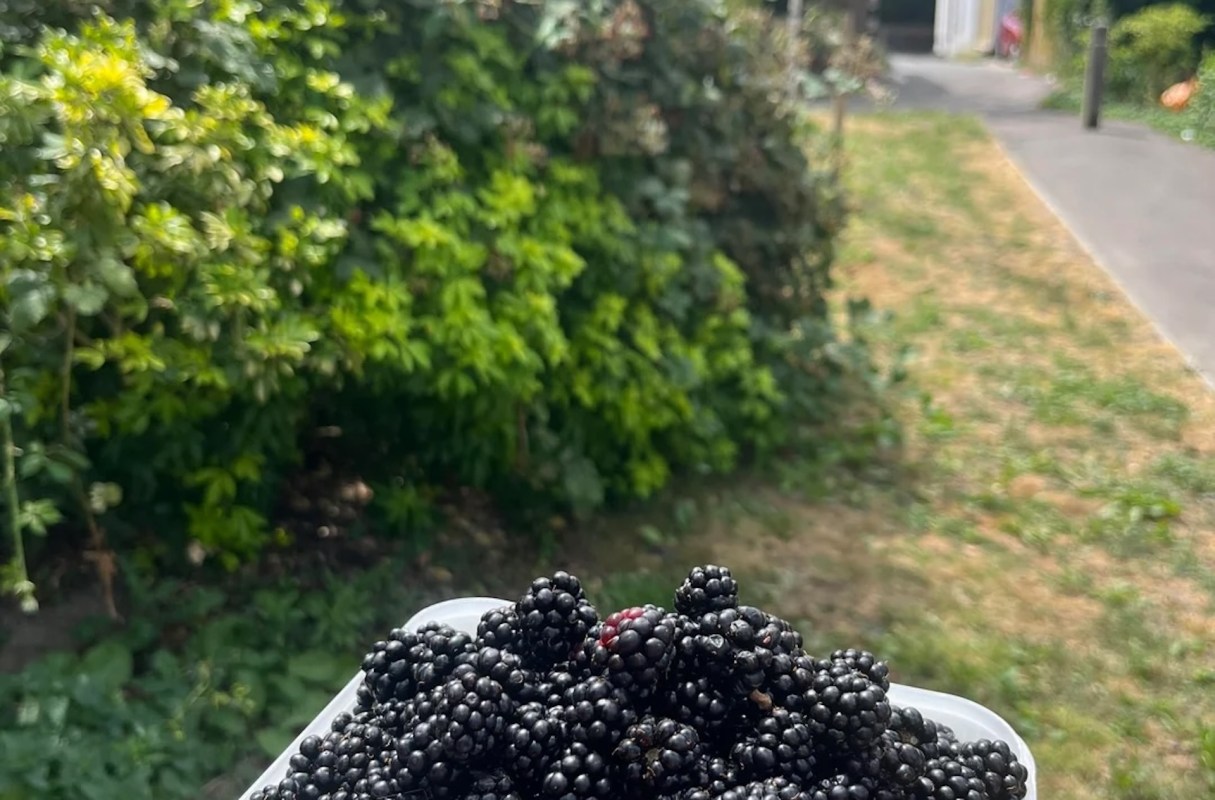
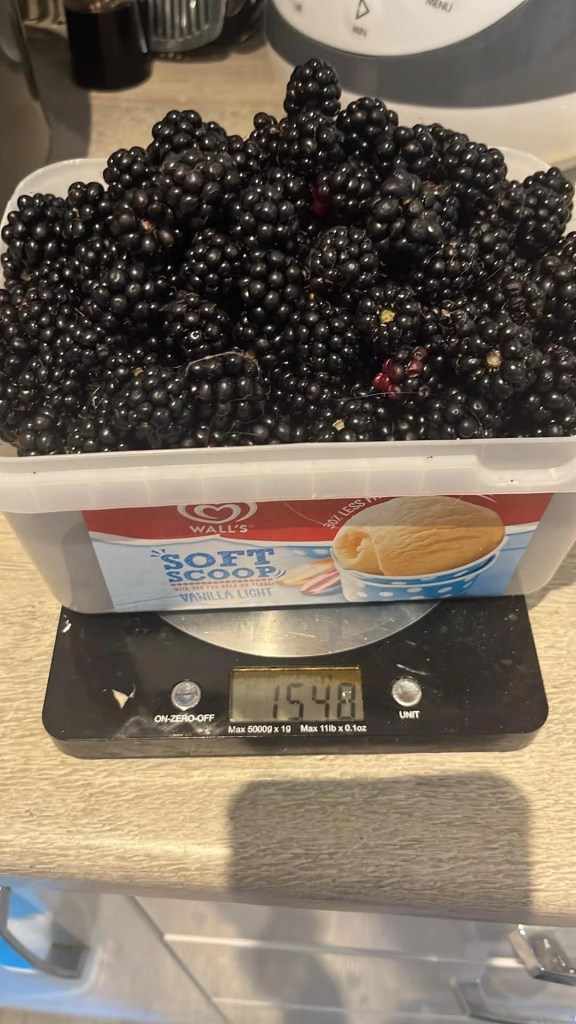
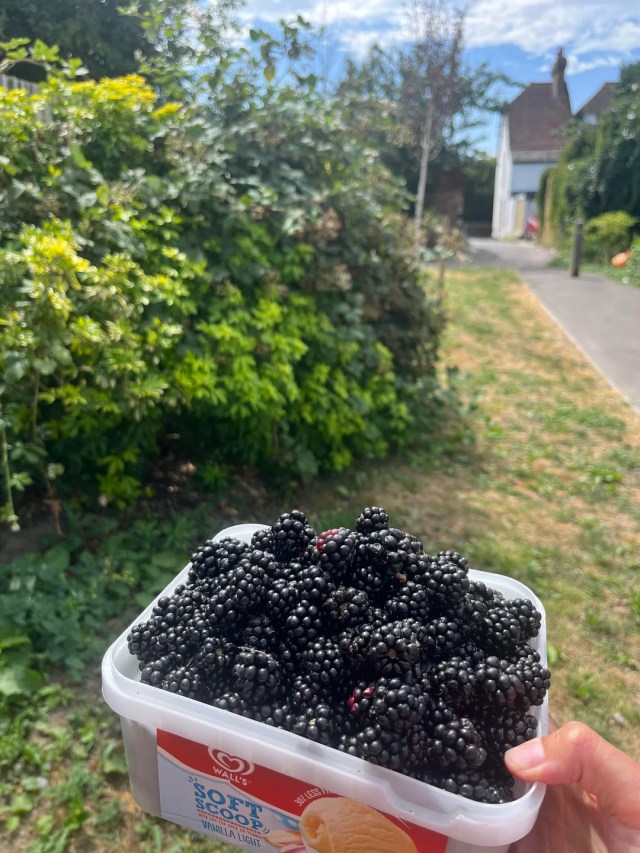
A U.K. forager sparked discussion online by sharing a winning late-summer harvest: over 1.5 kilograms of blackberries from neighborhood hedgerows, which kept them from paying £12 per kg at the grocery store.
That means the haul was worth around $24 — and, for many readers, it provided a reminder that some of the season's best food could still be growing right in front of them.
What happened?
In a Reddit thread posted to r/Anticonsumption, the Kent resident said the hedgerows yielded the wild blackberry score, helping them avoid what they would've paid at retail.
The post drew over 9,000 upvotes and 600 comments.
The discussion also took a nostalgic turn, with one commenter reflecting on a childhood shaped by easy access to fruit and other foods that grew on and behind their property.
"Our mom kept us BUSY picking them fruits. We didn't know how lucky we were until we moved," they wrote, describing a pear tree, blackberry bushes, tiny wild strawberries, wild grapes, and honey from neighbors who kept bees.
TCD Picks » Quince Spotlight
💡These best-sellers from Quince deliver affordable, sustainable luxury for all




Other users also shared memories. "Had an absolutely massive blackberry bush at the house I grew up in," one said.
Another added: "I grew up in Alaska; blackberry and raspberry bushes grew like weeds. I'd leave the house on my bike in the morning, head to the wooded trails, stop when I got hungry, and eat them straight from the bush."
The thread also touched on concerns, including the practical advice to avoid berries growing near busy roads or in areas sprayed with chemicals and to wash foraged fruit thoroughly before eating it.
Why does it matter?
The appeal of foraging is straightforward: Free food can take pressure off your grocery bill, especially when fresh berries are one of the pricier items in the produce aisle.
If a hedgerow haul can replace a store purchase even once or twice a season, the savings can be significant.
Foraging can turn a neighborhood walk into a useful errand and encourage people to notice the seasonal foods growing around them.
It can also cut waste. Many commenters noted that blackberries in the U.K. are so abundant that large quantities often go unpicked and rot.
Others raised the ethical point that foragers should leave some behind for birds and other wildlife.
With food prices on people's minds, folks are showing growing interest in low-cost, low-waste habits that are both practical and enjoyable.
What can I do?
Start small and stay safe. Only pick fruit you can confidently identify, avoid areas that may have been treated with chemicals, and skip plants growing next to heavy traffic, where pollution is a concern.
Wash everything thoroughly before eating it.
Follow local rules and be considerate of others. Pick only where foraging is allowed, take modest amounts, and leave plenty for wildlife and other people. "Foraging is normal and encouraged in the U.K.," one commenter said.
A good rule is to treat public abundance as a shared resource, not a personal stockpile.
If foraging is not realistic where you live, growing your own food can offer similar savings over time.
As one commenter suggested: "You should grow some if you have room. I have two blackberry bushes. They take very little care and produce a ton."
"Plucking fruits from the tree and eating them is unparalleled," someone else wrote.

Get TCD's free newsletters for easy tips, smart advice, and a chance to earn $5,000 toward home upgrades. To see more stories like this one, change your Google preferences here.







