


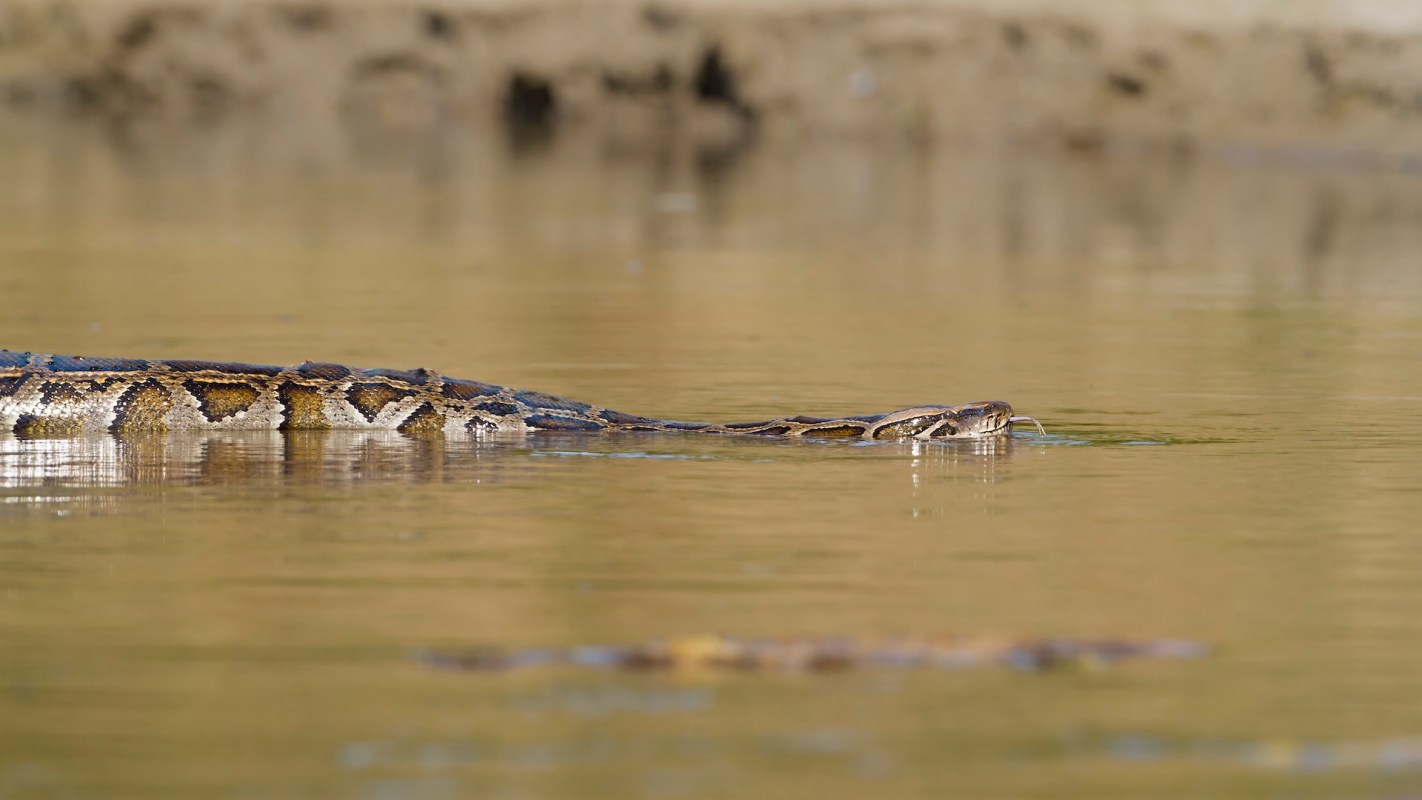
Burmese pythons in Florida appear to be extending their range beyond the southern portion of the state, NBC Miami reported.
Wildlife workers and researchers have said the invasive snakes are showing up farther north, and controlling them may be much tougher after breeding populations take hold in new places. For communities already dealing with the damage these predators have inflicted on native wildlife, that possibility carries serious ecological consequences.
What's happening?
After years of being concentrated in South Florida, Burmese pythons now appear to be advancing into more northern parts of the state, according to NBC Miami.
Robert McCleery, a University of Florida professor, said the university's Project Hopper, an Everglades python removal program, has shown him northward movement.
"There's no doubt. They are spreading," McCleery told NBC Miami. "From my research, it's not that they're spreading, it's that their impacts are spreading. And we can show, iteratively over time, the loss of mammals on the northern extent of where their range is, south of Loxahatchee and the Big Cypress area."
Florida's watery terrain is one reason why containing the creatures is so challenging. Because the snakes are strong swimmers, they are able to use the state's waterways to move north in search of more prey.
TCD Picks » Quince Spotlight
💡These best-sellers from Quince deliver affordable, sustainable luxury for all




Why does it matter?
As wetland food webs change, conserving biodiversity and sustaining the natural systems nearby communities rely on becomes more difficult.
Because so many native mammals in southern Florida have already disappeared because of these predators, they could be forced to move northward.
Detection and removal remain difficult even when agencies know pythons are around. An animal that spends most of its life in water and can slip through interconnected canals is tough to catch early, which increases the risk for counties farther north.
What's being done?
To avoid a worse outcome, researchers are focusing on keeping the snakes from gaining a stronger foothold in additional counties.
McCleery told the outlet that means combining work in heavily infested areas with efforts to locate and remove pythons in places like Palm Beach County before numbers grow to the point that control becomes far harder.
"If we can say, 'Hey, this is where we draw the line,' and use technologies for early detection, early warning, and rapid response, we're going to get a lot more bang for our buck in controlling this problem than trying to go back into the heart of the infestation while the pythons are still spreading northward," McCleery told NBC Miami.

Get TCD's free newsletters for easy tips, smart advice, and a chance to earn $5,000 toward home upgrades. To see more stories like this one, change your Google preferences here.






