


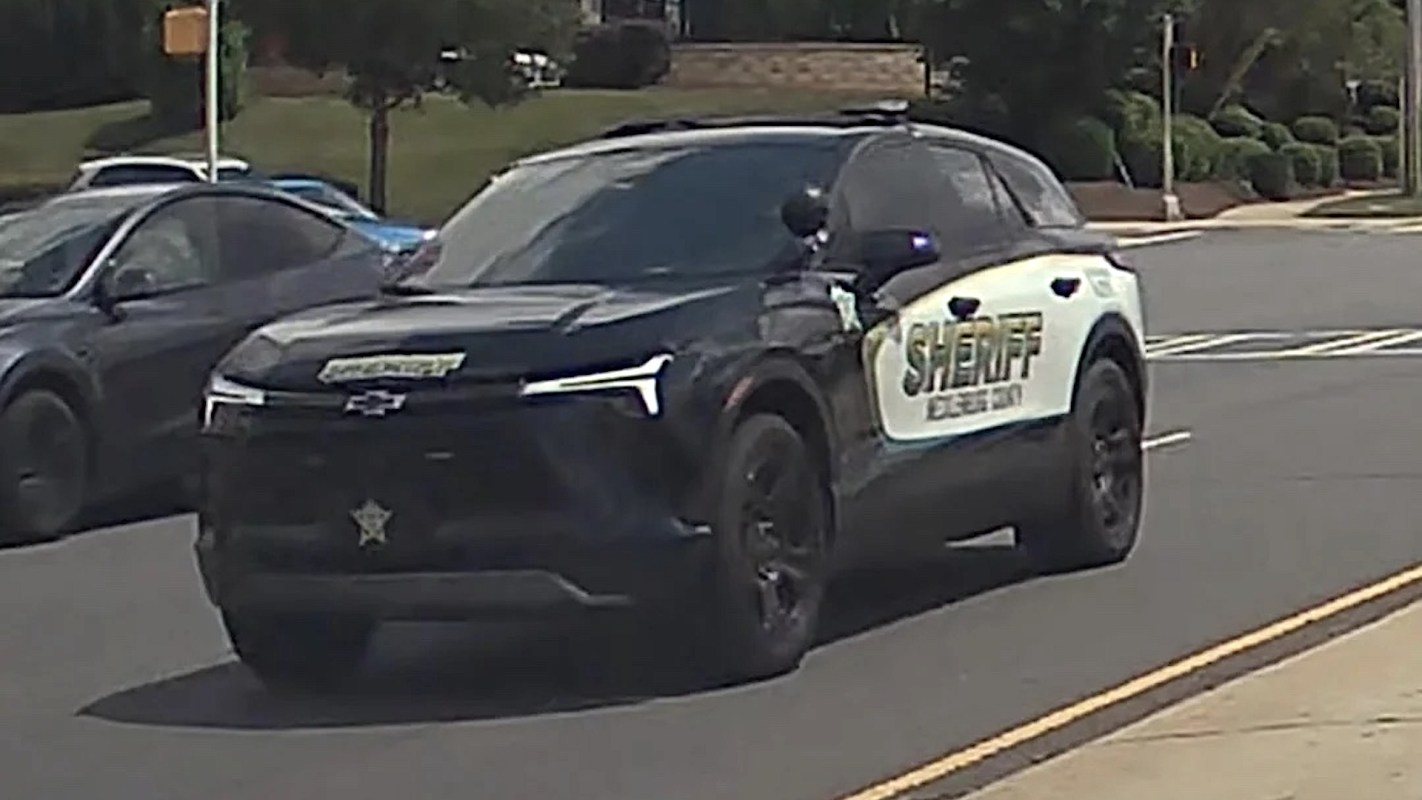
Police fleets could be an unexpected place to see electric vehicles catching on. A recent sighting in North Carolina has people talking about why patrol cars — with their stop-and-go driving, long idle periods, and constant use — could be a good fit for EVs.
What happened?
The conversation started when a Charlotte resident posted a photo on Reddit that appeared to show a Mecklenburg County Police Department Blazer EV and wrote, "First time I've seen police in Charlotte using an EV."
Commenters quickly took the conversation beyond just one town in North Carolina. One person pointed to similar fleet adoption in Canada, writing, "Here in Canada, Ontario police have put a number of them on the fleet now over the past year or so."
The same commenter said how EVs used by police could make both financial and environmental sense: "Definitely much better for taxpayer fuel dollars, carbon emissions, and the cars mechanically, compared to the insane amount of idle hours that gas police cars rack up over not that many miles."
Another user expressed their satisfaction with this EV sighting in Charlotte: "It's about damn time. With as much as police cars idle, EVs make way more sense than the Explorers."
Others added sightings from Richmond and Burnaby, British Columbia, which suggests the vehicle seen in North Carolina may be part of a broader shift in police fleets rather than an isolated example.
TCD Picks » Quince Spotlight
💡These best-sellers from Quince deliver affordable, sustainable luxury for all




Why does it matter?
Police cars spend a lot of time sitting still or creeping slowly through traffic. When a gas-powered cruiser sits at a stop, outside a call, or while monitoring a neighborhood, it still burns fuel and adds wear to the engine; an EV avoids that waste and typically needs less routine maintenance because there are no oil changes and fewer moving parts in the powertrain.
Over time, that means lower operating costs for public fleets. There's also a benefit for local air quality. Replacing gas patrol vehicles cuts tailpipe emissions in the same neighborhoods where officers spend the most time driving and parked, and that matters especially in dense urban areas where traffic pollution can be a persistent health burden.
Some commenters also saw performance as an advantage, not a drawback. In city driving, instant torque can help officers respond quickly to emergencies without the added fuel consumption tied to gas engines.
What can I do?
Even a single apparent Blazer EV in Charlotte suggests some departments may be beginning to test or adopt electric vehicles for public service. Smaller rollouts can help cities evaluate charging needs, range, and vehicle uptime before deciding on larger purchases.
If you're considering buying an electric vehicle, compare not just the purchase price, but also the costs of gas and maintenance over time.
Charging an EV at home often costs less than using public chargers, but basic Level 1 charging tends to be slow. Qmerit provides free, instant installation estimates for faster Level 2 home charger installations so you can wake up to a fully charged car in the comfort of your own home.
The sighting is another sign that EVs are moving into tougher everyday roles — not just commuting, but public fleets that rely on dependable performance.
One commenter summed it up simply: "Cop cars are an excellent EV use - great acceleration, able to idle quietly and cheaply in comfort (AC, heat, power for communication)."

Get TCD's free newsletters for easy tips, smart advice, and a chance to earn $5,000 toward home upgrades. To see more stories like this one, change your Google preferences here.






