


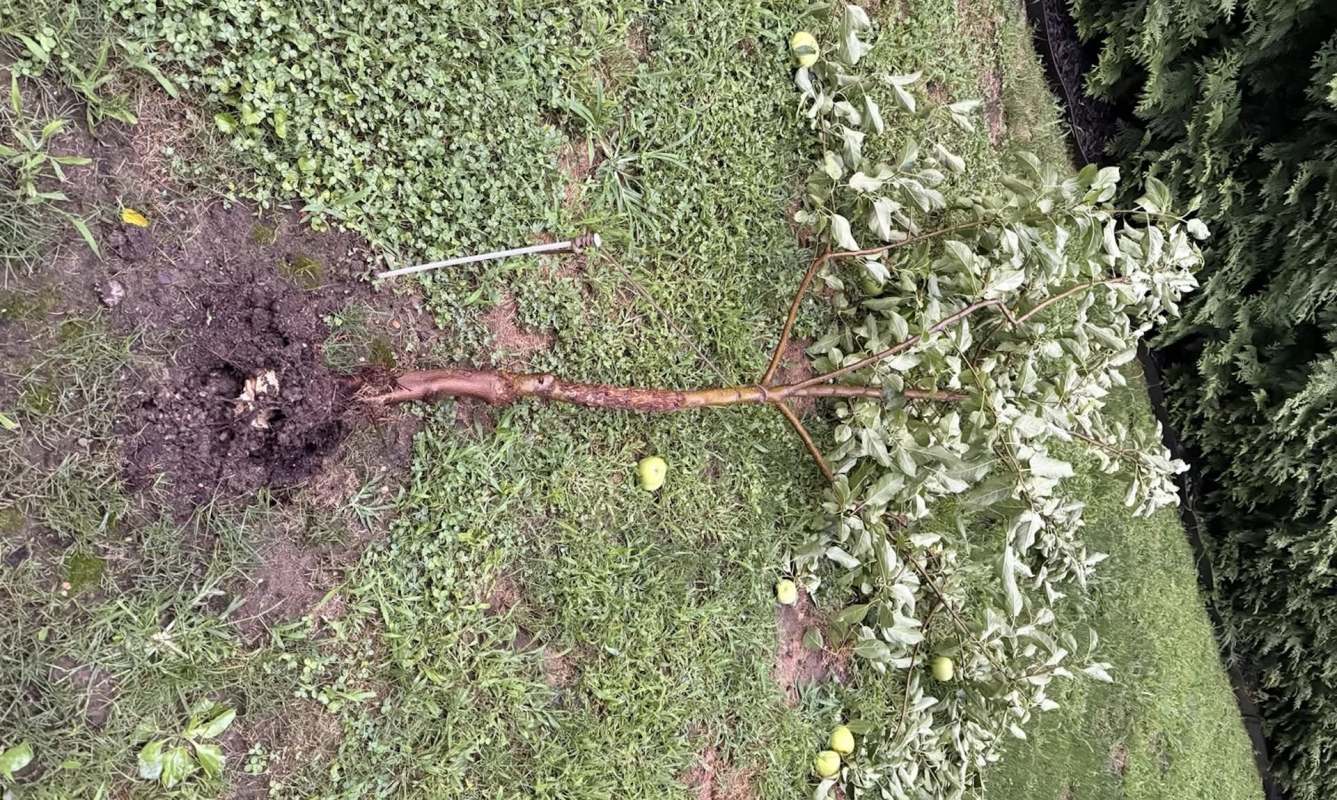
A storm crushed the hopes of one gardener that they would harvest a larger crop of apples when it knocked down the only apple tree in their yard that consistently bore fruit.
What happened?
Writing on Reddit, the gardener said that, out of three apple trees, only one of them was growing fruit.
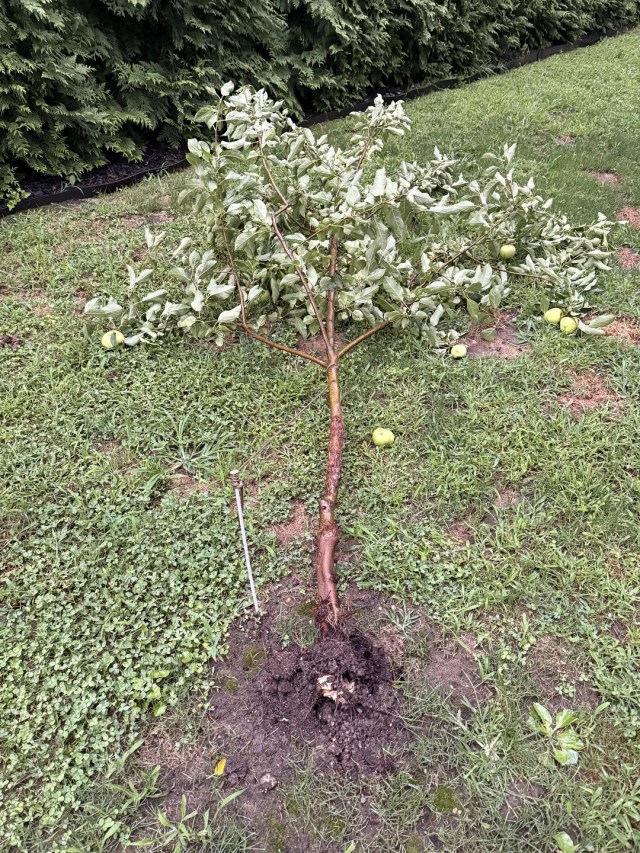
"Last year it gave me 3 apples, this year I was so excited because I had 15!" they wrote. "The storm blew it down."
Believing the tree itself was likely beyond saving, they asked if the apples could still be salvaged: "I know the tree is done but is there anything I could do for the apples or should I just cut my losses?"
However, many replies brought up that the tree may still have a chance at being saved. Several people said that if part of the root system was still attached, it might be possible to stand it back up, replant it, and secure it with stakes.
One commenter wrote: "If there is any root left attached it'd put it upright, stake it and put some soil on it. What do you have to lose?"
TCD Picks » Quince Spotlight
💡These best-sellers from Quince deliver affordable, sustainable luxury for all




Commenters also suggested the failure may have had to do with the tree's rootstock, particularly if it was a dwarf apple with a weaker root system.
Support needs can vary widely, as one commenter put it: "Depends a lot on the rootstock," while another warned that some dwarf apples "need permanent staking."
Why does it matter?
Losing a productive fruit tree can mean losing future harvests, money saved on store-bought produce, and fruit picked at peak ripeness.
Gardening can also support mental health by reducing stress, while adding physical activity through digging, pruning, hauling, and watering.
Backyard food gardens are vulnerable to severe weather, especially when trees are planted on rootstock that requires extra support. Even a tree that looks sturdy may still need permanent staking, depending on how it was grown.
The discussion also highlighted that fruit trees are not all the same. Choosing the right size and support system can make a major difference in whether a tree survives a major storm.
What can I do?
If a fruit tree tips or breaks near the base, gardeners in the thread suggested moving quickly.
Where roots are still hanging on, commenters advised trying to reset the tree: put it upright again, water it well, add soil, and stake it firmly. Some also recommended cutting back part of the top growth so the damaged roots have less canopy to support.
If the tree cannot be saved, the fruit may still be usable. And if you're planning a replacement, The Cool Down's guide to growing your own food can help you get started.
"Sorry to see that, apple trees can be resilient," one commenter wrote.
Another offered the simplest hard-earned lesson: "Lesson learned. Stake your fruit trees next time."

Get TCD's free newsletters for easy tips, smart advice, and a chance to earn $5,000 toward home upgrades. To see more stories like this one, change your Google preferences here.






