


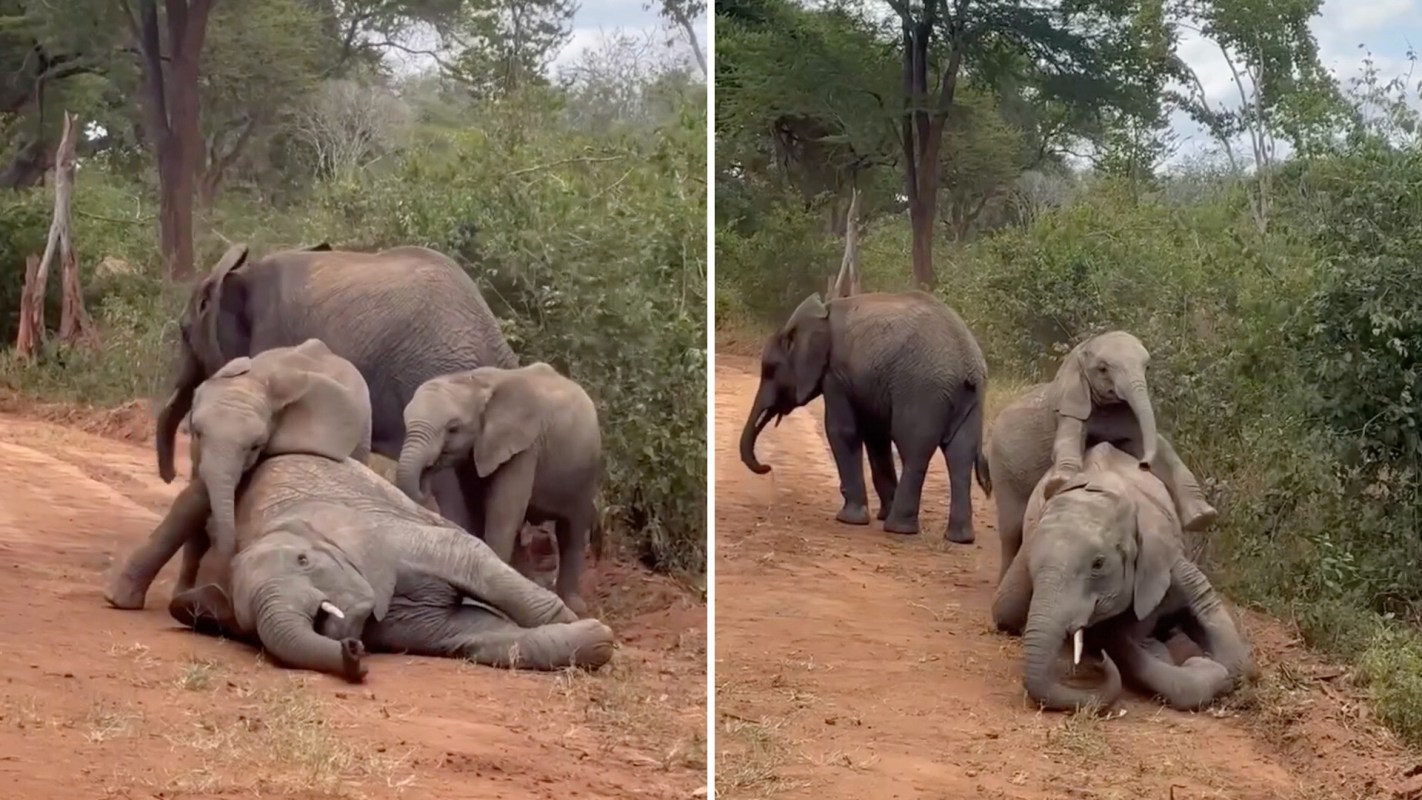
Breakfast time for an elephant troop in Kenya took an unexpected turn when keepers counted the elephant calves in front of them and came up one short.
The missing youngster belonged to Lima Lima, an elephant mother known for doing things her own way.
What happened?
A recent Instagram video from the Kenya-based Sheldrick Wildlife Trust showed the Umani herd of "ex-orphans" during their usual breakfast gathering. But a tally of the baby elephants quickly revealed one was missing.
In the caption, the trust wrote that after Lenny was discovered to be missing, "as if on cue, a baby elephant started shouting from a short distance away. The nannies [other elephants that serve as communal caretakers for the babies], responded with rumbles."
The SWT added that "It seems more likely that he was napping and Lima Lima didn't want to disturb his rest, but also, she didn't want to miss breakfast. Faced with an impossible choice, she decided to leave her son within earshot while she enjoyed a meal with friends."
Luckily, "just like his mother, Lenny is an unflappable elephant."
TCD Picks » Quince Spotlight
💡These best-sellers from Quince deliver affordable, sustainable luxury for all




The adorable footage then showed the herd playing together, with some of the babies climbing atop larger elephants.
Why does it matter?
Elephants are known for their strong social bonds, and calves often grow up surrounded by a network of watchful adults rather than relying on just one parent.
That herd structure can provide backup when one mother is less than perfect. The trust's joke about Lima Lima "know[ing] her herd's worth of helpers will fill the gap" points to the communal care that helps young elephants stay safe and learn from the group.
And thankfully, at the Umani reintegration unit, these dependent calves are monitored closely enough for keepers to notice when one baby is missing from the group.
For the animals at SWT, reintegration is not a matter of releasing animals and walking away. It also involves continued support as elephants regain independence while still benefiting from human protection and herd companionship.

Get TCD's free newsletters for easy tips, smart advice, and a chance to earn $5,000 toward home upgrades. To see more stories like this one, change your Google preferences here.







