


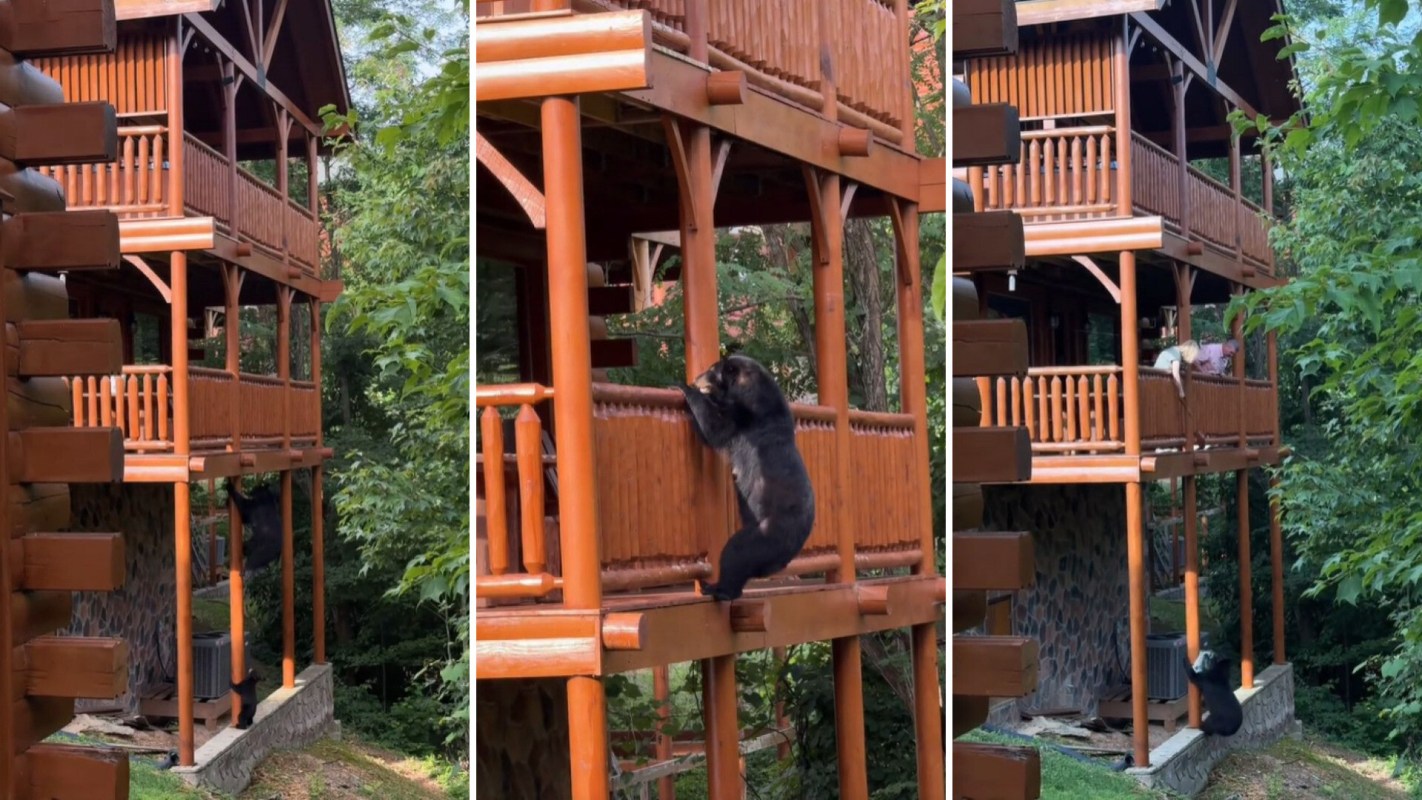
A black bear in Tennessee recently turned a cabin balcony into an unlikely grocery pickup zone.
In a scene that was amusing at first glance but unsettling after a second thought, the bear was seen climbing up, grabbing a Publix bag, spinning around, and carrying the food back down to a cub waiting below.
What happened?
Recorded by a visitor to the Great Smoky Mountains, a now-viral TikTok video shows people trying to scare off the black bear after it climbed onto a cabin balcony and quickly acquired some groceries.
@zelichonok.usa Only in the Smoky Mountains… 🐻 A black bear climbed up to our neighbors' balcony, stole a Publix grocery bag, and casually climbed back down like this was completely normal. People ran outside and tried to scare him away, but he grabbed the bag, did a funny little spin, and disappeared into the bushes. And the best part — a cub was waiting for him below. Would you stay in a cabin after seeing this? 😅 #GreatSmokyMountains #BlackBear #BearEncounter #Gatlinburg #Tennessee ♬ original sound - Жизнь и путешествия по США
The original poster explained that the black bear "casually climbed back down like this was completely normal… And the best part — a cub was waiting for him below."
One commenter joked, "The celebration twist when the bear got the goods and avoided bad human aim," while another wrote, "Oh my, just when I thought I'd be safe in a cabin with a porch way off the ground."
In a region well known for black bear sightings, the animals have learned where easy calories are found. Vacation rentals or other areas full of people and their trash can convince a bear that an easy meal is never too far away.
TCD Picks » Quince Spotlight
💡These best-sellers from Quince deliver affordable, sustainable luxury for all




Why does it matter?
Bears can become conditioned to seek out food near homes, cabins, and crowded tourist areas, increasing the risk for an interaction. This can lead to property damage, aggressive behavior, and dangerous close-range interactions for both people and animals. Once a bear learns to associate humans with food, they may keep returning, and that can end badly.
As BBC Future has reported, human behavior often plays a major role in wildlife conflict. This is especially true when development, tourism, and access to food pull animals into closer contact with people. Wild animals are adapting to human spaces because those spaces continue to offer rewards.
To help prevent interactions with them, never leave food, groceries, or trash where a bear can reach them.
That means bringing bags inside immediately, keeping doors and windows secured, using bear-resistant trash containers if available, and avoiding storing coolers or snacks outdoors. Feeding wildlife, whether intentionally or unintentionally, can put both people and animals at risk.

Get TCD's free newsletters for easy tips, smart advice, and a chance to earn $5,000 toward home upgrades. To see more stories like this one, change your Google preferences here.







