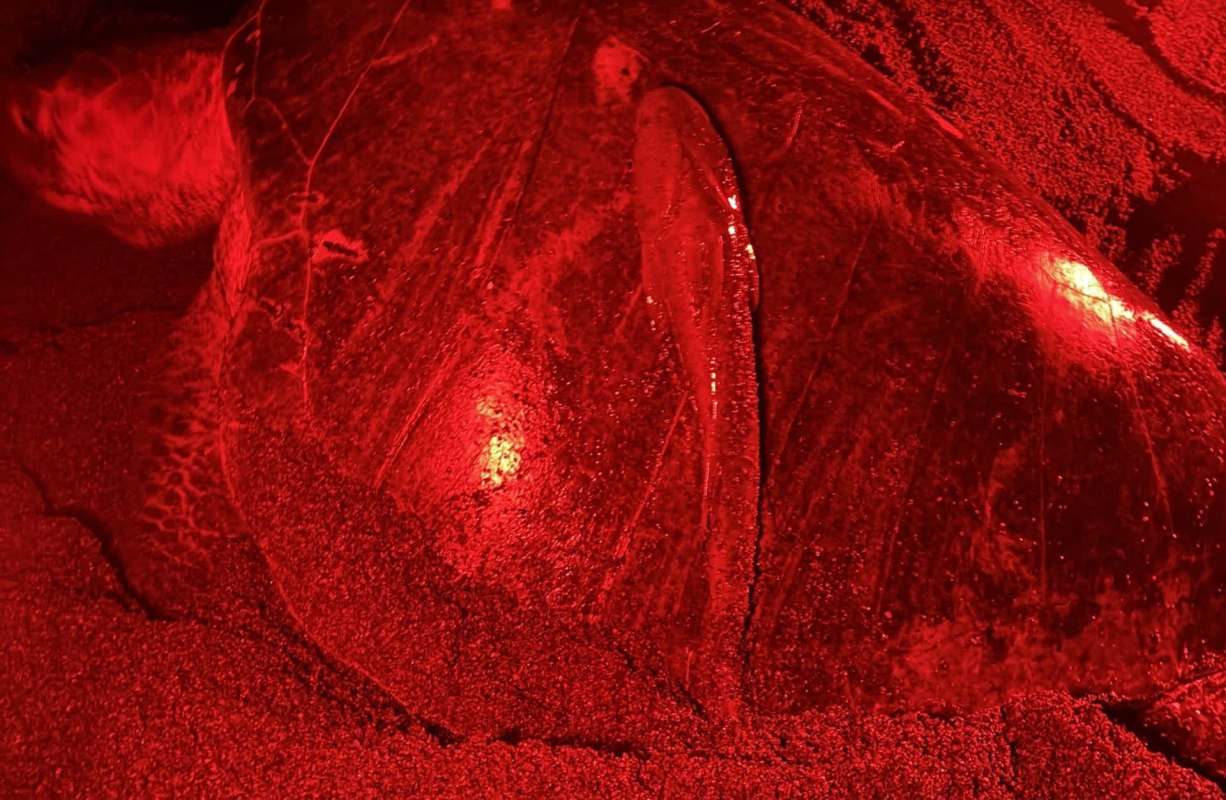
Researchers were surprised to see a little hitchhiker attached to one of the nesting turtles they were monitoring in Costa Rica.
A female turtle had left the water with an unexpected friend — a remora, also known as a suckerfish.
What happened?
Remoras, described here by the National Marine Sanctuary Foundation, typically spend their time fastened to animals such as sea turtles, rays, sharks, and whales, using a suction-cup-like disc to hitch a ride. What made this observation particularly unusual was that the fish stayed with its turtle host during the turtle's trip onto land.
According to the group's published study, the remora was attached to the turtle for 19 minutes until an assistant removed it and returned it to the ocean, so the team could properly measure the turtle.
This observation points to the possibility that some remoras can handle brief periods out of the sea, especially when they remain attached to a moist, moving host. That gives researchers a rare chance to consider what becomes of hitchhiking species when the animals carrying them briefly cross onto land.
Why does it matter?
Sea turtles already face a range of threats, per The State of the World's Sea Turtles, including habitat loss, fishing gear, plastic pollution, and disturbances on nesting beaches. Any new insight into their nesting behavior can help researchers better understand the wider web of animals connected to these critical reproductive events.
TCD Picks » Good Store Spotlight
Get 10% off your next purchase with code TCD10




The remora finding also shows how much scientists still have to learn about relationships between marine species. Remoras are often viewed as opportunists, per Medium, benefiting from transport, protection, and scraps of food from their hosts. Watching one endure time ashore raises new questions about how flexible that relationship may be.
Healthy beaches and oceans support not only iconic animals such as sea turtles but also entire communities of lesser-known species. That kind of knowledge can help shape conservation decisions, especially in places where turtle nesting supports ecotourism and local economies.
What's being done?
Researchers and conservation groups in Costa Rica and elsewhere are continuing to monitor nesting beaches, track turtle behavior, and document unusual interactions that might otherwise go unnoticed. Even short field observations can become valuable data when they capture rare animal behavior.
Protecting nesting habitat remains one of the most effective ways to help sea turtles and the broader ecosystems around them. That can include limiting beachfront lighting, reducing human disturbance during nesting season, and supporting organizations that patrol beaches and protect nests.
By following the turtle ashore, the remora highlighted a level of flexibility in marine life that researchers do not often get to witness. The observation briefly exposed an animal partnership that is usually out of sight below the surface.

Get TCD's free newsletters for easy tips, smart advice, and a chance to earn $5,000 toward home upgrades. To see more stories like this one, change your Google preferences here.