


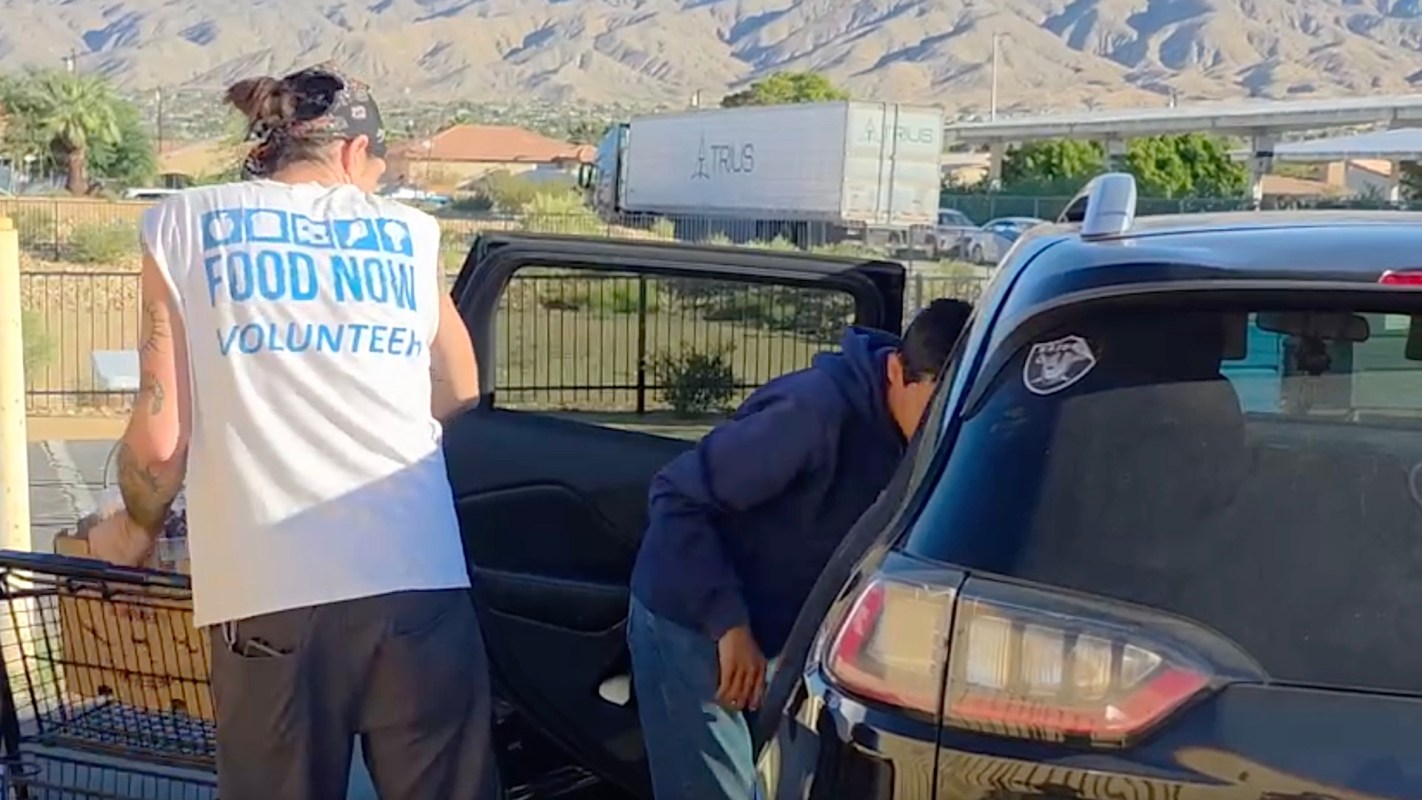
Well before sunrise in Desert Hot Springs, drivers begin queuing at Food Now, hoping a free box of groceries will help them cover another hard week.
For many in that line, asking for food assistance is something they never imagined they would need to do.
What's happening?
By 7:30 a.m. every Wednesday and Thursday, Food Now is distributing groceries from its main warehouse in Desert Hot Springs. As NBC Palm Springs reported, the pantry sees hundreds of vehicles each week and serves more than 600 people.
Resident Kevin Leslie is one of the regular visitors. For the past year, he has come each week while caring for his family, relying on the groceries to help keep meals on the table during his wife's hospitalization.
NBC Palm Springs also highlighted Russell Force, a senior living on a fixed income who said the pantry helps him manage rising everyday expenses. After losing his business, resident Gil Solis found himself needing the pantry's help, as well.
Why does it matter?
Grocery prices, housing costs, and price increases for other essentials continue to strain household finances. At Food Now, organizers say the people who show up come from a wide range of backgrounds, underscoring that hunger "does not always look the way people expect."
TCD Picks » Quince Spotlight
💡These best-sellers from Quince deliver affordable, sustainable luxury for all




Help with groceries can free up money for prescriptions, rent, gas, or utility bills — expenses that do not stop when a household is going through a difficult season.
What's being done?
Food Now's regular Wednesday and Thursday morning schedule gives residents a dependable place to seek groceries when food costs become unmanageable.
Knowing when and where groceries will be available helps families plan ahead, reduces uncertainty, and can ease the stress of trying to make limited resources last.
Local food pantries, senior centers, school meal programs, and 211 community resource lines can be a place to start. People looking for more ways to back community resilience can also explore how to donate money to climate causes, which often support communities facing overlapping economic and environmental stress.
For Force, the value of that help is straightforward: "The quality of the food is great, and it gets you over the hump." Plus, there's a sense of community as people come together in times of need. "It's about helping each other," Leslie said.

Get TCD's free newsletters for easy tips, smart advice, and a chance to earn $5,000 toward home upgrades. To see more stories like this one, change your Google preferences here.







