


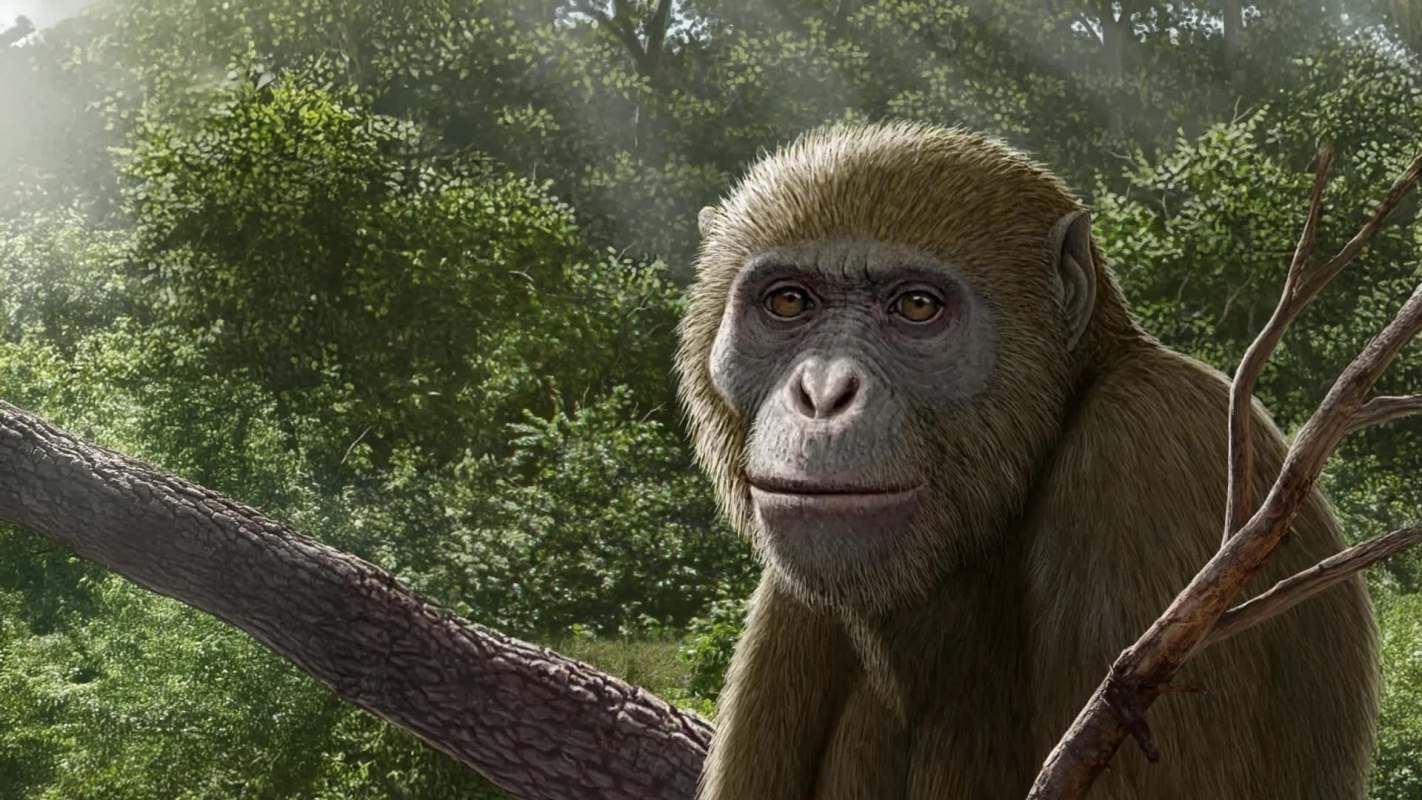
A fossil jaw unearthed in northern Egypt may be rewriting a key chapter of ape evolution.
The newly identified species lived roughly 17 to 18 million years ago and may help fill a major gap in the early ape family tree, reported ScienceDaily.
What happened?
At Wadi Moghra in northern Egypt, an international team identified a previously unknown fossil ape, Masripithecus moghraensis, from a fossil-rich locality dating to the Early Miocene.
In a study published in Science, researchers said the find is the strongest confirmed evidence so far of an ape in North Africa.
Earlier fossil sites in North Africa had yielded monkey remains but no verified apes. As a result, many researchers had assumed that early apes and their closest relatives were concentrated farther south in Africa during that period.
Hesham Sallam, a paleontologist at Mansoura University in Egypt and senior author of the study, said, "We spent five years searching for this kind of fossil because, when we look closely at the early ape family tree, it becomes clear that something is missing — and North Africa holds that missing piece."
TCD Picks » Quince Spotlight
💡These best-sellers from Quince deliver affordable, sustainable luxury for all




The fossil consists only of part of a lower jaw, but that fragment still reveals a distinctive combination of traits: especially large canine and premolar teeth, rounded and heavily textured molars, and a sturdier jaw than those seen in similarly old apes from East Africa.
Why does it matter?
The discovery could reshape how scientists think about where the ancestors of living apes, including humans, evolved.
According to the team's analysis, Masripithecus may fall closer to the branch leading to modern apes than any Early Miocene species now known from East Africa.
If so, the long-standing view that the common ancestor of today's apes lived in or near East Africa becomes harder to sustain. Instead, the findings highlight northern Africa and the Middle East as potentially important regions in ape origins and early diversification.
The fossil also offers insight into how ancient primates adapted to environmental change.
Shorouq Al-Ashqar, a researcher at the Mansoura University Vertebrate Paleontology Center in Egypt and a first author of the study, said, "Together, they suggest that Masripithecus was adapted for versatility. The study interprets its chewing anatomy as evidence of a flexible, mainly fruit-based diet, with the ability to process harder foods such as nuts or seeds when needed."
That kind of dietary flexibility may have helped the species survive as northern Africa and Arabia grew more seasonal.
What's being done?
Researchers did not rely on the jaw alone.
They used Bayesian methods to integrate fossil ages, anatomical comparisons between living and extinct apes, and DNA data from living species to estimate how different ape groups were related and when their lineages split.
The team also carried out biogeographic modeling to test where the common ancestor of living apes most likely lived.
Those results point to northern Africa and the Middle East as a possible crossroads, where changing sea levels and tectonic shifts sometimes opened migration routes between Africa and Eurasia.
The team said more fieldwork in North Africa and the Middle East could uncover additional fossils and clarify how apes spread and diversified. Each new find has the potential to fill gaps that have distorted the fossil record for millions of years.
"For my entire career, I considered it probable that the common ancestor of all living apes lived in or around East Africa," said Erik Seiffert, a paleontologist at the University of Southern California and a co-author of the study. "But this new discovery ... now strongly challenge[s] that idea."

Get TCD's free newsletters for easy tips, smart advice, and a chance to earn $5,000 toward home upgrades. To see more stories like this one, change your Google preferences here.






