


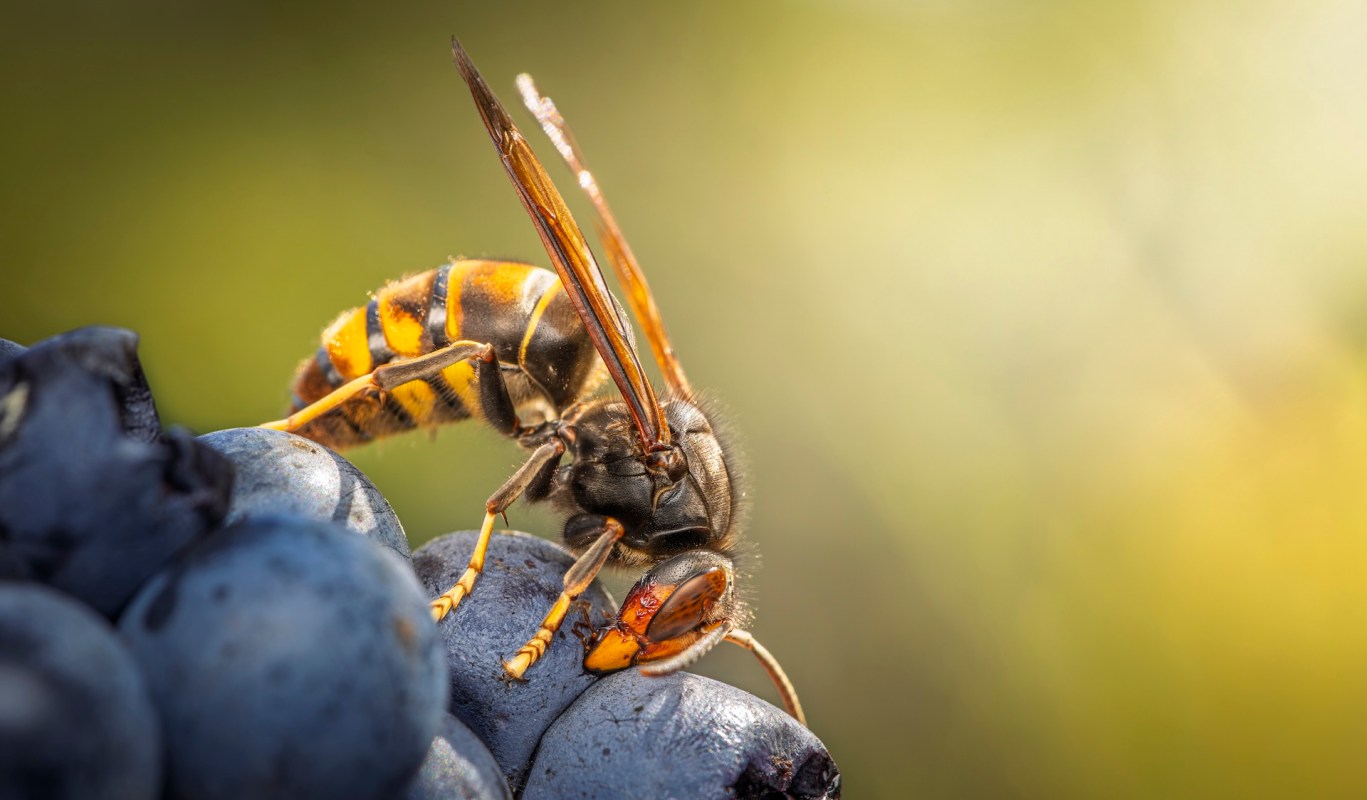
A lone insect found on a grain ship in Washington has prompted alarm in the Pacific Northwest.
Officials identified it as a yellow-legged hornet, an invasive predator that experts say may pose an even greater threat than the infamous giant "murder hornet."
What happened?
According to Capital Press, a Washington State Department of Agriculture grain inspector discovered a live yellow-legged hornet on a ship at the Port of Vancouver on April 30.
The agency then set traps and checked the surrounding area, but no other hornets have been found so far.
Experts have warned that this species may be better able to spread over a wide area than the northern giant hornet, which drew worldwide attention in 2019.
Northern giant hornets were declared eradicated in 2024 after three years without sightings in Washington and British Columbia.
TCD Picks » Quince Spotlight
💡These best-sellers from Quince deliver affordable, sustainable luxury for all




Grant County, Washington, commercial beekeeper Tim Hiatt said the yellow-legged hornet appears able to survive across a much wider range.
"The yellow-legged hornet could go coast-to-coast," he said, per Capital Press. "The Northern Giant Hornet wouldn't survive in Eastern Washington, but the yellow-legged hornet would."
Why does it matter?
Because yellow-legged hornets hunt honeybees, they threaten insects that are vital to pollinating many food crops and sustaining farm economies.
If the species takes hold, it could add pressure on growers and beekeepers and hinder efforts to create a more resilient food system.
Its spread overseas shows how quickly it can expand: after arriving in southern France in 2004, it moved across Western Europe and into Great Britain.
The species was first found in the United States in 2023 near Savannah, Georgia, and Clemson University said pest managers in South Carolina have since located more than 100 nests.
Another worry is that European honeybees lack the defenses used by some Asian honeybees, which can swarm an attacking hornet and kill it by forming 116-degree Fahrenheit "heat balls."
"They're darn prolific," Hiatt said, warning the danger can grow fast. "They reproduce quickly."
What's being done?
For now, Washington is concentrating on finding out whether this was an isolated discovery or something more.
Agriculture officials have placed traps near the port and searched for evidence that the insect was more than a single stowaway that arrived on cargo.
That work is particularly urgent because queens emerge from hibernation in spring and can travel long distances.
Embryo nests can start out around the size of tennis balls in spring, while larger secondary nests in the fall can be bigger than basketballs and high in trees, making them far harder to find and destroy.
The state's past success against northern giant hornets suggests a strong response can work.
"It's a serious deal," Hiatt said. "Kudos to the Department of Agriculture for catching it."

Get TCD's free newsletters for easy tips, smart advice, and a chance to earn $5,000 toward home upgrades. To see more stories like this one, change your Google preferences here.






