


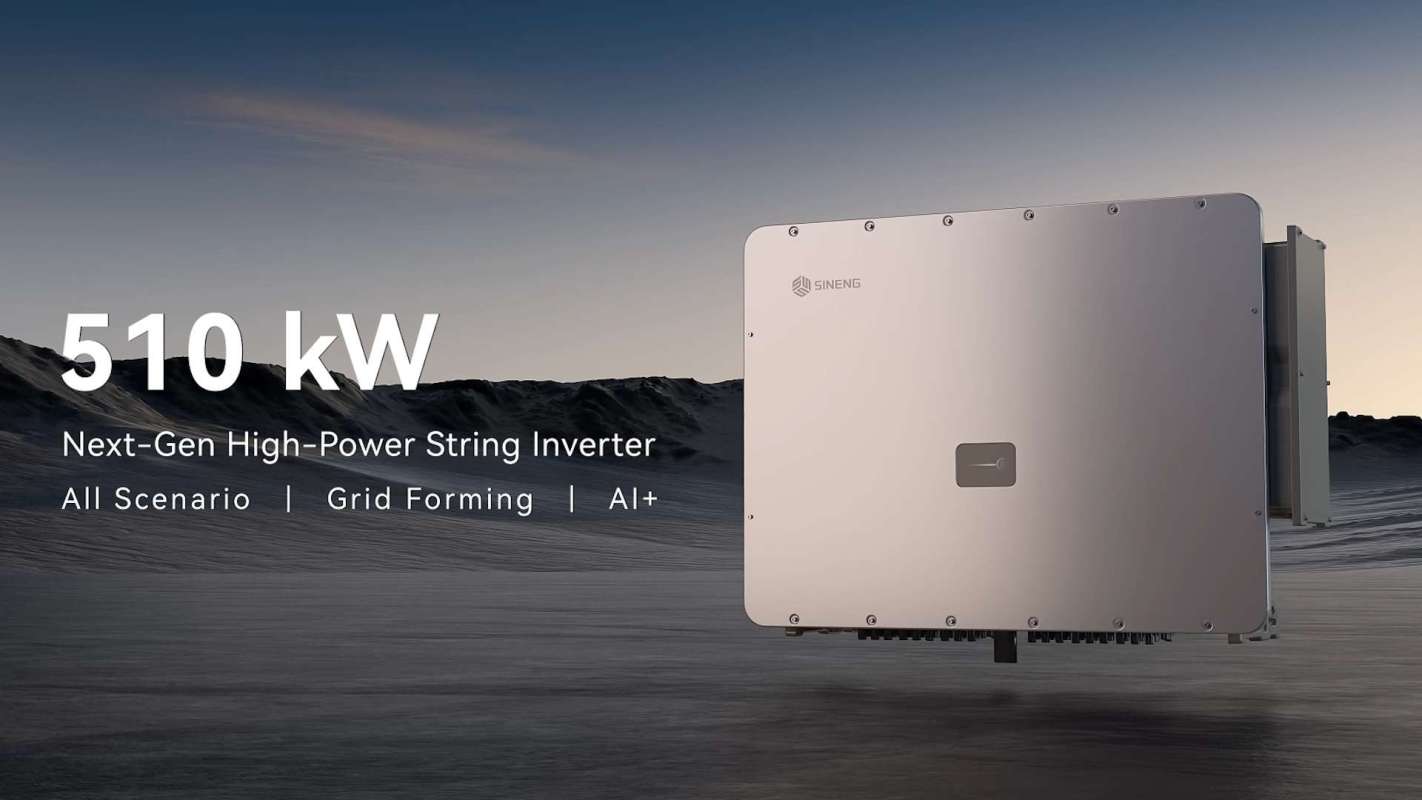
A newly launched solar inverter from Chinese manufacturer Sineng Electric could help utility-scale solar projects get more power out of each installation while trimming some of the hardware and wiring costs that make large solar farms expensive to build.
More efficient solar hardware can bring down the cost of renewable electricity; support more resilient grids; and lower operating expenses for cities, businesses, and utilities.
What's happening?
For developers working on solar project blocks above 7 megawatts, Sineng Electric has rolled out the SP-510K-H, a 510-kilowatt string inverter. As PV Magazine reported, it accepts DC input as high as 1,650 volts, which can lengthen each string by about two or three modules.
By stretching strings farther, projects may need less mounting hardware and fewer other balance-of-system, or BOS, parts in the field. The inverter delivers 1,000 volts on the AC side to curb line losses and can use aluminum cabling and power line communication to push costs down further.
Sineng Electric also says the transformerless unit can reach 99% maximum efficiency and 98.8% European efficiency. With six maximum power point trackers, room for up to 36 strings, and a permitted DC-to-AC ratio of up to 1.8, the inverter gives designers more latitude when laying out large solar arrays.
Why does it matter?
Inverters are the part of a solar system that convert electricity from panels into usable power for the grid, so even relatively small improvements can have an outsize effect on a project's economics. If developers can install fewer support components and lose less electricity as power moves around a site, the cost of producing clean energy can decline.
TCD Picks » Quince Spotlight
💡These best-sellers from Quince deliver affordable, sustainable luxury for all




Lower-cost utility-scale solar can stabilize electricity prices over time, expand access to domestically generated power, and reduce reliance on non-renewable energy sources that contribute to planet-warming air pollution.
Sineng Electric said the inverter includes grid-forming functionality for weak grids with a short-circuit ratio of 0.93 or higher, according to PV Magazine. The company also cited black-start capability, dynamic frequency regulation, and suppression of wide-band oscillation.
Those features are intended to help grids recover more quickly and operate more smoothly as larger amounts of renewable energy come online.
What's being done?
Solar manufacturers are increasingly building equipment that goes beyond basic power conversion. With the SP-510K-H, PV Magazine said, Sineng Electric added operations and maintenance features including AI-based power generation forecasting, automated current-voltage and capacitance-voltage diagnostics, and insulation monitoring at the MPPT level.
Those tools can help plant operators identify faults faster, reduce downtime, and keep electricity flowing. Faster troubleshooting can translate into lower maintenance costs and more consistent energy production, which is valuable for utilities and large energy buyers looking to control expenses.
For tougher sites, Sineng Electric says the inverter uses an IP66 enclosure, IP68 cooling fans, and C5 corrosion protection while maintaining full power at elevations up to 13,123 feet. Reported safety features include AFCI 2.0 arc-fault detection, terminal temperature monitoring, millisecond-level fault isolation, and Type I+II DC surge protection.
Better solar hardware can speed the buildout of cleaner, cheaper electricity systems. As utilities and companies adopt technologies that lower renewable energy costs, households could benefit from more dependable power and less exposure to fuel-price swings.
"MPPT-level insulation monitoring enables precise fault localization, significantly improving troubleshooting efficiency and reducing downtime. Real-time AC and DC terminal temperature monitoring provides early warning of overheating," the manufacturer said in a statement, per PV Magazine.

Get TCD's free newsletters for easy tips, smart advice, and a chance to earn $5,000 toward home upgrades. To see more stories like this one, change your Google preferences here.






