


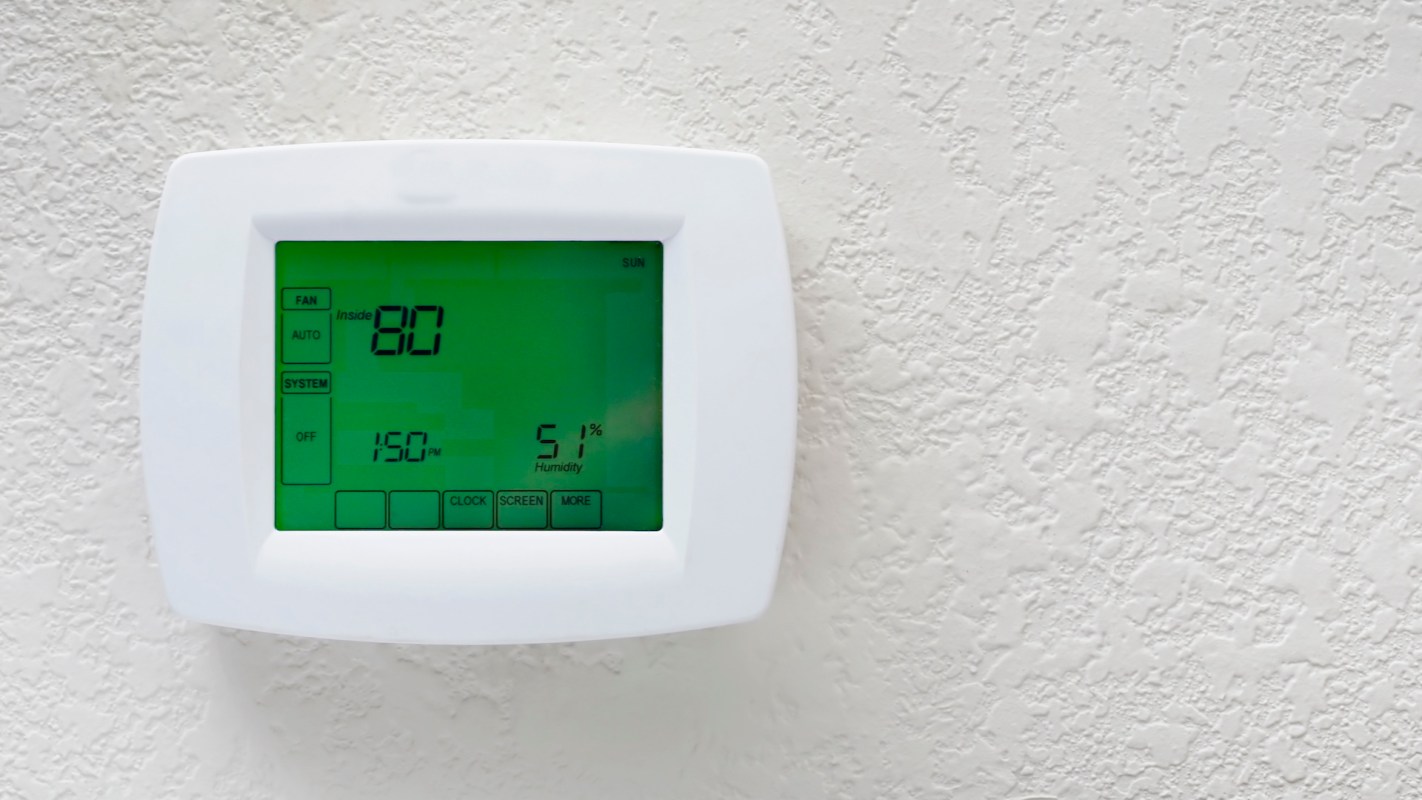
When triple-digit heat hits, few things are more frustrating than watching the thermostat refuse to fall to a livable temperature.
That was the situation one apartment renter described after being told their building's AC could cool only about 15 to 20 degrees below the outdoor temperature.
What happened?
They wrote on Reddit's r/hvacadvice that in summer "it's been 100°F outside lately and my apartment can't go below 79 during the day," while the indoor temperature once climbed to 82 when it was 106 outside.
They shared a screenshot of a notification from management saying AC units would only cool 15 to 20 degrees below outside temperatures.
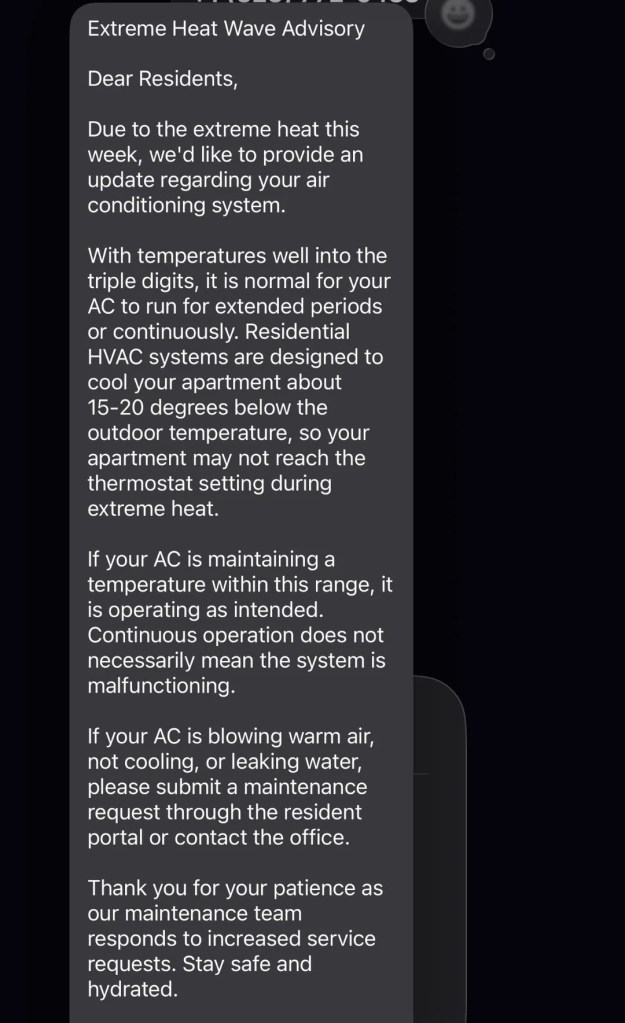
They added that winter was also difficult, writing that maintenance "didn't take me seriously until my place got to 50."
Rather than accepting the apartment complex's explanation at face value, many commenters argued the "15-20 degree" figure was being used incorrectly. They said that number typically describes the temperature difference across the HVAC system itself — the air going in versus the air coming out — not a hard cap on how far indoor temperatures can sit below outdoor conditions.
Because the apartment also struggled in winter, some commenters said the problem could have more to do with the building or the system setup than with a universal AC limit.
They pointed to possibilities such as poor insulation, damaged ductwork, or equipment that is too small.
Save $10,000 on solar panels without even sharing your phone number Want to go solar but not sure who to trust? EnergySage has your back with free and transparent quotes from fully vetted providers in your area. To get started, just answer a few questions about your home — no phone number required. Within a day or two, EnergySage will email you the best options for your needs, and their expert advisers can help you compare quotes and pick a winner. Solar panels can save you more than $50k over their 25-year lifespan, and EnergySage can help you save as much as $10k on installation. Which begs the question — isn't that worth an email or two? |

For people planning a larger upgrade, heat pumps are significantly more energy-efficient than traditional HVAC systems and can provide both heating and cooling from a single system. That can mean access to tax credits, rebates, and long-term savings, and EnergySage's Heat Pump Marketplace can help shoppers compare heat pump options.
For a smaller-scale option, Merino offers single-room, ultra-efficient HVAC systems at a lower price point. It's a targeted heating and cooling solution that can be installed in under an hour.
Why does it matter?
This kind of confusion can mean more than simple discomfort. When a system cannot keep up during extreme heat, residents may be left dealing with unsafe indoor temperatures, higher electric bills, and little control over whether repairs are handled properly.
What can I do?
If your apartment will not cool properly, start by documenting indoor temperatures at different times of day, checking the filter, and asking management for written details on the system's design limits and maintenance history. It can also help to note whether the home overheats in winter, since that may point to insulation or air-leak issues rather than the AC alone.
You can also reduce heat gain with blackout curtains, weatherstripping, and by limiting oven or dryer use during the hottest parts of the day. If your lease allows it, a supplemental room unit may provide temporary relief while you push for a longer-term solution.
For homeowners looking beyond cooling fixes, EnergySage also offers a free solar quotes comparison tool to help slash energy bills.
And for anyone comparing efficient HVAC replacements, EnergySage's Heat Pump Marketplace is another place to start.

Get TCD's free newsletters for easy tips, smart advice, and a chance to earn $5,000 toward home upgrades. To see more stories like this one, change your Google preferences here.






