


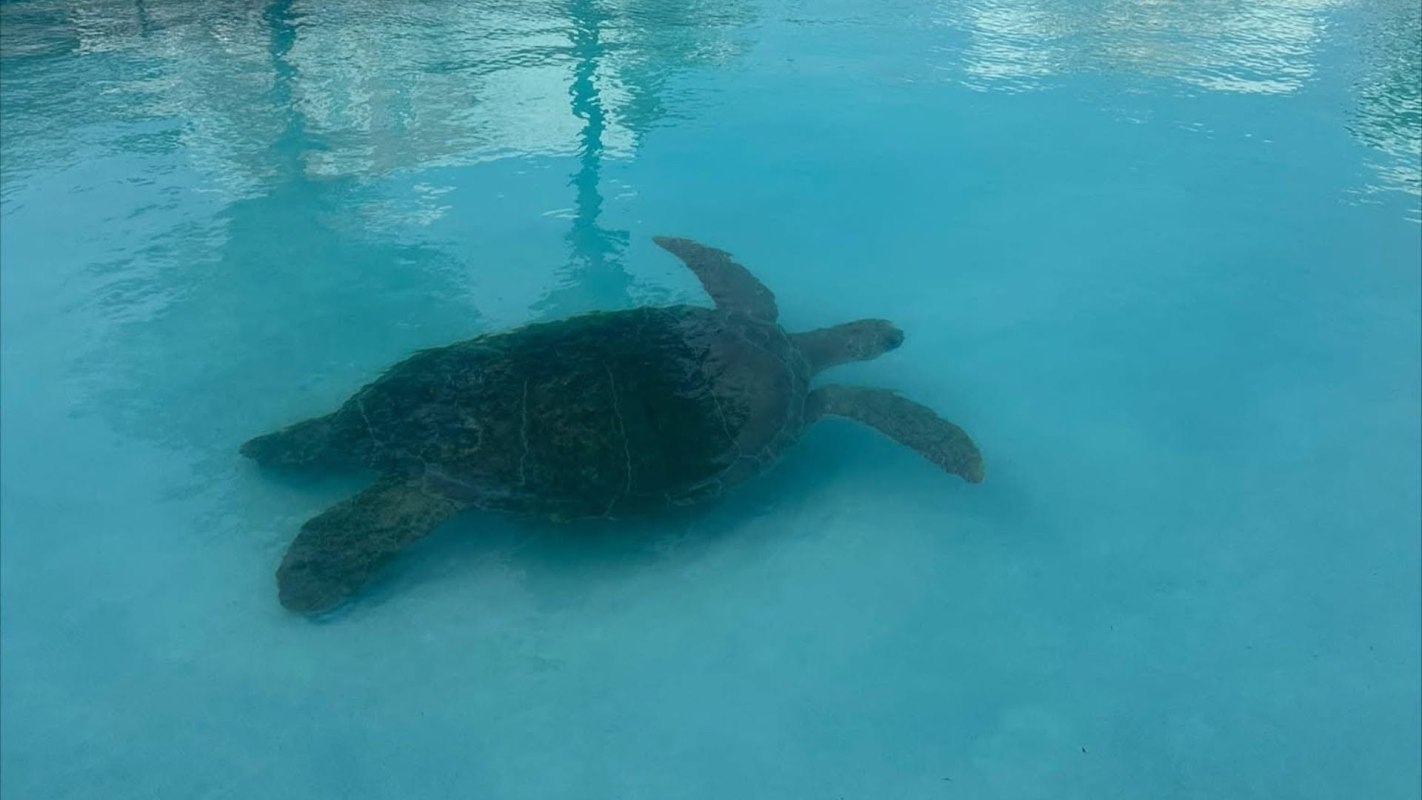
A beach-monitoring patrol in the Cayman Islands led to an unexpected wildlife rescue when Department of Environment volunteers found a 400-pound sea turtle in a swimming pool.
The green sea turtle was lifted out, examined, tagged, and released back into the water. The rescue also drew attention to a larger problem facing nesting turtles on heavily developed coasts.
What happened?
The adult female turtle was discovered July 16 in a pool at Rum Point while DoE volunteers were on patrol, according to Good Good Good. The outlet said the area was known for a beachfront resort, watersports, and laid-back pools.
Conservation officials and members of the islands' Turtle Team worked together to carry out the rescue.
In a Facebook post, the DoE said, "Getting a 400-pound turtle safely out of a swimming pool is no small feat, but the team removed her, checked and tagged her, and released her back to sea."
Officials said the turtle did not seem to be in poor health. Still, the situation underscored the hazards turtles can encounter during nesting season and along developed shorelines.
TCD Picks » Quince Spotlight
💡These best-sellers from Quince deliver affordable, sustainable luxury for all




Rescuers think it likely became disoriented after coming ashore to nest and then moved inland into a developed area instead of returning to the water.
Why does it matter?
Lighting and landscaping along beachfront property can create serious dangers for sea turtles.
"Female turtles come ashore at night to nest," the DoE explained. "Artificial light on the beach, or the removal of natural coastal vegetation, can leave them disoriented and cause them to crawl into developed areas instead of returning to the sea."
In that situation, features of a property that might otherwise seem harmless can become dangerous traps.
As the agency warned, "If they reach a swimming pool with its edge at ground level, they can fall in and become trapped."
The problem does not affect only adult turtles. Good Good Good noted that hatchlings rely on an instinct called sea finding, which usually guides them toward the ocean's bright, low horizon under moonlight and starlight. Artificial light from development, or even flashlights, can draw them the wrong way.
What's being done?
The DoE used the rescue to encourage beachfront property owners to make practical adjustments during nesting season.
Its advice included keeping native coastal vegetation intact, cutting back on artificial light visible from the beach, and moving beach furniture and small watercraft off the beach overnight.
The agency also highlighted pool design. It said property owners should consider raised pools or barriers around ground-level pools, and noted empty ground-level pools should not be left unfenced during nesting season.
Visitors can help, too. Avoiding unnecessary lighting and keeping beaches flat and easy for turtles to cross can reduce the chances that nesting adults or hatchlings become disoriented.
Such steps can lower the risks facing vulnerable turtles during one of the most sensitive parts of their life cycles.
"This turtle is safely back at sea," the DoE reported. "Practical beachfront management can help keep more nesting turtles out of danger."

Get TCD's free newsletters for easy tips, smart advice, and a chance to earn $5,000 toward home upgrades. To see more stories like this one, change your Google preferences here.







