


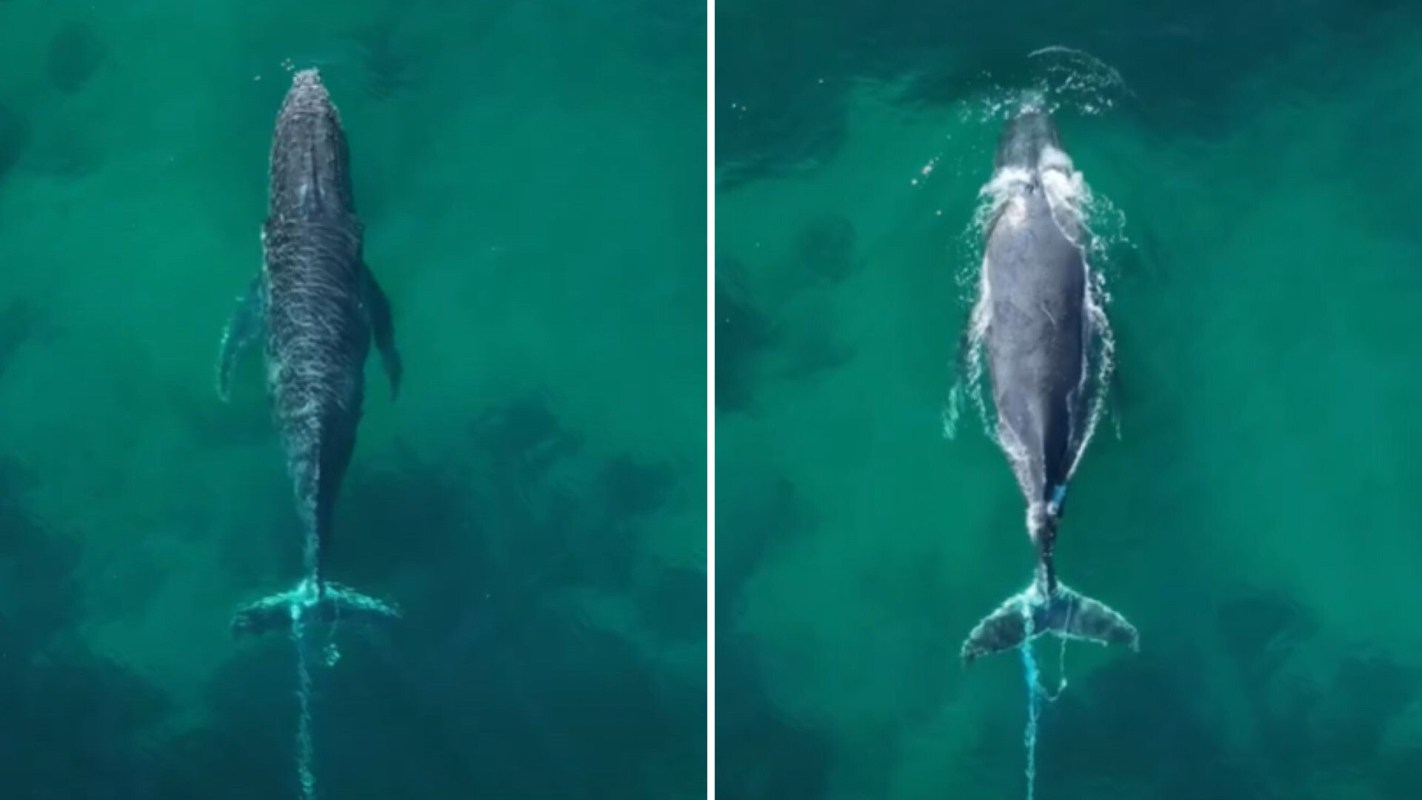
What started as an ordinary drone outing above Forresters Beach on Australia's Central Coast turned into an emergency when one beachgoer realized a humpback whale had its tail caught in something.
Multiple rescue teams then worked within hours to follow the whale, approach it safely, and remove the entanglement so it could keep migrating.
What happened?
A humpback whale swimming near Forresters Beach in New South Wales was found with discarded fishing material wrapped around its tail after a beachgoer noticed the problem in drone footage, per The Dodo.
The drone operator then alerted ORRCA Australia, the Organization for the Rescue and Research of Cetaceans in Australia, and responders began using fresh photos and public sighting updates to work out where the whale was moving.
That information was then shared with other groups involved in the rescue. Marine Rescue NSW followed the whale by boat to maintain visual contact. Even with fishing materials attached, the animal was still swimming freely enough that its movements were hard to anticipate.
After the whale was found and its condition was evaluated, the NSW National Parks Large Whale Disentanglement Team removed the ropes. The whale was freed later the same day it was first reported.
TCD Picks » Quince Spotlight
💡These best-sellers from Quince deliver affordable, sustainable luxury for all




ORRCA later posted about the rescue on Facebook writing, "Thanks to the swift reporting by the public the NSW National Parks Large Whale Disentanglement Team was rapidly deployed."
The group added "In what was an unprecedented day yesterday, four other entangled whales were also reported across the NSW coastline, highlighting the increasing pressure on responders during the humpback migration… Today's rescue is proof that timely reporting can make all the difference."
Why does it matter?
Entanglement is one of the clearest examples of how human waste can directly threaten marine life. Discarded ropes, fishing line, and other gear can cut into animals, restrict movement, and leave them vulnerable to exhaustion, infection, or even drowning.
For humpback whales, those risks are especially serious during migration, when they travel long distances and need to conserve energy. A whale slowed or injured by debris may struggle to feed, avoid danger, or reach breeding grounds.
Healthy whale populations also support ocean ecosystems and help sustain the tourism economies many beach towns depend on. Thankfully, the beachgoer's quick action gave trained teams a chance to intervene before the situation worsened.

Get TCD's free newsletters for easy tips, smart advice, and a chance to earn $5,000 toward home upgrades. To see more stories like this one, change your Google preferences here.







