


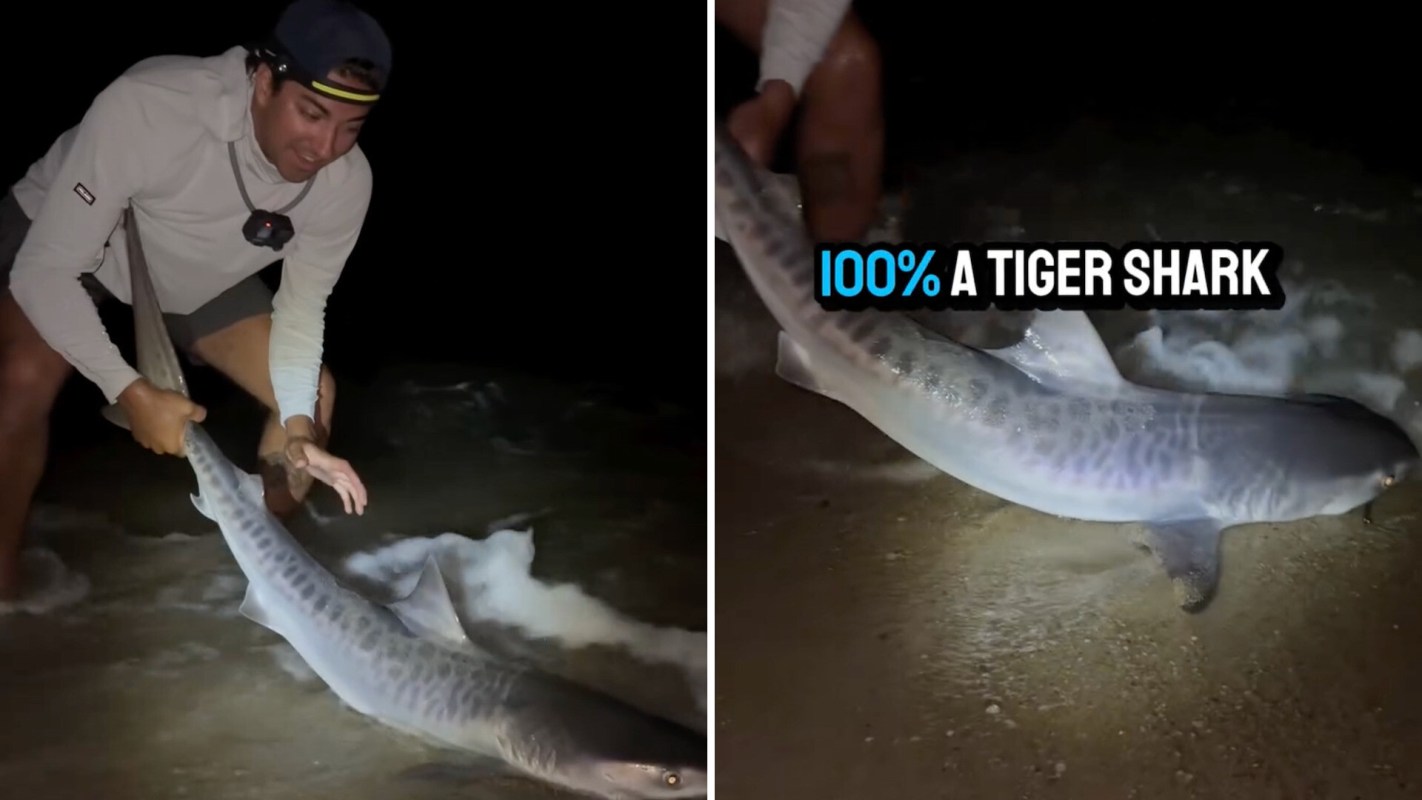
What began as a nighttime search for brown sharks on a Cape Cod beach ended with two Massachusetts anglers bringing in a juvenile tiger shark from the surf instead.
What happened?
Nate Rouette, On The Water's social media manager, went to the beach with his brother Nelson Rouette to fish eels for brown sharks.
According to On The Water, a few missed pickups and a lengthy lull gave way to one last bite that turned into a fish the brothers had never before landed from Cape Cod sand. In the glow of a headlamp, the shark's vertical striping gave it away: It was a juvenile tiger shark, still an uncommon species in New England.
Rouette shared the moment on On The Water's Instagram, showing the shark's iconic stripes glistening in the glow of the flashlight.
The catch was especially notable because it came just days after another report. On The Water said a tiger shark had been seen about three miles off Mashpee's Popponesset Bay eating a leatherback turtle, in what was described as the first sighting near the Cape this season.
Recent summers have brought similar catches from shore. On The Water previously reported a juvenile tiger shark caught from the south side of Cape Cod in August 2024, followed by another in August 2025.
TCD Picks » Quince Spotlight
💡These best-sellers from Quince deliver affordable, sustainable luxury for all




Taken together, those reports suggest the species may be showing up in the area more regularly than it once did.
Why does it matter?
Research cited by On The Water indicates that tiger sharks generally favor waters of around 72 degrees Fahrenheit or warmer, conditions that historically kept them farther south for much of the year.
But NOAA-backed findings highlighted by the outlet show the species is arriving in these waters earlier as ocean warming pushes its seasonal range northward.
Ocean warming is not happening at random. It is closely tied to human activity, particularly the burning of planet-warming fuels like oil, gas, and coal, which traps heat in both the atmosphere and the ocean.
What's being done?
Scientists are already tracking these changes.
NOAA Fisheries and other researchers have spent years documenting how warming on the Northeast Continental Shelf is affecting where marine animals live, feed, and migrate. That kind of monitoring can help communities better understand what species may appear offshore — or even from the beach — during hotter seasons.
On an individual level, the Rouette brothers responded in a way experts generally encourage after an unusual catch. As On The Water described it, they kept the shark wet, freed the hook quickly, snapped a few photos, and let it go.
That helps reduce stress on the animal while still documenting an important sighting. For Rouette, the surprise of the moment was summed up in one line to his brother, Nelson: "It's a Tiger, Nels!"

Get TCD's free newsletters for easy tips, smart advice, and a chance to earn $5,000 toward home upgrades. To see more stories like this one, change your Google preferences here.







