


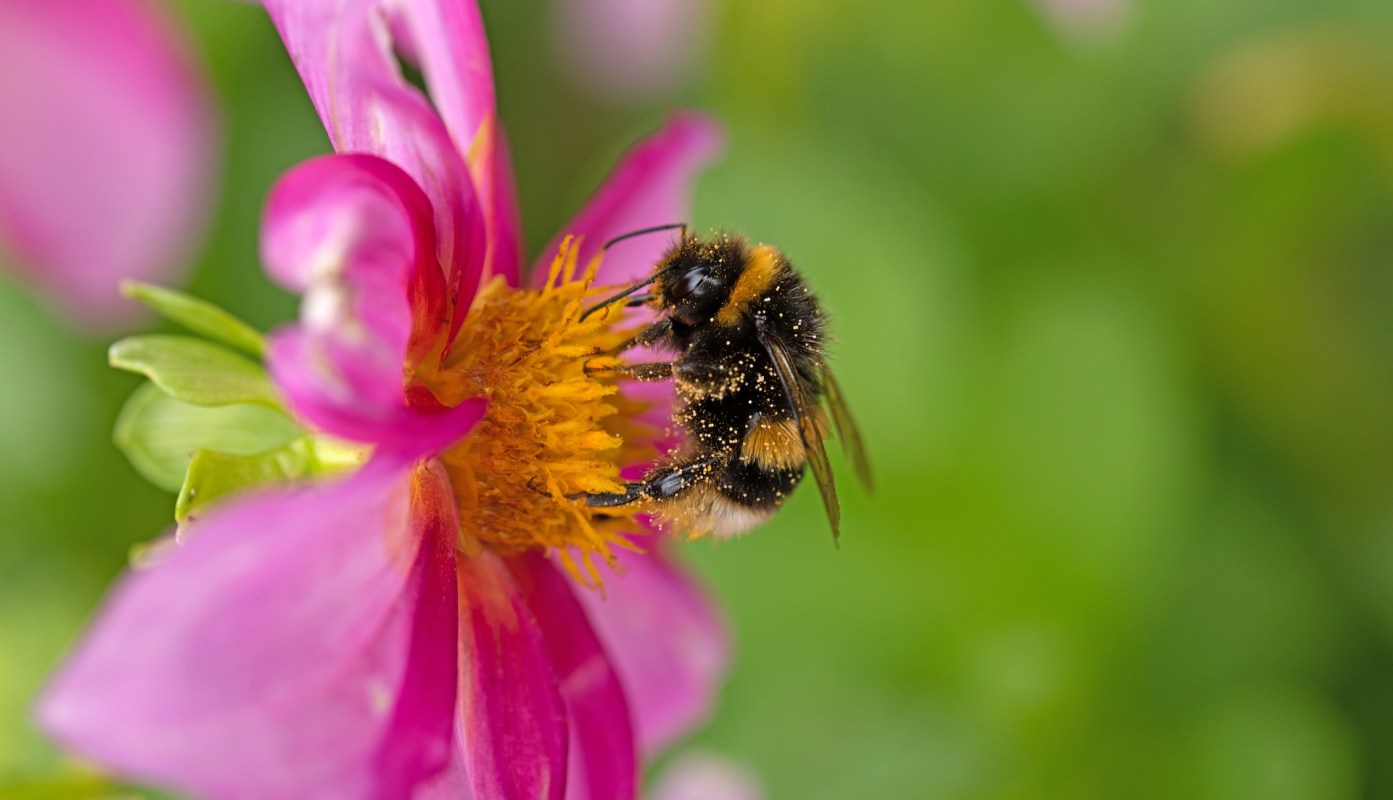
When it comes to yards, some people prefer neatly manicured landscaping while others prefer a messier, more wild look. As it turns out, bees have a preference, too, according to research by the Missouri Botanical Garden.
By studying bee populations in yards around the St. Louis area, the researchers determined that less-tidy gardens supported more bees than heavily landscaped ones.
What's happening?
Beginning in 2020, the project gathered bee photos from hundreds of citizen scientists working in their own gardens. Those participants documented bees every two weeks, and researchers used the images to identify species and track activity over time.
The St. Louis region is home to about 200 native bee species, and, as Fox 2 reported, the study found that many of them were better served by prairie-like and woodland-style gardens.
While bees are most commonly associated with flowers, it turns out blooms are not the only things that bees require from their environment.
According to Webster University Professor Nicole Miller-Struttmann, bees also need places to nest and overwinter, which makes leaves, vegetation, and undisturbed ground just as important as flowers.
TCD Picks » Quince Spotlight
💡These best-sellers from Quince deliver affordable, sustainable luxury for all




Why does it matter?
Maintaining a wide range of different bee species helps ecosystems keep working and supports agricultural practices. Not all bees serve the same ecological function, so diversity matters.
Miller-Struttmann said that 75% of food crops depend on pollination, so declines in pollinators can affect food production, biodiversity, and the health of urban green spaces.
The study also pushes back on the idea that a good yard has to look perfectly trimmed at all times. A more natural landscape can help native bees and potentially other species, as well.
What can I do?
Homeowners can make a difference without overhauling their entire yard at once. Adding more native plants by rewilding your yard, leaving some fallen leaves where they are, upgrading to a natural lawn, and keeping parts of the yard less disturbed can create habitat that many native bees need.
In a city with hundreds of native bee species, small changes across many yards can add up quickly.

Get TCD's free newsletters for easy tips, smart advice, and a chance to earn $5,000 toward home upgrades. To see more stories like this one, change your Google preferences here.






