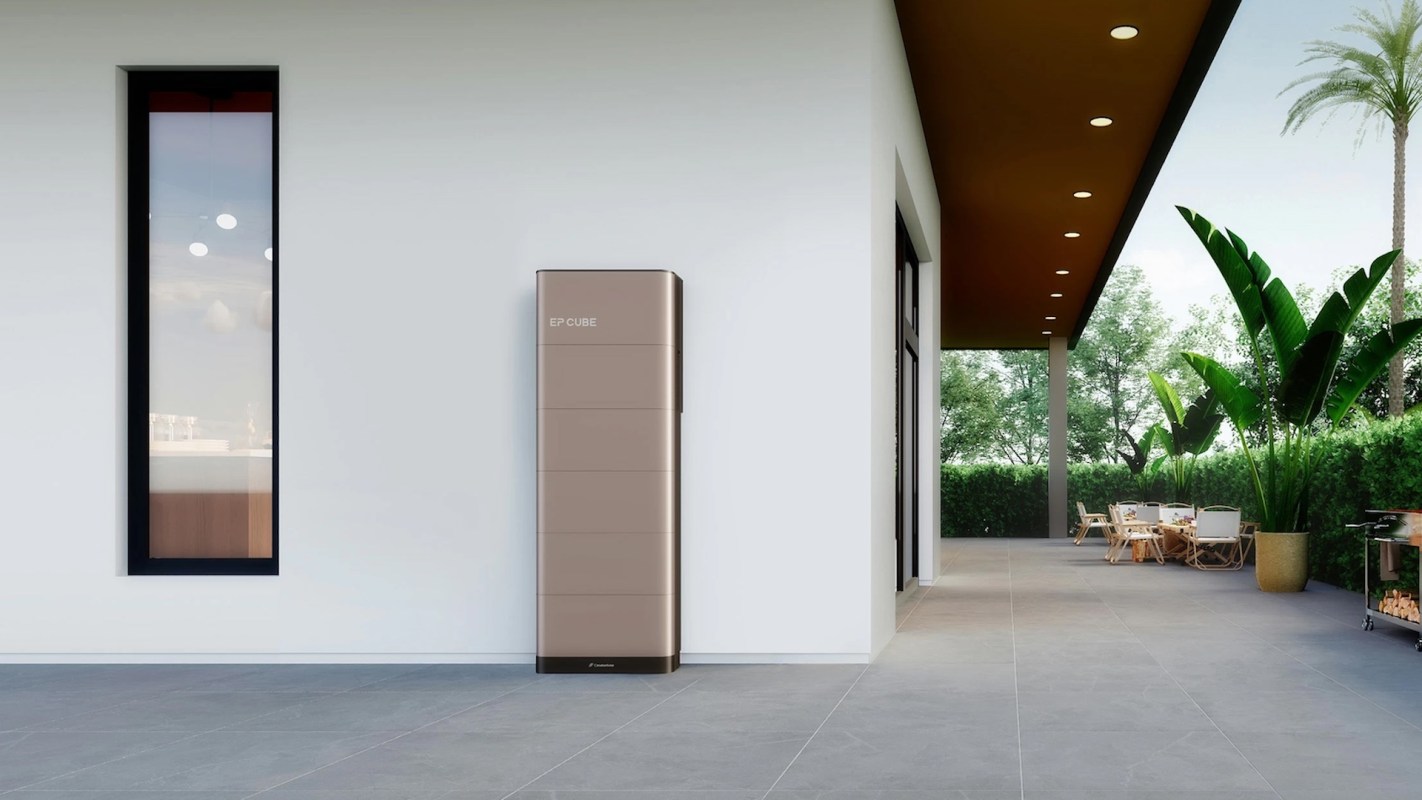
Canadian Solar is expanding its battery lineup with two upgraded EP Cube systems designed to deliver more power, more flexible solar connections, and significantly more storage capacity.
For households worried about rising electricity bills or potential outages, the update suggests a future in which a single system can handle more of the load during both everyday use and emergencies.
What happened?
Chinese-Canadian solar company Canadian Solar has broadened its EP Cube storage platform with a single-phase option for homes and a three-phase version meant for larger residences as well as commercial and industrial use, according to ESS News.
Each battery module in the new EP Cube Single-Phase 2.0 holds 5 kilowatt-hours, and one base can scale up to 40 kilowatt-hours. The system is rated for 10 kilowatts of AC output and 15 kilowatts of DC output, while running two complete units in parallel increases total storage to 80 kilowatt-hours.
In a single stacked setup, the EP Cube Three-Phase Pro spans from 10 kilowatt-hours to 40 kilowatt-hours. Up to five units can also be linked together, allowing for as much as 100 kilowatts of AC output, 120 kilowatts of solar input, and 200 kilowatt-hours of storage.
A company spokesperson said the EP Cube Single-Phase 2.0 system "provides 10 kW AC and 15 kW DC output in a more compact form factor."
TCD Picks » Quince Spotlight
💡These best-sellers from Quince deliver affordable, sustainable luxury for all




Why does it matter?
Battery systems like these can make rooftop solar more practical. Instead of sending excess electricity back to the grid during the day and relying on costly grid power at night, users can store that energy and use it later, potentially lowering monthly electricity bills.
The backup benefits are significant as well. A battery paired with solar can help keep essential appliances running during outages caused by storms, grid strain, or wildfire-related shutoffs. That kind of resilience can be especially important for families that depend on refrigerated medicine, internet access, or home medical equipment.
Homes with more complicated roof layouts may be able to use more of their solar production because, Canadian Solar said, the Single-Phase 2.0 includes four independent maximum power point trackers, or MPPTs. That could help prevent usable energy from going untapped.
For larger buildings, the Three-Phase Pro's higher output and greater storage capacity could help reduce demand charges, support backup planning, and make battery storage more attractive for businesses seeking to better manage energy costs.
What's being done?
Canadian Solar is leaning into a modular approach, meaning buyers do not have to commit to the largest system at the outset. They can start with a smaller setup and add battery modules over time as their energy needs grow, whether that means buying an electric vehicle, adding more appliances, or preparing for more frequent outages.
Both new systems also appear to be designed for outdoor use, with weather-resistant protection ratings on the inverter and battery stack. That could give installers and property owners more flexibility when indoor space is limited.
According to ESS News, the Three-Phase Pro folds backup capability into the inverter and does not need a separate smart gateway. That could simplify installations and reduce hardware complexity for larger properties.
Unlike many competing systems, the spokesperson said the upgraded single-phase unit has "four independent MPPTs, enabling greater design flexibility for complex roof configurations and improving energy harvest under shaded conditions."

Get TCD's free newsletters for easy tips, smart advice, and a chance to earn $5,000 toward home upgrades. To see more stories like this one, change your Google preferences here.