


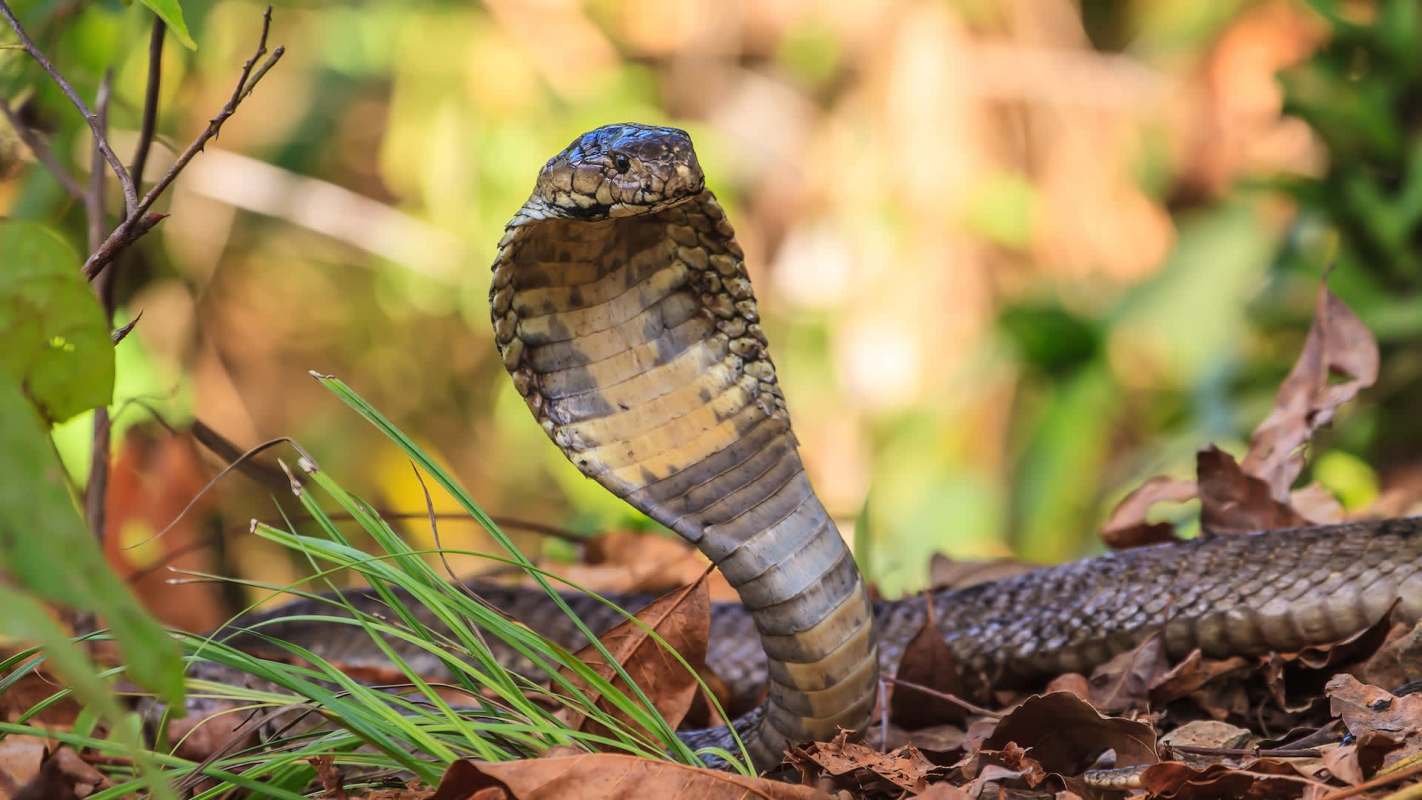
While collecting mushrooms in a community forest in Nepal, local forest users came across the unusual sight of a rare king cobra nest.
The discovery stands out for two reasons: King cobras are considered vulnerable, and they are the only snakes known to build nests.
What happened?
According to The Rising Nepal, community forest chairman Bhandari said community forest users found the nest on July 15 near Jhakri Sota in the Ambe Community Forest of Ghorahi Sub-Metropolitan City-18 while they were searching for mushrooms.
Bhandari said the site was secured after the nest was found with help from snake rescuer and conservationist Kuldeep Neupane, who has been involved in snake rescue and conservation work in the area for the past four years.
Since the discovery, access to the nesting site has been limited, and local residents have been stopped from collecting grass, firewood, and mushrooms in the surrounding area.
Om Bahadur Oli, acting chief of the Division Forest Office in Dang, said officials are watching the area more closely and coordinating with the community forest users' committee to keep it protected. Neupane has also continued to inspect the nest regularly.
TCD Picks » Quince Spotlight
💡These best-sellers from Quince deliver affordable, sustainable luxury for all




Snake researcher and conservationist Basanta Subedi said female king cobras make nests from dry leaves and other vegetation, then remain with them until the eggs hatch.
A female king cobra generally lays 30 to 40 eggs, which hatch in two to three months. The species can grow longer than 18 feet (5.5 meters) and is recognized as the world's longest venomous snake.
Why does it matter?
By feeding on both venomous and nonvenomous snakes, king cobras help support ecological balance.
Subedi said that if king cobra populations fall, other venomous snakes could become more common, potentially leading to more snakebite cases.
The discovery highlights the growing overlap between people and wildlife. In this case, people searching for food in a community forest came upon a nesting site in an area also used to collect grass and firewood.
A king cobra nest near a frequently used forest area can be dangerous if people unknowingly get too close, especially when a female is guarding eggs.
Subedi also said that Nepal protects pythons but does not list king cobras among the country's protected species despite their vulnerable status.
What's being done?
The immediate response has focused on giving the nest space.
The Division Forest Office has increased monitoring of the area and is working with the local forest users' committee to protect it.
The office also keeps venomous snakes that rescuers remove from places near human settlements for conservation.
Neupane said he has rescued and conserved around 3,000 venomous and nonvenomous snakes in the area.
He also said he has relocated king cobras three times after they entered homes in the Rampur and Balrampur areas of Ghorahi-2.

Get TCD's free newsletters for easy tips, smart advice, and a chance to earn $5,000 toward home upgrades. To see more stories like this one, change your Google preferences here.






