


A routine dog walk in Bend, Oregon, evolved into an overnight search and a cliffside emergency — all thanks to a weak leash.
Luckily, the dog wasn't injured and was able to return home safely.
What happened?
The dog, Maverick, broke off his leash during a walk in early June. His owner spent the night looking for him, and finally spotted him on a cliff before calling for help, according to the Bend Fire and Rescue's Instagram post.
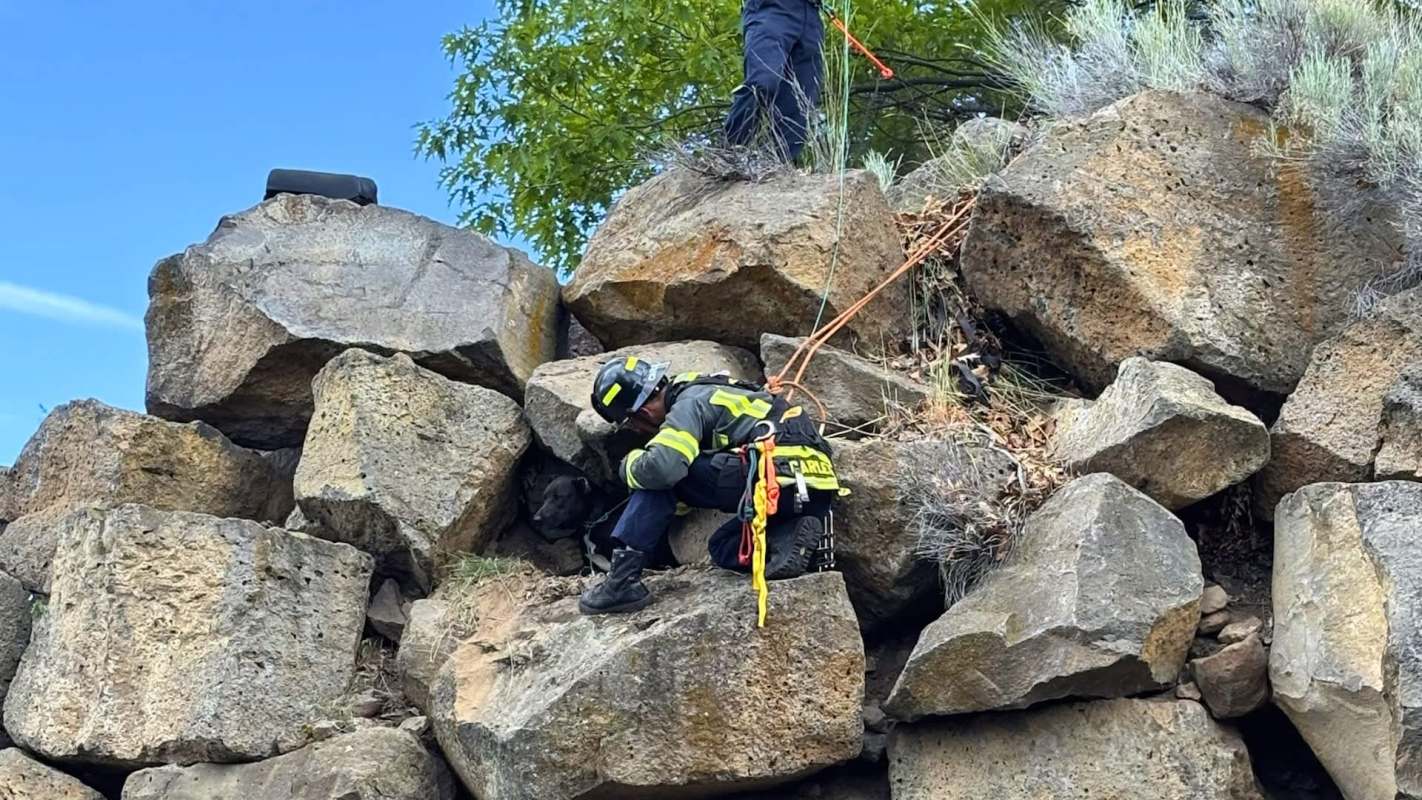
When firefighters reached the area, they saw that the black dog had wedged himself into a recessed spot along a slim ledge, the agency told Central Oregon Daily. He was positioned roughly 10 feet below the cliff top and about 25 feet above the ground, which made him both tough to spot and difficult to access.
Responders set up rope gear suited for steep terrain and lowered a firefighter down to where Maverick was sheltering. Once the dog was attached to a leash, firefighters carefully encouraged him out of the recessed area until he could climb back up to the top on his own.
Why does it matter?
A broken leash can quickly turn into a rescue situation with real risks. Outdoor recreation areas can include rocky drop-offs, uneven ground, and limited visibility.
TCD Picks » Quince Spotlight
💡These best-sellers from Quince deliver affordable, sustainable luxury for all




Pets can panic, bolt, or wedge themselves into spaces that owners simply cannot reach on their own.
Specialized rope rescues require training, coordination, and equipment, and they can make the difference between a successful recovery and a tragic outcome.
What's being done?
In this case, the immediate solution was a technical rescue carried out by Bend Fire and Rescue. Rather than trying to force the dog out of a precarious spot, firefighters used equipment designed for steep-angle operations and took a controlled approach.
Improvised rescue attempts can put both pets and owners in greater danger. When an animal is stranded on unstable terrain, calling trained responders may be the safest option, especially if cliffs, ravines, or fast-moving water are involved.
Checking leashes, harnesses, and clips before heading out can reduce the odds of equipment failure. In rugged areas, a well-fitted harness may offer more security than relying on a collar alone.
It can also help to keep pets close in unfamiliar terrain, carry updated identification, and resist the urge to climb after a frightened animal in a risky area.
"We recognize that animals are family, and we treat them as patients with the same care, compassion, and professionalism we provide to all those we serve," Bend Fire and Rescue wrote.

Get TCD's free newsletters for easy tips, smart advice, and a chance to earn $5,000 toward home upgrades. To see more stories like this one, change your Google preferences here.







