


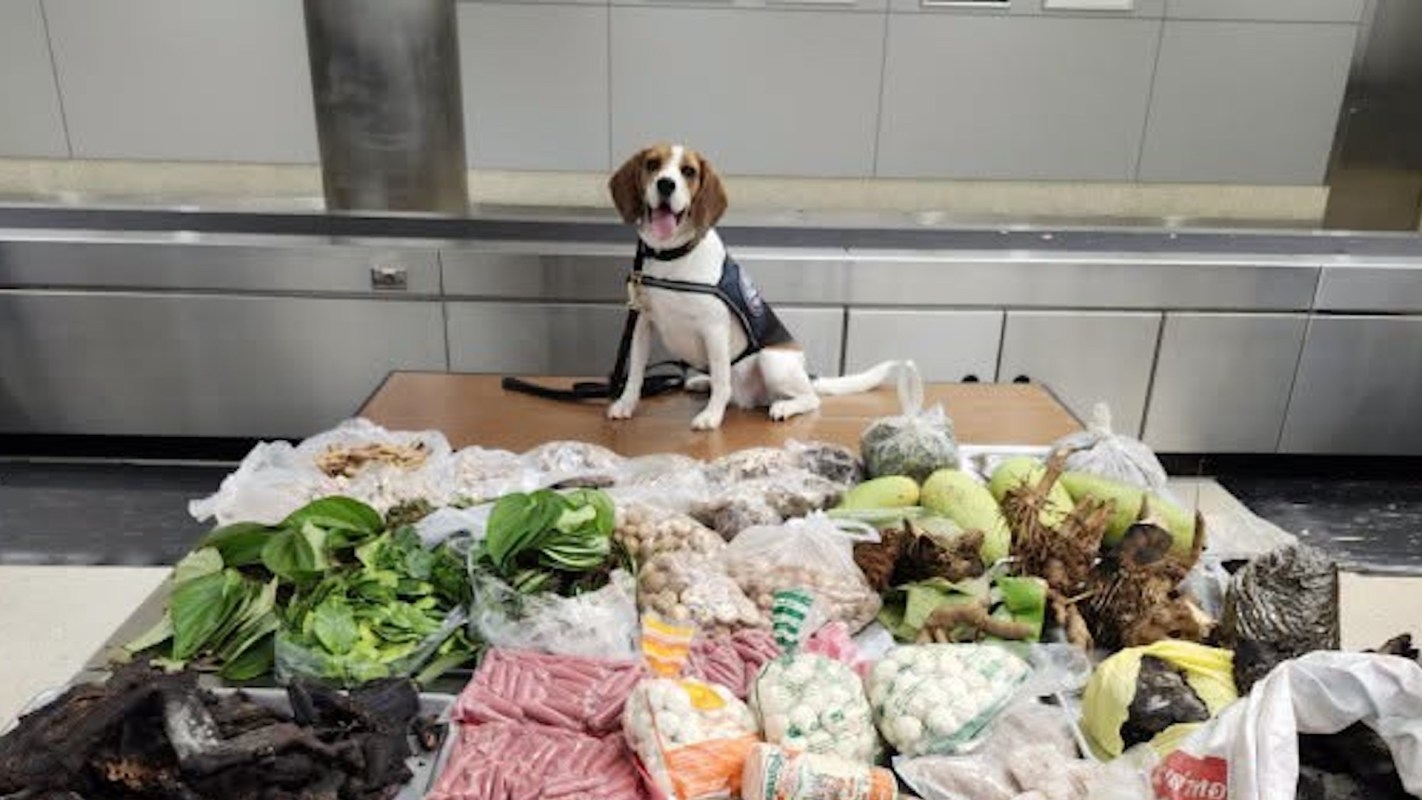
After K9 Maisy alerted officers to a suitcase arriving from Thailand at a Los Angeles Port of Entry, U.S. Customs and Border Protection uncovered wildlife parts, raw meat, and plant materials packed inside — a stark reminder of the kinds of threats border officers are tasked with stopping.
What happened?
Authorities released a photo of K9 Maisy with the seized goods and said everything had been stuffed into one suitcase at the Los Angeles Port of Entry, according to KTLA.
CBP said the traveler was trying to bring the items into Los Angeles from Thailand, and the Bengal monitor lizard remains were later taken by the U.S. Fish and Wildlife Service.
Another border bust in California involved officials at the San Ysidro crossing in San Diego County intercepting hundreds of fish fillets that three people were trying to bring back after a fishing trip.
In that case, the California Department of Fish and Wildlife said, "The officers located two large coolers that contained approximately 436 fish of a variety of species including rockfish, lingcod, sheephead, and yellowtail."
Why does it matter?
Wildlife parts, raw meat, and live plant materials can pose risks to ecosystems, agriculture, and public health when they cross borders without inspection.
TCD Picks » Quince Spotlight
💡These best-sellers from Quince deliver affordable, sustainable luxury for all




The illegal wildlife trade also places added pressure on species already dealing with habitat loss and other human-driven threats.
The fish case also shows the issue is not limited to one airport or one traveler. Mexico caps licensed fishermen at 20 pounds of fish per person, and California officials said the three suspects lacked valid fishing licenses there.
Authorities further alleged that the catch was not intended for personal use. The evidence suggested the fish were being brought back for sale.
What's being done?
In Los Angeles, CBP and K9 Maisy flagged the suitcase, and the lizard remains were then taken into custody by the U.S. Fish and Wildlife Service.
At the border in San Diego County, the entire catch was held as evidence. Criminal charges have been filed against the suspects for unlawful take, lack of valid fishing licenses, and bringing fish into the United States illegally.
"With the information obtained and the evidence identified, the team of state and federal officers determined the subjects were involved in selling the catch they were bringing back to the United States," CDFW officials said.

Get TCD's free newsletters for easy tips, smart advice, and a chance to earn $5,000 toward home upgrades. To see more stories like this one, change your Google preferences here.







