


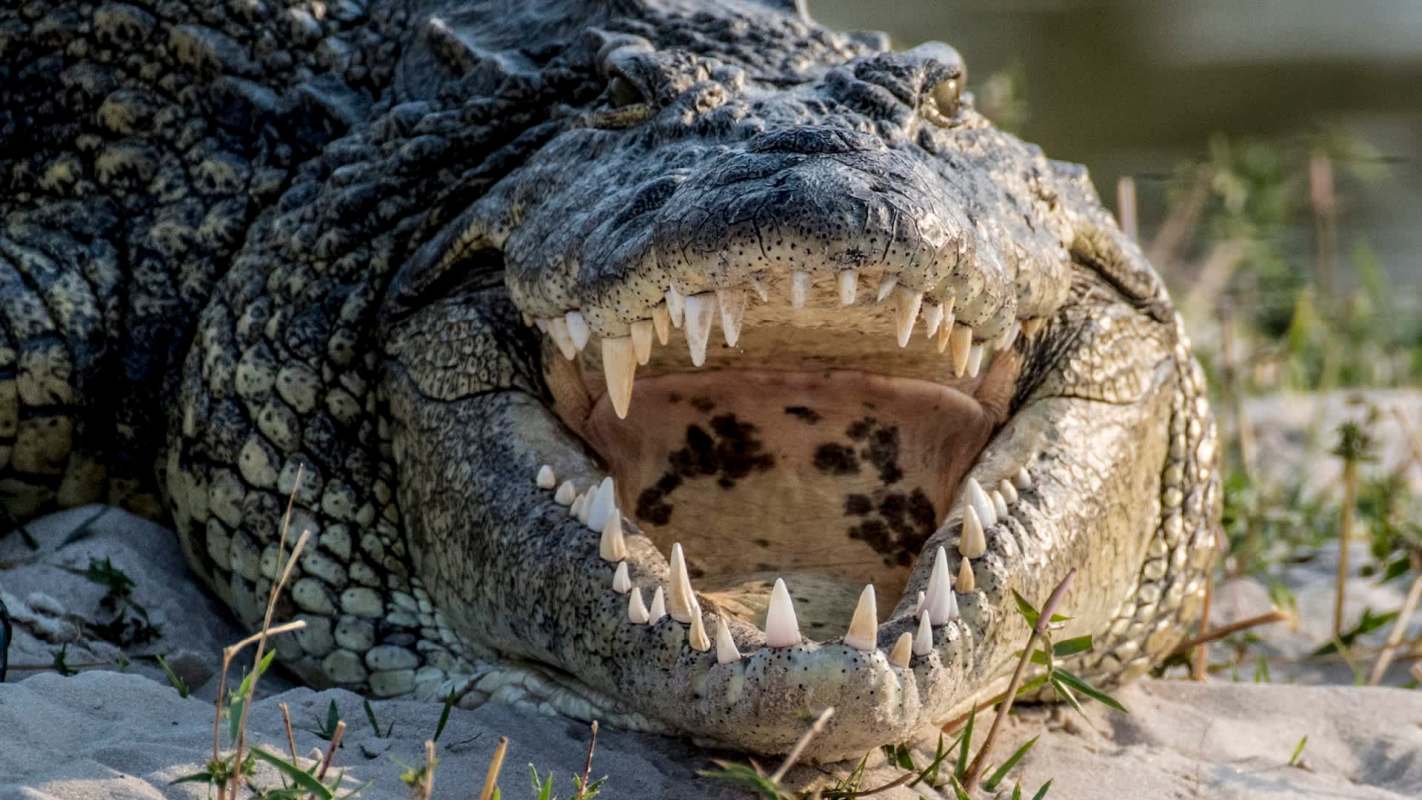
A camera mounted on an adult Nile crocodile in Uganda captured a scene that may look unnerving at first glance. The massive reptile was filmed gently carrying a cluster of newly hatched babies inside its jaws.
While Nile crocs are almost always associated with danger or killing, this clip instead captured more nurturing behavior.
What happened?
A wildlife filmmaker strapped a camera to the croc near Murchison Falls in Masindi, and the resulting video shows it moving hatchlings away from the nest after they called out from inside it.
As Discover Wildlife reported, this post-hatching care is provided by both male and female Nile crocodiles. The outlet also shared footage of the croc carrying a baby in its jaws.
At just 12 inches long, the babies are tiny beside an adult and are particularly at risk during their first days of life. Because birds, fish, and even other crocodiles may prey on them, the parents sometimes carry many hatchlings at once, taking them toward the shoreline or a protected nursery pool.
What seems risky is actually a form of protection. Inside the adult's mouth, the young are cushioned and carried carefully rather than crushed. For several weeks afterward, crocodile parents remain nearby and defend the hatchlings aggressively from danger.
TCD Picks » Quince Spotlight
💡These best-sellers from Quince deliver affordable, sustainable luxury for all




By attaching a camera to this crocodile, the filmmaker captured a close-up view of behavior that is rarely seen from this angle. Wildlife filmmakers, researchers, and conservation groups continue to use new tools to document animal behavior without relying solely on distant observation.
Camera technology can reveal how species raise their young, hunt, migrate, and respond to environmental change, offering insights that can improve habitat protection and public education.
Why does it matter?
Footage like this broadens the usual image of Nile crocodiles as purely dangerous animals by showing how carefully they look after their young at a crucial stage.
When wildlife is seen only as a threat, support for protecting species and the habitats they depend on can weaken.
At the same time, human expansion into waterways and riverside habitats can increase contact between people and large predators such as crocodiles. Many dangerous encounters are influenced by habitat pressures and increasing overlap between wildlife and human activity, as explored by the BBC.
In places where crocodiles are present, following local safety guidance around rivers and shorelines is essential, especially during breeding and nesting periods, when adults may be more defensive. Respecting buffer zones and avoiding known nesting areas can help reduce conflict, too.

Get TCD's free newsletters for easy tips, smart advice, and a chance to earn $5,000 toward home upgrades. To see more stories like this one, change your Google preferences here.







