


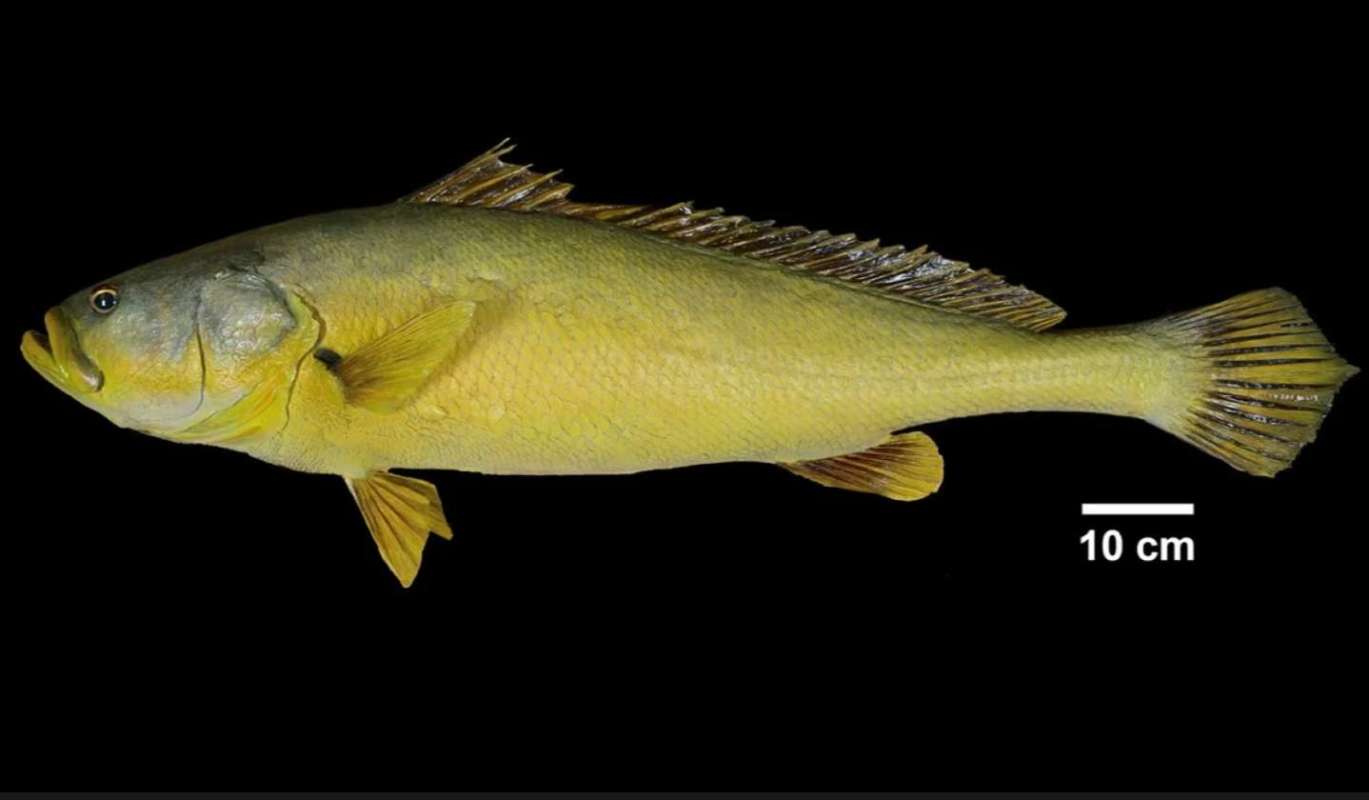
More than 10 years after its last recorded appearance in Hong Kong waters, the critically endangered Chinese bahaba, nicknamed the "Panda of the Sea," has been identified again through a newly developed method.
What happened?
According to Asia Research News, a Lingnan University-led research team created a lower-cost environmental DNA (eDNA) monitoring method for the Chinese bahaba. The fish is native only to China's coast, is listed as critically endangered, and is one of the few marine species given first-class wild-animal protection in China.
From January to September 2025, the team sampled 23 locations across western Hong Kong waters. Researchers gathered three 33.8-fluid-ounce (1-liter) seawater samples at every site, for a total of 414 samples, and included sterile controls to help prevent contamination.
In September, Chinese bahaba eDNA turned up at four sites: Tai O, Sha Chau and Lung Kwu Chau Marine Park, Southwest Lantau Marine Park, and Sunny Bay near The Brothers Marine Park. Tai O stood out with both the highest concentration of eDNA and the most frequent detections.
Chi-Ho Ip, an assistant professor in Lingnan University's Division of Science, commented on the finding: "There has been no recorded occurrence of the Chinese bahaba in Hong Kong SAR waters for more than a decade.
"Given the species' extreme rarity, the chance of encountering it through conventional survey methods is exceptionally low, making it difficult to understand its distribution."
TCD Picks » Quince Spotlight
💡These best-sellers from Quince deliver affordable, sustainable luxury for all




Why does it matter?
The Chinese bahaba, which can reach 6.6 feet (2 meters) in length, was once common around Tai O and locally known as the "Tai O fish." Its population later collapsed after heavy overfishing driven by the high medicinal value of its swim bladder.
Signs that rare fish may be returning can give officials useful information for managing marine parks, fisheries, and restoration projects in ways that support both environmental and economic stability.
The result also underscores the value of newer scientific methods that can aid conservation without adding stress to marine ecosystems. Conventional fish surveys often depend on trawling or capture techniques, which can disturb other sea life and damage seabed habitats.
A noninvasive approach like eDNA, by comparison, lets scientists watch for possible recovery while minimizing disruption to the surrounding environment.
What's being done?
To build the detection system, researchers analyzed the Chinese bahaba's mitochondrial genome and designed a highly sensitive qPCR test able to pick up tiny amounts of DNA in seawater, including traces from mucus or feces. Laboratory validation showed the test could distinguish the species from other fish even when DNA levels were extremely low.
The September detections followed the August 2025 release of about 1,300 hatchery-reared juvenile Chinese bahaba into the Pearl River Estuary. The findings suggest some of those juveniles may have reached western Hong Kong waters, giving conservationists an early indication of movement and survival.
As Ip explained, "the greatest advantage of eDNA technology lies in its non-invasive nature. It enables scientists to confirm the presence of a species without capturing or disturbing individual fish."
He added that if even "a tiny amount of eDNA" is left behind, "its presence can be accurately determined."

Get TCD's free newsletters for easy tips, smart advice, and a chance to earn $5,000 toward home upgrades. To see more stories like this one, change your Google preferences here.






