


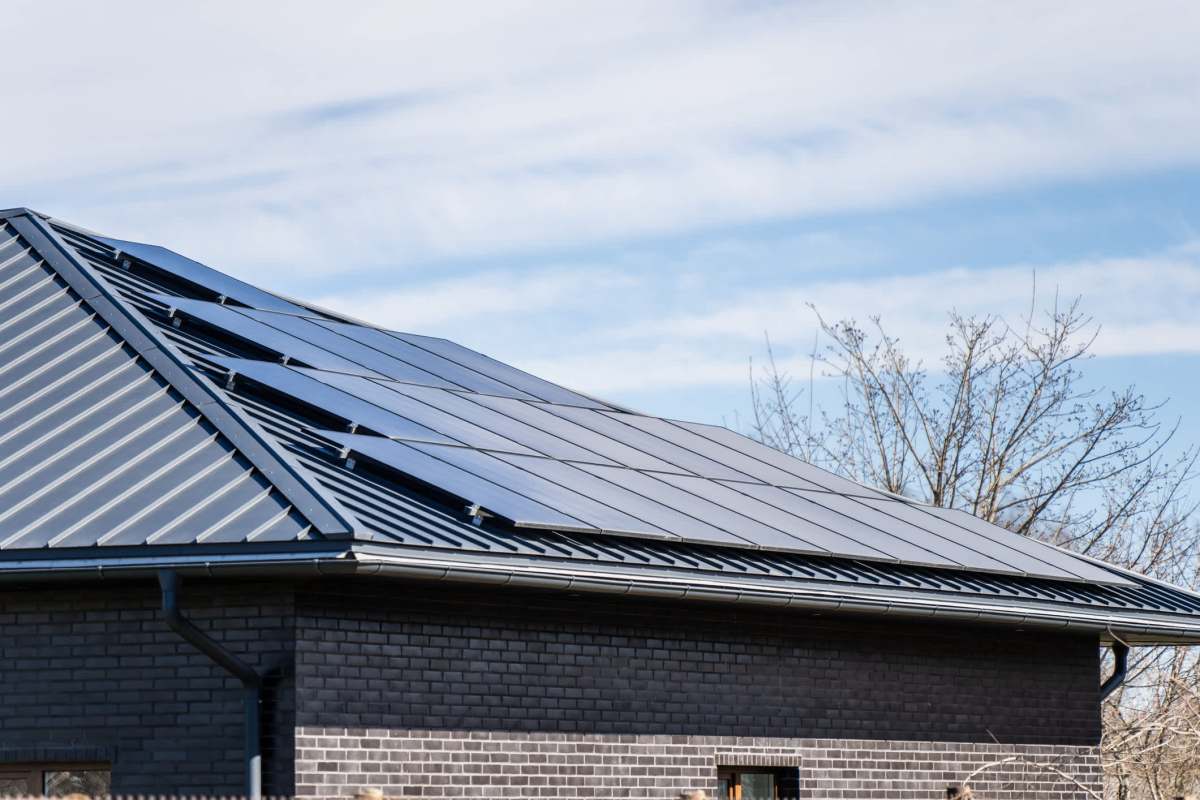
Installing solar panels on a standing-seam metal roof could be one of the smartest long-term home energy moves homeowners overlook.
That is because the roof itself may last long enough to avoid one of solar's most underestimated expenses: paying to remove and reinstall panels during a reroofing job.
What's happening?
There are different types of standing-seam metal roofs, but as Sheffield Metals International explains, a standing-seam metal roof is "defined as a concealed fastener metal panel system" with vertical legs and a "broad, flat area between the two legs."
These types of roofs are gaining popularity due to their longevity, and a Reddit user argued that standing-seam metal roofs and solar panels make an especially strong match.
"Have a standing seam metal roof? Solar is a no-brainer," the original poster wrote in r/solar. They added that a roof's durability is a major part of the equation because solar output declines slowly over time, with solar panels degrading "very linearly at .5% per year."
Some pushed back on the latter notion. One commenter argued that "solar panels degrade at much less than that," while others noted that the method of installation would impact degradation rates.
Still, it was hard to deny the homeowner's point that a standing-seam metal roof's longevity — around 50-70 years — could result in a significant return on a solar investment.
"One of the best home improvement plans ever," one commenter remarked. "An architect friend of mine said 'the roof will be your kids problem' (because it's gonna last so long)."
Save $10,000 on solar panels without even sharing your phone number Want to go solar but not sure who to trust? EnergySage has your back with free and transparent quotes from fully vetted providers that can help you save as much as $10k on installation. To get started, just answer a few questions about your home — no phone number required. Within a day or two, EnergySage will email you the best local options for your needs, and their expert advisers can help you compare quotes and pick a winner. |

"I put panels on a clipped standing seam roof with no exposed fasteners. Best move i ever made," another echoed.
Why does it matter?
All in all, going solar is one of the best ways to save money on home energy, especially if you can avoid extra installation and maintenance costs. Homeowners who want to size up the opportunity can use EnergySage to get quick solar installation estimates and compare quotes for free.
One expense that can reshape the value of a solar installation, however, has nothing to do with the panels themselves. If a shingle roof needs to be replaced while the solar system still has useful life left, the cost of taking the array down and reinstalling it afterward can cut into the savings.
"I don't see this talked about enough," the original poster said. When the roof lasts longer than the array above it, homeowners may be able to avoid that extra labor cost entirely.
More From EnergySage
💡Go deep on the latest news and trends shaping the residential solar landscape

"When you factor-in a 4% compounding cost of electricity from the utility, your system will pay for itself 4-10x over depending on your utility rates and net-metering policy," they argued.
What can I do?
Free comparison tools, like those from EnergySage, can help demystify the solar installation process. You can also check out EnergySage's solar map, which breaks down the average cost of solar in each state and available state-by-state incentives. Together, these resources can help homeowners get the best price for rooftop solar panels and access available incentives.
Adding battery storage to a solar setup is also one of the best ways to protect your home during outages, save money on energy, and go off-grid. Homeowners interested in backup power can explore EnergySage for information about home battery storage options, including competitive installation estimates.

Get TCD's free newsletters for easy tips, smart advice, and a chance to earn $5,000 toward home upgrades. To see more stories like this one, change your Google preferences here.






