


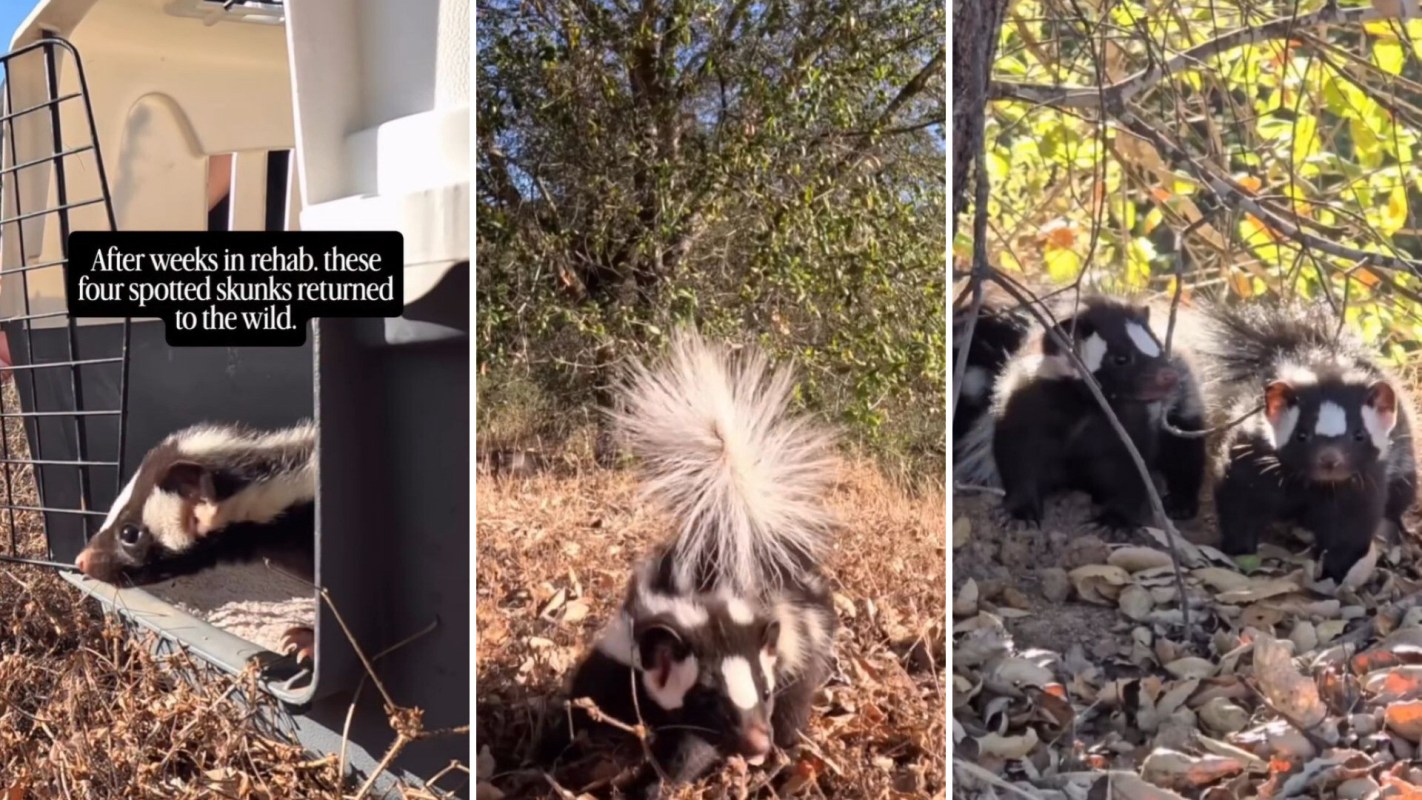
After several weeks of rehabilitation and social development at the San Diego Humane Society's Ramona Wildlife Center, four rare western spotted skunks have been returned to the wild, the organization said.
What happened?
According to a report from KPBS, in Valley Center, the San Diego Humane Society released the four western spotted skunks at a remote site after staff said they had met the size and developmental markers needed to live independently.
At the Ramona Wildlife Center, staff cared for the animals and encouraged socialization while preparing them for release without compromising their wild behavior.
One of the orphans came from Sierra Wildlife Rescue in Northern California and was moved more than 400 miles by Flying Tails Animal Rescue so it could join the other orphaned spotted skunks in Ramona, according to the San Diego Humane Society and as reported by KPBS.
The San Diego Humane Society said the center usually sees hundreds of striped skunks each year, making the arrival of six western spotted skunks from separate litters in one season unusual.
As Autumn Welch, wildlife operations manager at the Ramona Wildlife Center, told KPBS: "We have never seen this many western spotted skunks in a single season before."
TCD Picks » Quince Spotlight
💡These best-sellers from Quince deliver affordable, sustainable luxury for all




Two of the spotted skunks are still in care. According to wildlife officials, the smallest was placed in an outdoor pre-release habitat with a somewhat older skunk in late June so both can continue developing before their expected release in the coming month or two.
Their recovery also requires more than food and shelter. For orphaned wild animals, socialization with their own species can be essential to keeping them wild.
KPBS reported that during rehabilitation at the Ramona center, the skunks bonded and spent time exploring their enclosure, digging and sleeping together. Officials said those behaviors help keep the animals from becoming habituated to people while strengthening the natural skills they need to survive on their own.
What's being done?
Staff waited to release the skunks until the animals were physically ready and an appropriate site had been selected.
Finding secluded release areas is especially important for western spotted skunks because they are more reclusive than striped skunks. Wildlife officials said the same approach is now being used for the two skunks still in care.
By housing the younger skunk with a slightly older companion in a pre-release habitat, the team is giving it a chance to learn from another skunk instead of becoming dependent on people.

Get TCD's free newsletters for easy tips, smart advice, and a chance to earn $5,000 toward home upgrades. To see more stories like this one, change your Google preferences here.







