


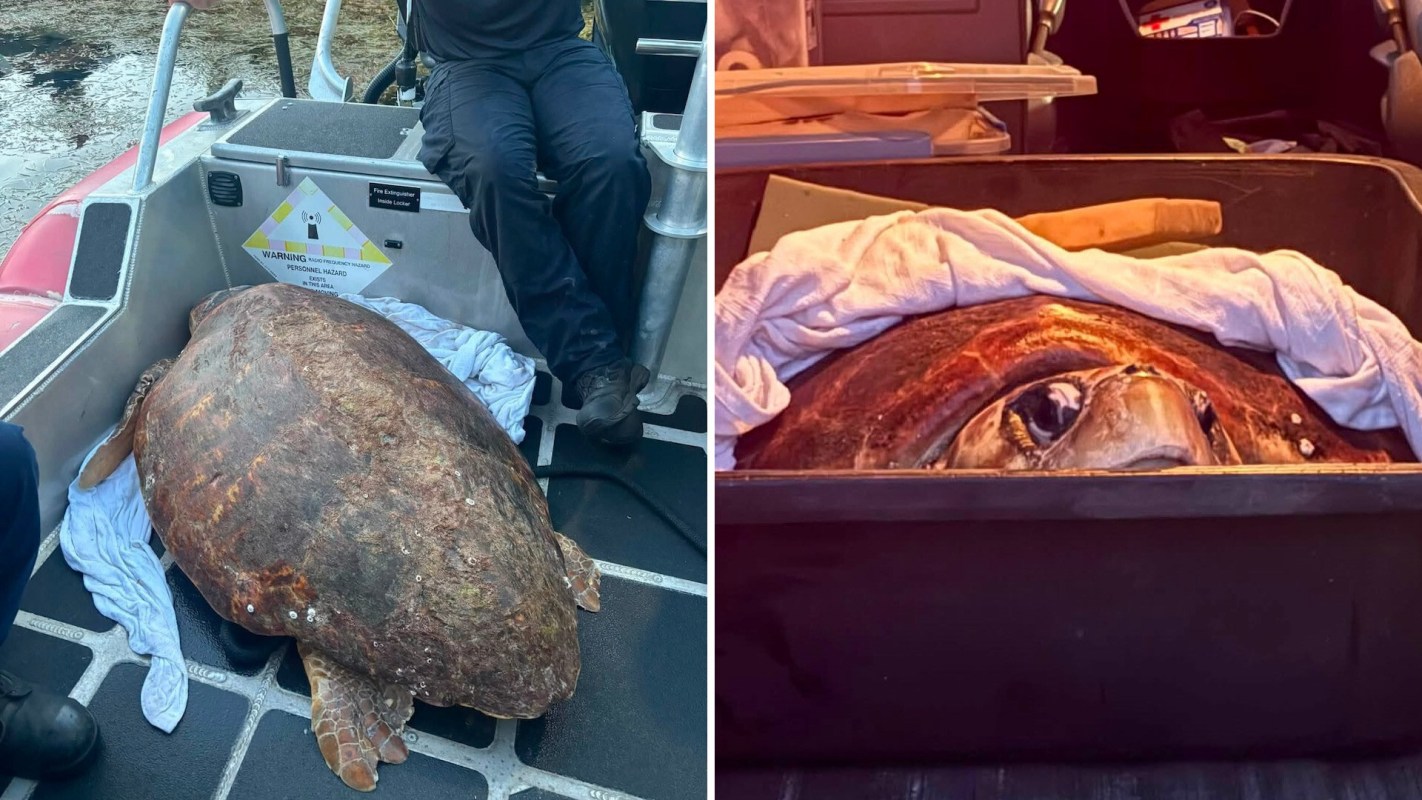
An urgent wildlife response is underway in the Lower Florida Keys after the Coast Guard saved a massive loggerhead sea turtle, giving the animal a second chance.
Crews brought the female turtle named Timmy in for treatment after spotting her struggling near the surface and moving erratically.
What happened?
The Turtle Hospital in Marathon received Timmy after a weekend recovery operation conducted with Coast Guard Station Key West. In a statement posted on X and cited by Fox 35 Orlando, the agency said crews found her about seven miles south of Sugarloaf Key and brought her safely ashore.
Hospital staff said Timmy is one of the largest loggerhead sea turtles the facility has treated in its 40-year history. Staff put her age at 70 to 80 years old, and she weighed just under 300 pounds.
After she arrived at the hospital, Timmy was given fluids and broad-spectrum antibiotics. Staff also performed an in-house blood chemistry test, collected blood plasma to screen for biotoxins, and sent additional blood samples to a university lab for culture testing.
She has adjusted well to her hospital tank and had a stronger appetite than when she first came in, finishing everything the staff gave to her. Bette Zirkelbach, general manager of The Turtle Hospital, said in a statement: "We are cautiously optimistic that Timmy will make a full recovery and return to the wild."
TCD Picks » Quince Spotlight
💡These best-sellers from Quince deliver affordable, sustainable luxury for all




Why does it matter?
Large, older sea turtles play an important role in marine ecosystems, and the survival of breeding-age females helps support future sea turtle populations.
A turtle floating at the surface and moving abnormally may be dealing with illness, injury, toxins, or another serious condition that requires specialized care.
For coastal communities, healthy sea turtle populations are closely linked to healthy oceans. Sea turtles are part of the broader balance of marine life that supports everything from seagrass habitats to coastal tourism and local wildlife viewing. However, these animals have faced various threats, including ones influenced by humans, such as trash improperly discarded into the ocean, causing them to be at risk of getting tangled up in objects such as old fishing nets.
Wildlife responses often depend on different agencies working together. Without the teamwork of the Coast Guard and rehabilitation experts, a turtle this large and medically fragile would have had fewer chances of getting the care she needed.
What's being done?
Timmy remains under close observation at The Turtle Hospital, which has treated more than 3,000 sea turtles since opening in 1986. The facility focuses on rehabilitating sick or injured animals so they can eventually be released back into the wild.
Her treatment is ongoing. In addition to follow-up blood chemistry testing, staff plan to monitor her behavior over the next several days and determine whether her condition continues to stabilize.
One of the next major steps will be testing her in the hospital's 160,000-gallon pool. That deeper-water assessment should help staff evaluate how well Timmy is navigating and whether she is regaining more normal strength and coordination.
"She has settled down in her hospital tank, is exhibiting more normal sea turtle behavior," Zirkelbach said. "She also defecated, which is a wonderful sign that her digestive system is working properly."

Get TCD's free newsletters for easy tips, smart advice, and a chance to earn $5,000 toward home upgrades. To see more stories like this one, change your Google preferences here.







