A new product from APsystems could make small-scale solar easier to try.
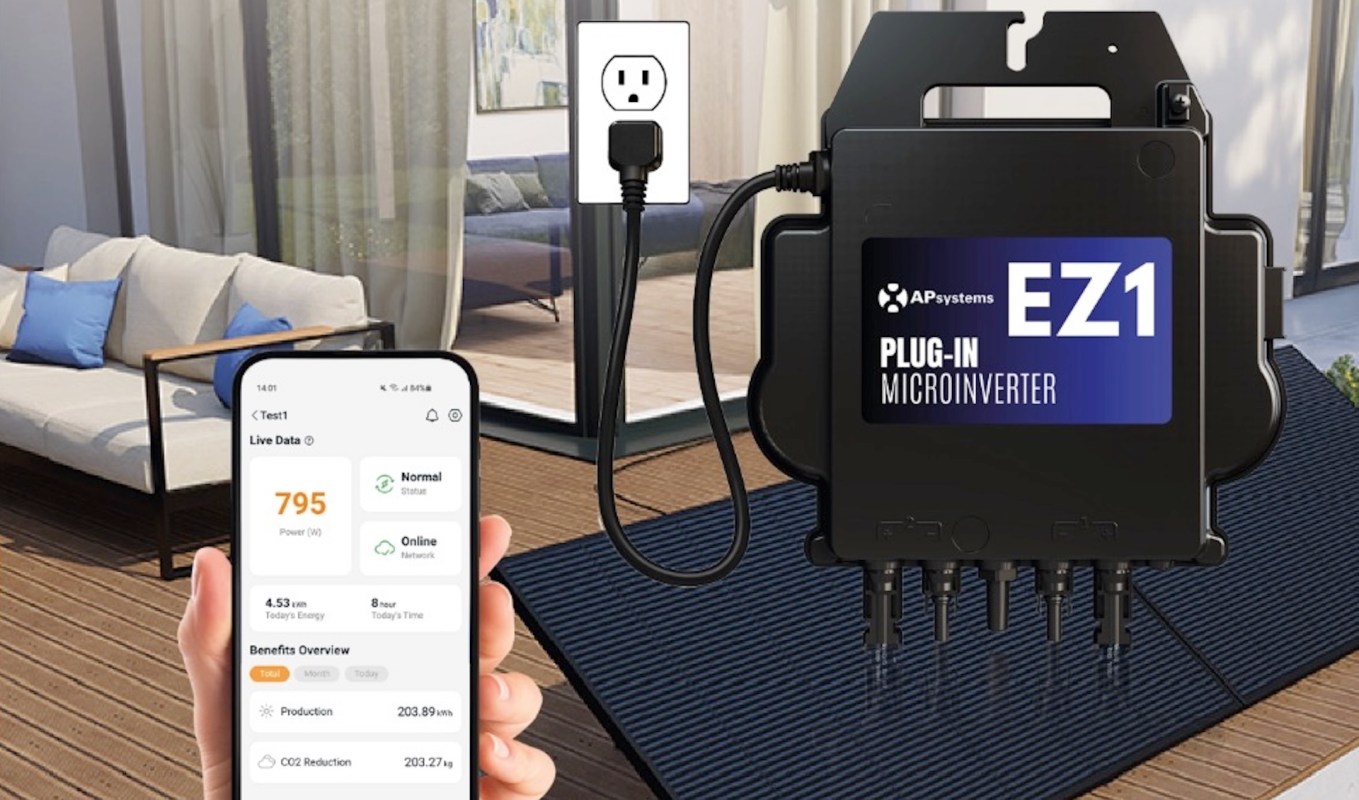
The company has introduced a microinverter for DIY and balcony-style systems that can connect to a regular household outlet.
For renters and homeowners, that could reduce some of the usual cost and hassle involved in producing electricity at home.
What's happening?
According to PV magazine, APsystems has released the EZ1-LV, a third-generation microinverter built for two-panel setups in spaces such as balconies, gardens, garages, and carports.
Rather than depending on a hardwired electrical connection, the system can be used with an optional 16 AWG, 5-meter AC extension cable and a standard 120-volt plug that fits a typical home outlet.
APsystems says the product is intended for smaller, decentralized solar installations instead of conventional rooftop arrays. It can work with two solar panels and supply up to 900 VA of continuous output.
TCD Picks » Good Store Spotlight
Get 10% off your next purchase with code TCD10


To accommodate newer, larger-format panels, each input channel can handle as much as 18 amps, and the suggested module range spans from 315 watts to more than 660 watts. Separate maximum power point tracking for each panel is included to help improve energy production.
Users can check performance nearby through Bluetooth or remotely through the built-in Wi-Fi using the AP EasyPower app, which supports monitoring up to four units at a time.
Why does it matter?
One of the biggest barriers to home solar has long been the upfront complexity. Electrical work, installation costs, and space limitations can keep many people from taking part.
A plug-and-play microinverter for small spaces lowers that barrier, especially for people who do not have an entire roof to devote to solar.
That is particularly meaningful for renters, condo residents, and homeowners with limited outdoor space. Even modest solar generation can help offset electricity use and lower utility bills over time.
Smaller distributed systems can also support a cleaner grid by capturing sunlight close to where the energy is used.
The EZ1-LV is designed to handle demanding temperatures and also meets major U.S. and Canadian safety requirements, including UL 1741, IEEE 1547, arc-fault protection, and rapid shutdown standards.
What can I do?
If you have been curious about solar but are not ready for a full rooftop installation, products like this offer a middle ground.
A balcony, garden, garage, or carport setup may be a more approachable way to see whether solar works for your home, available space, and budget, even if it won't solve 100% of all household electricity use like rooftop panels can.
Before buying, it is still important to check local utility policies, lease terms, and building rules. APsystems says the product is not intended for typical rooftop arrays, and up to two EZ1-LV units can share one branch circuit.
When comparing options, it is worth looking at panel size compatibility, expected sunlight, and the monitoring features included. The EZ1-LV offers app support along with Bluetooth, Wi-Fi, and cloud-based tracking, which can make it easier to follow real-time production and estimate savings over time.
The device also comes with a 12-year warranty from APsystems, giving shoppers another point to weigh as more flexible consumer solar products reach the market.
Products like the EZ1-LV offer another way to generate power without the expense and commitment of a full rooftop system.

Get TCD's free newsletters for easy tips, smart advice, and a chance to earn $5,000 toward home upgrades. To see more stories like this one, change your Google preferences here.