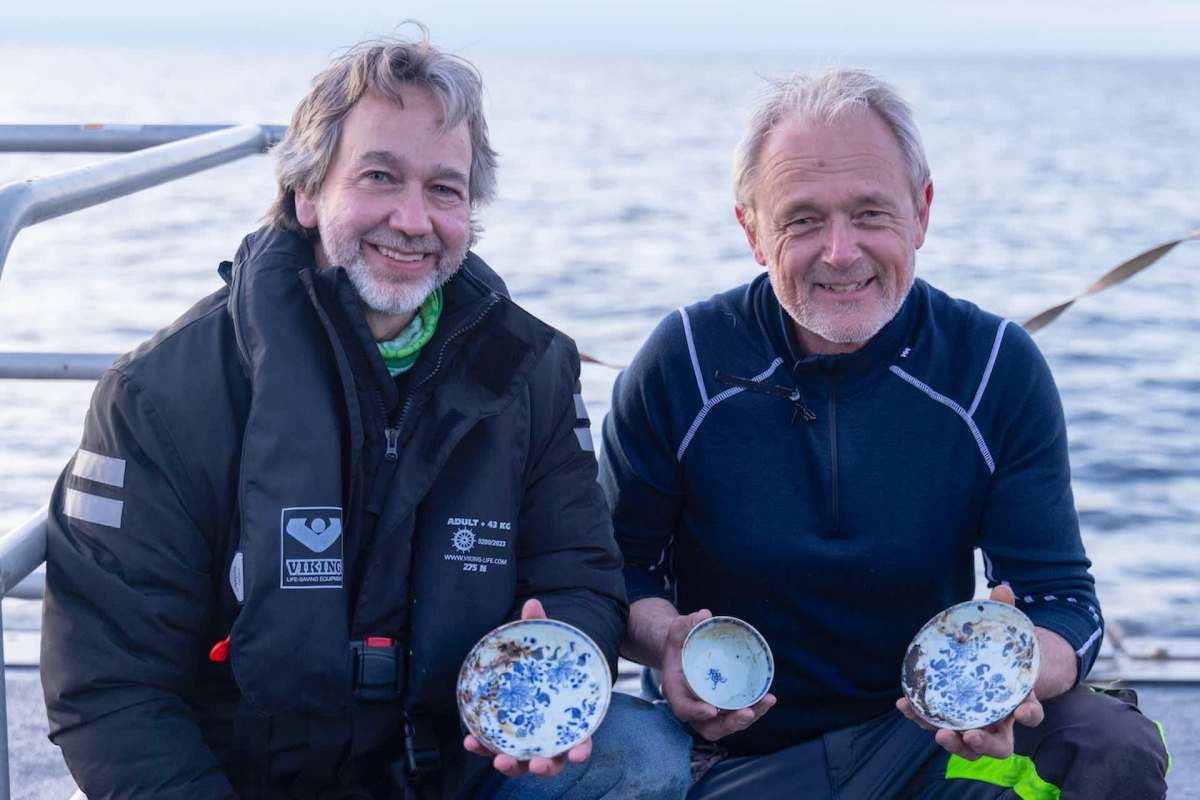
An 18th-century shipwreck discovered off Norway nearly 2,000 feet down appears to still hold rows of Chinese porcelain in their original stacks, preserving an unusually clear trace of a vanished trade route on the seabed.
What happened?
The wreck was located in the Skagerrak Strait by Espen Saastad, a watch designer who also operates a small remotely operated underwater vehicle survey business.
Norway's Directorate for Cultural Heritage announced the find in June, reported GEEKSPIN.
What researchers have already seen is striking: mostly Chinese porcelain, neatly arranged and largely undamaged, along with chandelier fragments, goblets, bottles, and grain barrels.
ROV footage suggests some plates have scarcely moved since the sinking, a level of preservation rarely seen in an 18th-century wreck after so many years in saltwater and currents.
There are still major questions about the vessel. Researchers do not yet know where the ship departed from or where it was headed.
TCD Picks » Good Store Spotlight
Get 10% off your next purchase with code TCD10




One clue comes from a brick from the galley bearing a Lübecker Ratsziegelei mark; that Lübeck brickworks operated until 1772, helping narrow the possible time frame and trade links.
Researchers are also especially interested in unopened crates that may contain textiles or organic materials such as tea, herbs, or medicine.
Why does it matter?
Because Chinese porcelain was still considered a luxury in Europe at the time, even as it was becoming attainable for a wider merchant class, the wreck captures an important stage in early global commerce.
A site with cargo this intact could give archaeologists a much clearer picture of 18th-century trade networks, shipping practices, and everyday goods than a wreck that had been more severely damaged.
Non-porcelain luxury items may also point to links with England or Germany, adding to the story of how products moved across continents long before modern logistics systems existed.
Parts of the wreck have already been damaged by modern trawlers.
Once sites like this are destroyed, the information they contain about trade, craftsmanship, and shared history can be lost permanently.
What's being done?
Norway's cultural heritage authorities are treating the wreck as a protected monument rather than a cache of valuables to be commercially recovered, keeping the focus on research, documentation, and preservation.
Investigators are now closely studying seabed images and identifying objects for future examination, including a spectacular porcelain lotus plant that remains on the seabed.
The unopened crates could eventually reveal even more about what people were buying, transporting, and valuing in the 18th century.
The Directorate has also emphasized that the cargo is "very well-preserved, considering how old it is," despite damage from trawling.
Continued mapping and careful remote exploration could help protect the site while allowing researchers to learn more from it.
The find also highlights how smaller ROV operations can make deep-water exploration more accessible without immediately disturbing fragile sites.
"I had to pinch myself when I realised the scale of the find — it was hard to believe," said Director General Hanna Geiran of the Norwegian Directorate for Cultural Heritage, per GEEKSPIN. "I'm now looking forward to learning more about the ship's history."

Get TCD's free newsletters for easy tips, smart advice, and a chance to earn $5,000 toward home upgrades. To see more stories like this one, change your Google preferences here.