


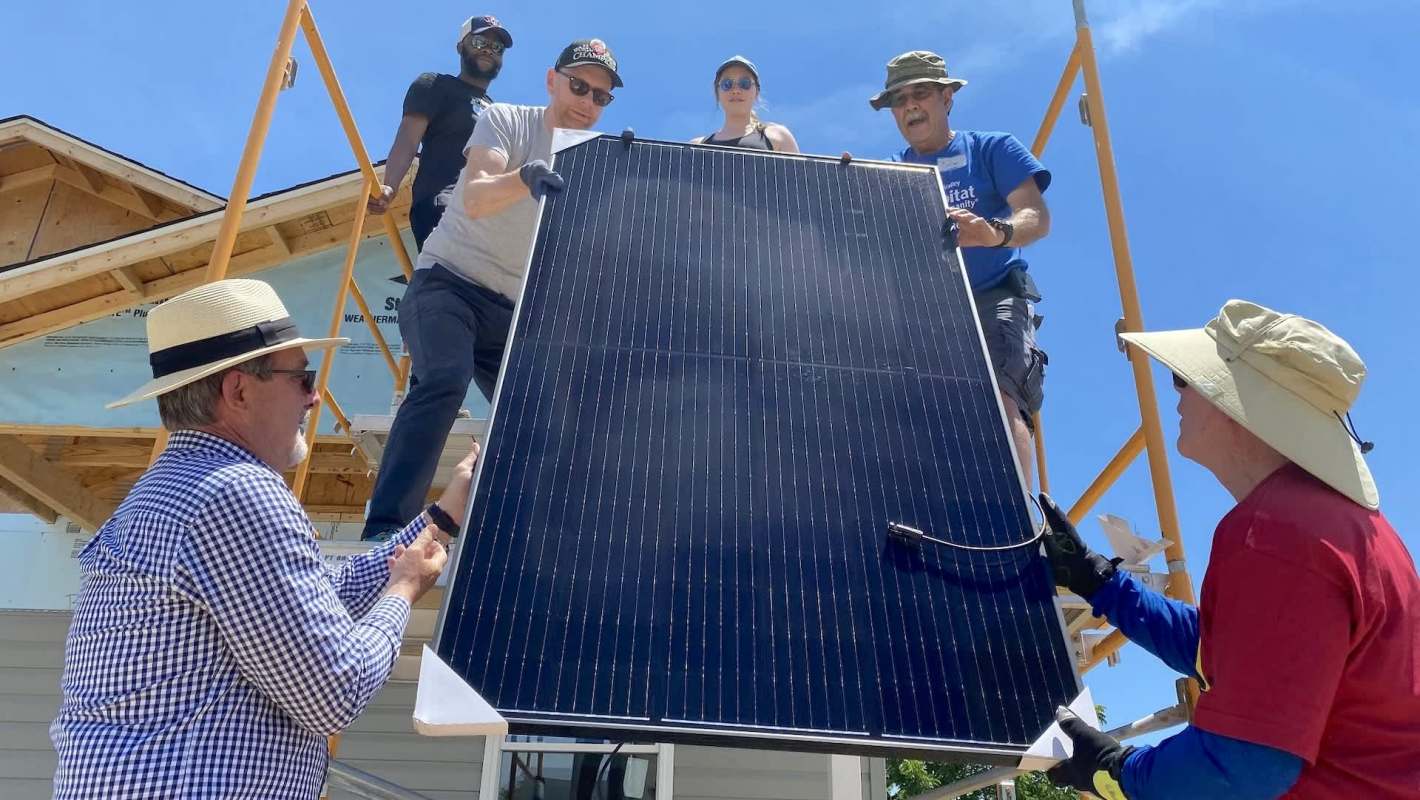
Volunteers in Ashland recently installed the 100th solar roof on a Habitat for Humanity home in Virginia, marking an affordable-housing milestone that could help lower the homeowner's utility bills for decades.
What happened?
The gathering at the Ashland home marked the nonprofit's 100th residential solar project, with volunteers and partner groups on hand for the occasion, according to The Richmonder.
Habitat officials told The Richmonder that families selected for the program can lower their monthly electricity costs by about $70 to $80.
Participants pay $15 to $25 a month for 10 years before taking ownership of the panels. If utility rates continue rising, those savings could top $25,000 over 25 years.
The Ashland project involved Habitat for Humanity, GiveSolar, and Convert Solar, with help from volunteers such as First Gentleman Adam Spanberger.
Morgan Dean, the executive director of King William Habitat for Humanity, said the initiative is about more than cutting monthly bills.
TCD Picks » Quince Spotlight
💡These best-sellers from Quince deliver affordable, sustainable luxury for all




"We believe in providing everyone a decent and quality space to call home, and that starts with sustainability," she said.
Why does it matter?
For many families, the cost of housing does not end with a mortgage or rent payment. Utility bills can put additional strain on already tight budgets, especially during periods of extreme heat or cold.
A solar roof can make energy costs more predictable, helping homeowners plan ahead and keep more money available for groceries, child care, transportation, and other essentials.
When homes rely more on solar energy, they can reduce dependence on electricity generated by polluting fuels. That can help lower climate-warming emissions and improve air quality, supporting healthier communities over time.
Habitat's model treats solar as part of affordable housing, not as a separate upgrade.
Overton McGehee, the executive director of Habitat for Humanity Virginia, said nonprofits are helping give families some protection against rising electricity prices.
What's being done?
Funding for the systems comes from private donors and, according to The Richmonder, supporters such as the Just Pax Fund, Clean Virginia, and the American Institute of Architects.
Local Habitat affiliates choose eligible families and then review with each household whether solar makes sense for that home.
Habitat for Humanity Virginia has now set a goal of reaching 525 solar installations.
The organization ultimately wants solar-equipped neighborhoods linked in a virtual power plant to cut energy costs across the community.
Such a setup could allow homes to send excess electricity back to the grid, potentially generating additional financial value while strengthening local energy resilience.
The project is intended to extend money-saving clean energy solutions beyond high-end homes or new developments.
McGehee said, "The sun shines on the just and unjust. It shines on the roofs with solar panels; it shines on the roofs without solar panels. But only solar panels can run your refrigerator."

Get TCD's free newsletters for easy tips, smart advice, and a chance to earn $5,000 toward home upgrades. To see more stories like this one, change your Google preferences here.






