


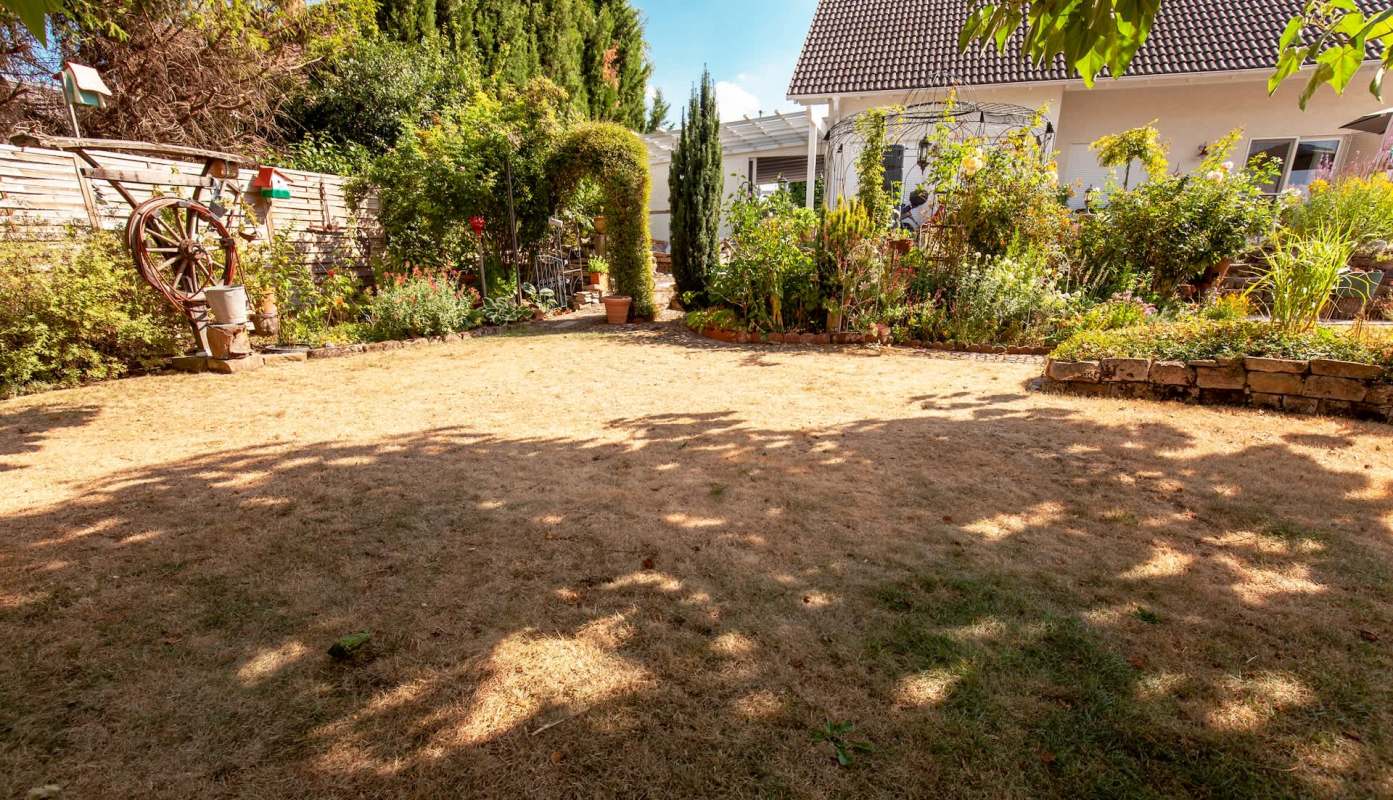
A new-build yard outside Denver looked pristine at first, but one brutal summer showed the homeowner how expensive and water-intensive that sod lawn could be.
Instead of opting for the grass maintenance grind and trying to fix every patch of dead grass, they converted part of the space with a native garden kit that required less water and less ongoing work.
What happened?
The trouble spot was a sunny area with no established trees, where the builder-installed lawn struggled in the Colorado heat. According to House Beautiful, the homeowner began removing the thirstiest sections of the yard and replacing them with garden beds and a discounted "Garden in a Box" from Colorado nonprofit Resource Central.
Designed to simplify planting, the kit included a layout plan, guidance on spacing, and 28 drought-tolerant perennials chosen for Colorado growing conditions. Once planted, it produced a native garden with bright blooms that was already drawing bees and butterflies.
In speaking with House Beautiful, California-based Pro Active Pest Control president and CEO Kyle Turner put it this way: "I think homeowners are finally asking themselves, 'Why am I spending time and money keeping a plant alive that doesn't actually want to grow here?'"
House Beautiful also reported that McCauley Adams, a Kentucky landscape designer with Ramble on Rose Garden Design, said many homeowners are starting to see that lawn areas no one uses offer less value than spaces that can hold flowers, support pollinators, or function as outdoor living areas.
TCD Picks » Quince Spotlight
💡These best-sellers from Quince deliver affordable, sustainable luxury for all




Why does it matter?
In hot, dry places, keeping a traditional lawn alive can take a lot of time and money, especially as irrigation costs climb. Converting even a portion of the yard to native plants can reduce water use, mowing, and other routine upkeep.
Native plantings can nourish bees and butterflies, and a more varied yard may also draw birds and helpful insects. Turner said: "A healthy native landscape attracts pollinators, birds, and beneficial insects that help keep pest populations in check naturally."
Homeowners don't have to eliminate turf everywhere to benefit. Grass can stay where children or pets actually use it, while less useful areas can be turned into native beds. A partial approach like this can give you many of the benefits, while also giving your space versatility to be used for a wide variety of things.
Experts said these landscapes still need attention early on, including watering and weeding during the first year or two. After that establishment period, they generally take less work than a standard lawn.
What can I do?
A good first step is to study the yard before choosing plants. Sun exposure, drainage, soil, and USDA Hardiness Zone all matter.
Clare Horne, founder of Nashville-based garden design studio The Grass Girl, recommended noticing where water pools and how the light changes over the course of the day.
For beginners, preplanned kits can make the process feel far less intimidating. House Beautiful quoted Em Daugherty, Colorado-based director of e-commerce at Bath Garden Center, who said, "Plant-by-number kits appeal to landscaping novices because they remove the guesswork and make lawn design simple and foolproof while remaining an affordable option."
It may also help to check what is available locally before starting the project. House Beautiful pointed readers toward city, county, and nearby water-utility programs, some of which provide rebates, turf-replacement incentives, or water-wise landscaping support. For more ideas, check out The Cool Down's pages on rewilding your yard and upgrading to a natural lawn.
Turner summed up one of the long-term advantages this way: "You end up with a yard that's more resilient because it's functioning like an ecosystem instead of a monoculture." And Adams added, "It gives you something beautiful to look out on, and it's also a way of giving back to the land, even if it's just a small patch of it."

Get TCD's free newsletters for easy tips, smart advice, and a chance to earn $5,000 toward home upgrades. To see more stories like this one, change your Google preferences here.






