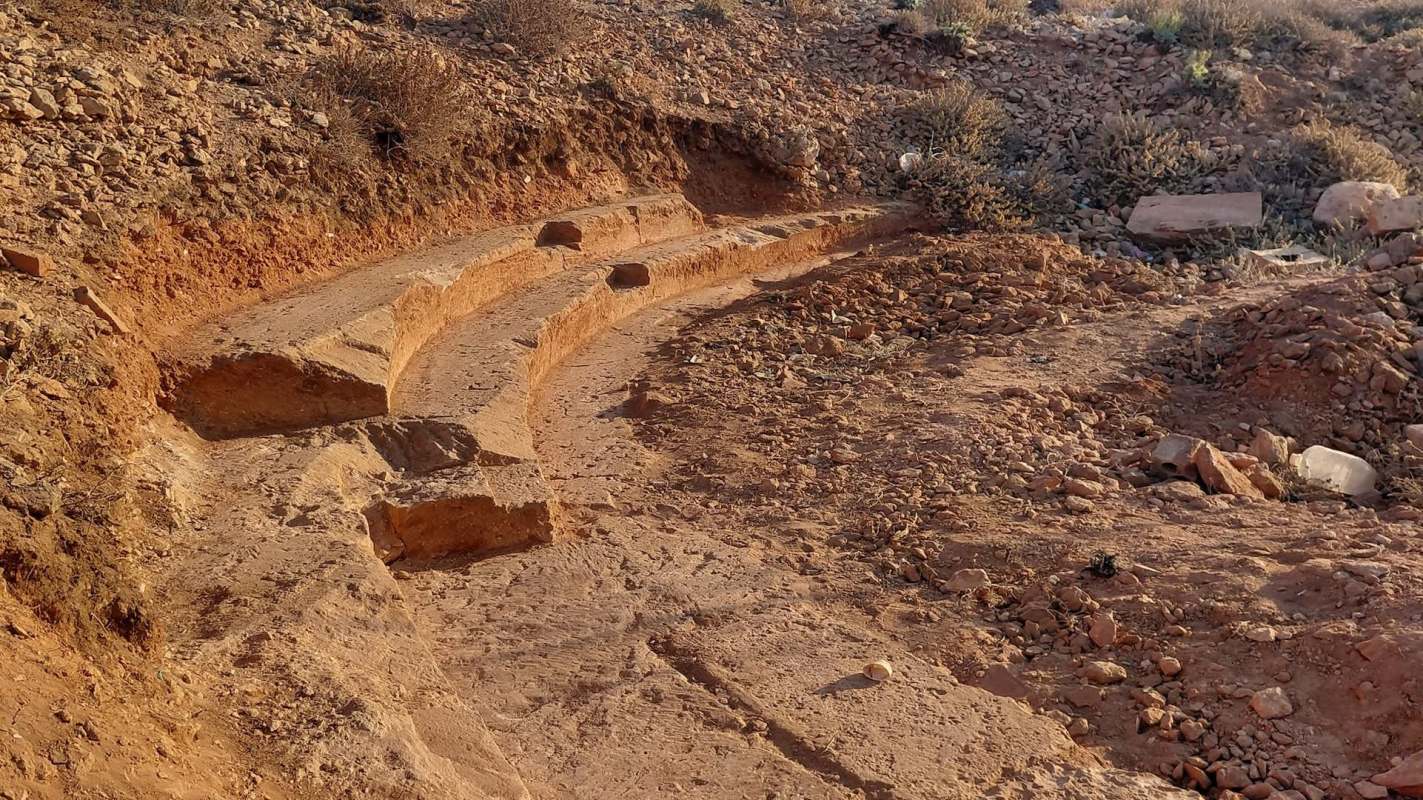
Archaeologists have said a recently identified racecourse in Apollonia on Libya's coast could offer an unusual perspective on the ancient Mediterranean.
What happened?
At the eastern Libyan site, researchers identified an ancient Greek hippodrome, a theater facing the Mediterranean, and multiple sacred complexes.
The French Archaeological Mission in Libya disclosed the discovery Thursday in Sousse, the modern town near the ruins. The mission has been examining Apollonia's Greek and Roman remains for years, according to Greek Reporter.
Vincent Michel, who led the French mission, called the racecourse "an exceptional scientific find." He added that the structure is "one of a kind, with no similar site known anywhere else in the Cyrenaica region or across the wider Mediterranean."
Apollonia once functioned as the harbor city for Cyrene, a Greek colony founded in the seventh century B.C. by settlers from Thera, the island now called Santorini. During the Greek and Roman periods, it prospered as a Mediterranean trading hub.
Why does it matter?
According to officials, the newly found racecourse could alter interpretations of Apollonia's history and of the role the city played in the ancient Mediterranean.
TCD Picks » Good Store Spotlight
Get 10% off your next purchase with code TCD10




Major archaeological discoveries can help strengthen cultural preservation efforts, encourage educational investment, and support heritage tourism when conditions allow. Nearby communities can eventually benefit from jobs, restoration work, and broader recognition of local history.
What's being done?
Work at Apollonia is ongoing under the French Archaeological Mission in Libya, where Michel has overseen research since 2011. The latest findings indicate that important questions about the site remain unresolved.
Formal scientific reports on the racecourse, theater, and sacred complexes are expected soon, officials said. Once published, the material should give other scholars a chance to test the evidence, compare Apollonia with other ancient sites, and refine the story of the city's development.
By highlighting the scale of what remains at Apollonia, the discoveries further emphasize its importance among Libya's archaeological sites. That can help justify continued documentation, conservation, and international collaboration aimed at protecting the ruins.

Get TCD's free newsletters for easy tips, smart advice, and a chance to earn $5,000 toward home upgrades. To see more stories like this one, change your Google preferences here.