


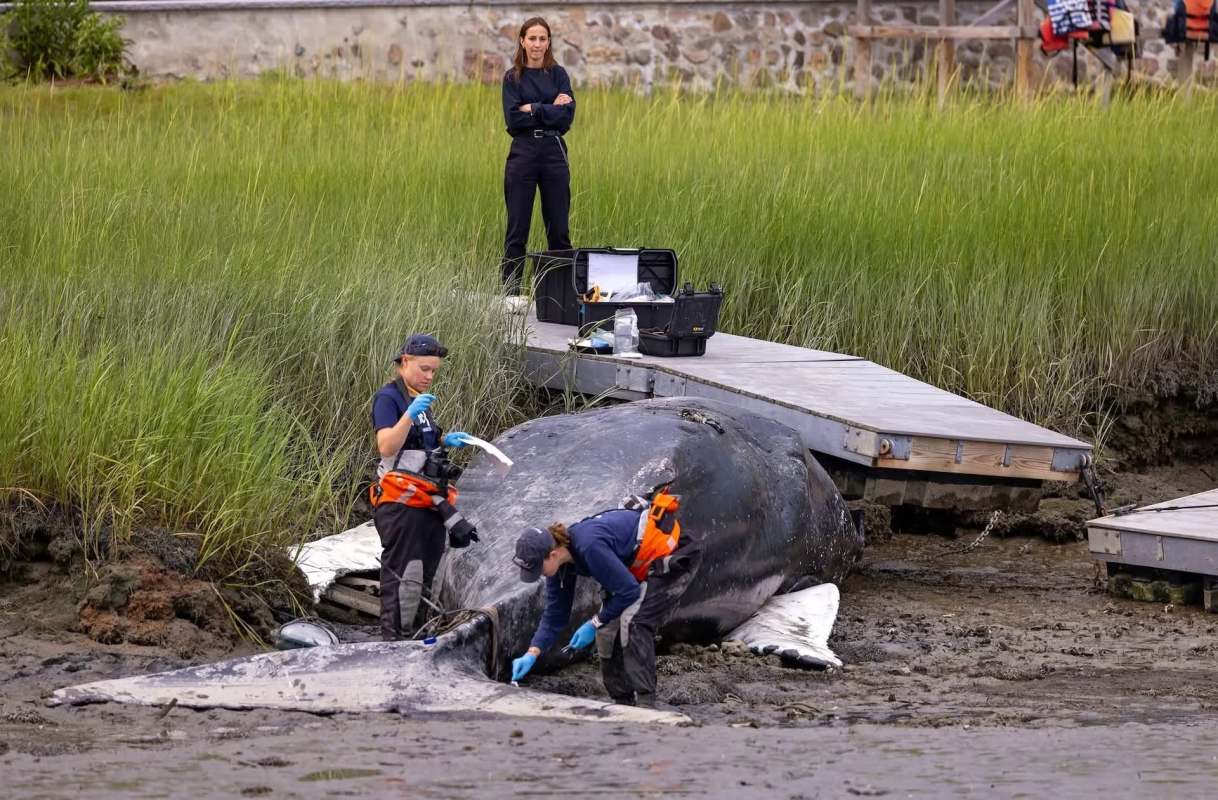
A juvenile humpback whale that washed up in Winthrop, Massachusetts, on Wednesday got wedged under a private dock as the tide rose, pulling in crews from several agencies.
The incident reflects how often marine wildlife now encounters coastal infrastructure built by people, especially as boat traffic and waterfront development expand along the coast.
What happened?
Authorities said the young humpback measured about 30 feet and weighed an estimated 35,000 pounds, according to Boston.com. Someone spotted it near Washington Avenue around 12:30 p.m., but crews didn't get to the site until that evening.
Whale and Dolphin Conservation of North America (WDC-NA) took the lead on the response, with backup from the Massachusetts Environmental Police and the Winthrop Harbormaster.
Officials still have not determined the juvenile whale's identity, and they do not know what caused its death, as Boston.com reported. Provincetown's Center for Coastal Studies received photos of the whale to check against its Gulf of Maine Humpback Whale Catalog.
WDC-NA and the National Oceanic and Atmospheric Administration are also working to move the whale for a necropsy, a process that could take several days.
TCD Picks » Quince Spotlight
💡These best-sellers from Quince deliver affordable, sustainable luxury for all




No large whale had washed up in the state so far this year before this one. Last year passed without a major stranding, but crews dealt with six in 2024.
Why does it matter?
A whale becoming trapped beneath a dock is unusual, but the broader pattern behind strandings like this is not.
NOAA has flagged a string of East Coast strandings dating back to 2016 as unusual mortality events, a designation that's touched humpbacks, minke whales, and the critically endangered North Atlantic right whales.
Major causes of death include entanglement in fishing gear, vessel strikes, and infectious disease. Fishing gear entanglements and vessel strikes are closely linked to human activity, as more entanglement cases have turned up in recent years amid growing boat traffic and fishing gear left in whale habitat.
Whale deaths can point to deeper stress within ocean ecosystems that coastal communities rely on for tourism, fisheries, and environmental stability.
What's being done?
The immediate focus is figuring out what happened to the whale.
WDC-NA said internal and external examinations may help reveal whether the whale was harmed by disease, entanglement, a vessel strike, or another cause.
The group is also looping in partners at every level of government, plus tribal liaisons and community members. WDC-NA reached out to the Wampanoag Tribes, recognizing what the whale's death means to their culture.
The group says federal dollars keep its rescue work running. Regina Asmutis-Silvia, who leads WDC-NA, put it plainly: "The federal funding freezes and delays in funding opportunities we have experienced in the past year do not stop whales from stranding, but they do disrupt our ability to respond."
If you spot a marine mammal in trouble along the coast between Plymouth and Revere, call WDC-NA's stranding hotline: 617-688-6872. Boaters can also help by slowing down in known whale habitat and staying alert on the water.
"We are heartbroken at the loss of this young animal," said Lauren Brandkamp, who coordinates WDC-NA's stranding response. The group added that for the Wampanoag Tribes, the whale "represents a loss to their family."

Get TCD's free newsletters for easy tips, smart advice, and a chance to earn $5,000 toward home upgrades. To see more stories like this one, change your Google preferences here.







