


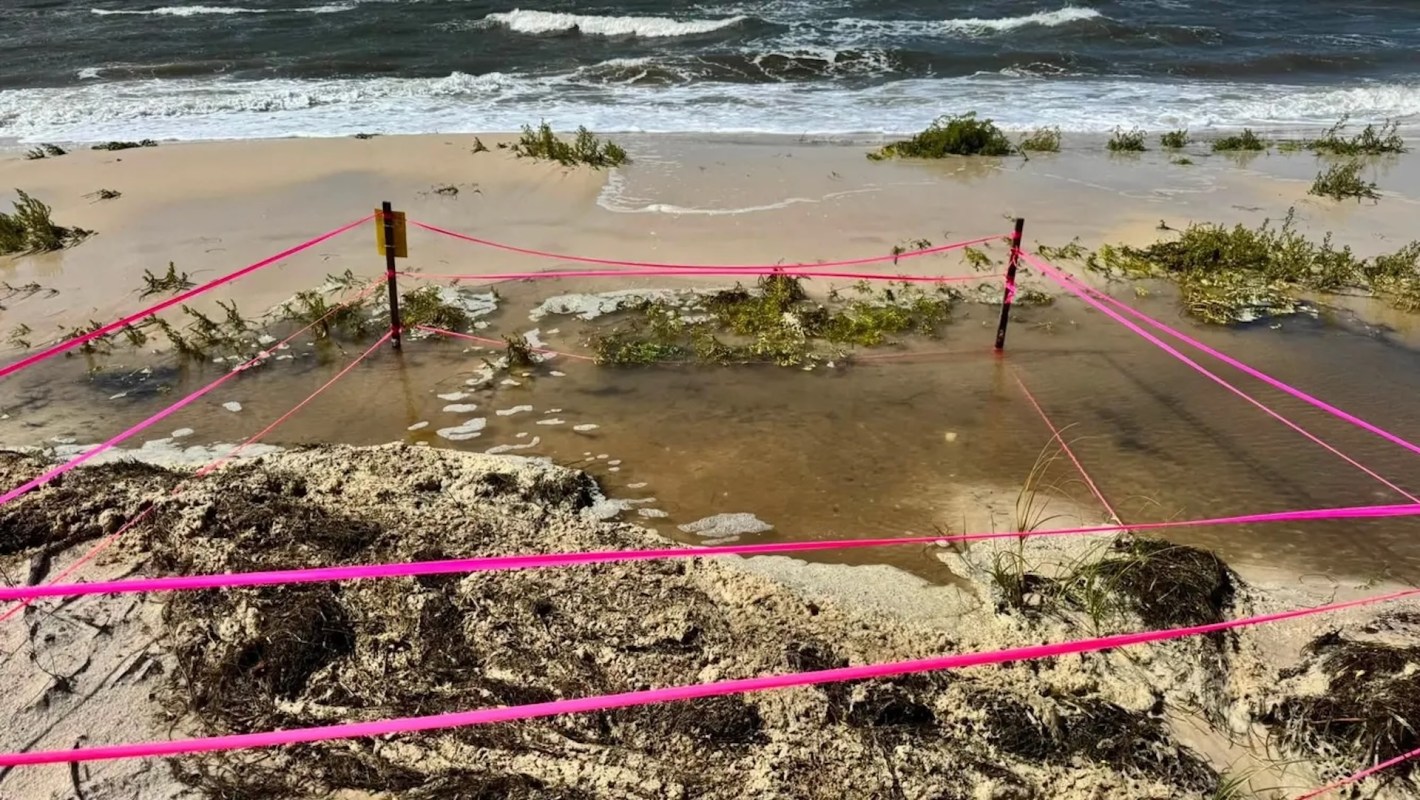
Storm damage from Tropical Storm Bertha on Florida's Gulf Coast wiped out sea turtle nests, hurting local wildlife populations and affecting the coastal communities that depend on healthy beaches.
What happened?
After Bertha sent rough surf and storm surge into Gulf Coast communities such as Destin and Panacea, local sea turtle groups reported nests that were flooded or destroyed, Fox Weather reported. In Destin, the Destin-Fort Walton Beach Sea Turtle Patrol said 18 of its 22 nests were lost.
Even the remaining nests may still be at risk.
"We use the term survived lightly because they all still experienced high amounts of wash over and inundation," the organization wrote on Facebook. The patrol added that it hopes to locate the nests again using pre-storm GPS coordinates and beach measurements.
In Panacea, the losses were even more severe. The Alligator Point Sea Turtle Patrol said storm surge washed across each of its seven nests, destroying them or sweeping them away entirely.
Bertha struck during Florida's sea turtle nesting season, which runs from March to October along more than 1,300 miles of sandy shoreline, according to Fox Weather. Because a typical nest contains 80 to 120 eggs and averages about 110, the storm likely eliminated the chance for hundreds of hatchlings to emerge later this season.
TCD Picks » Quince Spotlight
💡These best-sellers from Quince deliver affordable, sustainable luxury for all




Why does it matter?
Each lost nest means fewer hatchlings entering the ocean for species already facing problems like habitat loss, artificial light, marine debris, and changing coastal conditions.
Sea turtles help support marine ecosystems by maintaining healthier seagrass beds and ocean food webs that coastal communities rely on. When those systems weaken, the effects can spread well beyond just the area, impacting human industries like tourism and fishing.
Local patrol groups spend long hours marking nests, tracking shorelines, and educating beachgoers. When a storm wipes out nests in a matter of hours, it erases months of conservation work and delays progress toward healthier coasts.
What's being done?
Using pre-storm GPS data and beach measurements, the Destin sea turtle patrol plans to find the nests again and see whether any can still be protected or moved.
Monitoring will continue through the rest of the nesting season, which lasts into October. Even damaged nesting areas can still provide useful information for future conservation planning, beach management, and storm response.
Residents and visitors can help reduce pressure on the turtles that remain. Staying away from marked nests, filling in beach holes, removing chairs and trash at the end of the day, and keeping beachfront lighting low at night can make beaches safer for nesting turtles and hatchlings.
These volunteer organizations are often the first to document losses, protect surviving nests, and help communities understand what is at stake when storms reshape the shoreline.
The Alligator Point Sea Turtle Patrol wrote, "All of our nests were either inundated with storm surge or completely washed out and we're heartbroken."

Get TCD's free newsletters for easy tips, smart advice, and a chance to earn $5,000 toward home upgrades. To see more stories like this one, change your Google preferences here.







