


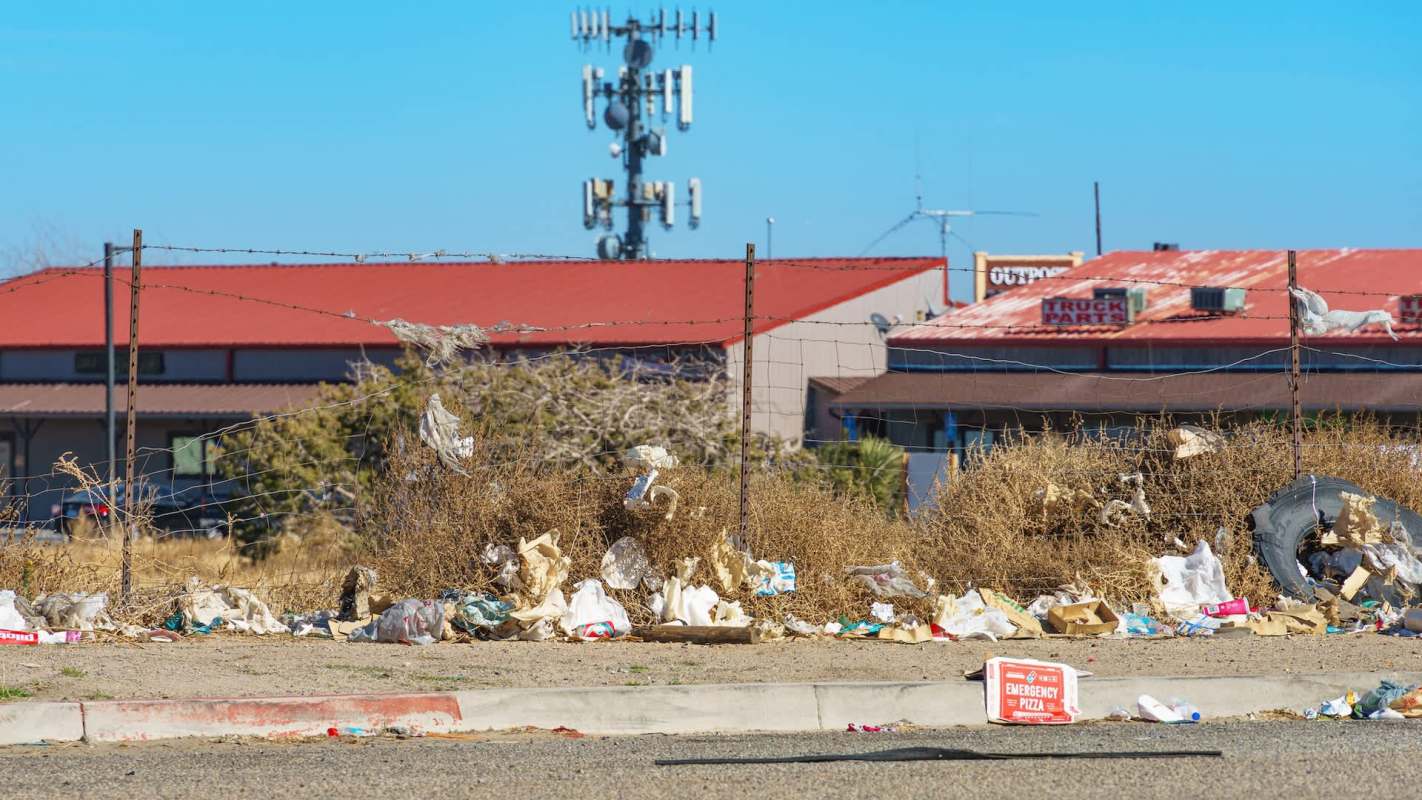
In Louisiana's so-called Cancer Alley, plastic pollution is not a distant environmental problem. Advocates say it is in the air near homes and inside people's bodies.
The fight over plastic is now being framed as a public health alarm, rather than just a story about waste, litter, or recycling.
What's happening?
Judith Enck, a former EPA regional administrator who now heads Beyond Plastics, said plastic is woven into daily life and is now turning up inside the human body as well.
Speaking with Paloma Beltran for Living on Earth, shared by Inside Climate News, Enck said plastics connect several overlapping issues, including climate change, ocean pollution, environmental justice, and public health.
Enck said the harms linked to plastic span its full life cycle. She noted that just 5% to 6% of plastic gets recycled, while much of what remains is burned, buried in landfills, or released into the environment.
As cleaner transportation and electricity options grow, large oil and gas companies have leaned more heavily on plastics as a business opportunity.
TCD Picks » Quince Spotlight
💡These best-sellers from Quince deliver affordable, sustainable luxury for all




"We are seeing plastics emerge as plan B for the fossil fuel industry," Enck said.
Why does it matter?
According to Enck, the health concerns are driven in part by microplastics, tiny fragments measuring no more than about 0.2 inches, or five millimeters, that can be inhaled or swallowed.
She said researchers have found these particles in blood and in multiple organs and tissues, including the lungs, kidneys, liver, placenta, breast milk, and testicles.
"Our babies are being born pre-polluted," Enck said.
Enck pointed to a New England Journal of Medicine study that found microplastics attached to plaque in neck arteries, which was associated with a higher risk of stroke, heart attack, or premature death. She also cited newer research suggesting microplastics can cross the blood-brain barrier.
Many people are exposed in small, repeated ways through packaging, bottle caps, food containers, and polluted air, while health agencies and regulators are still catching up to the science.
Residents near petrochemical plants are exposed to toxic chemicals "24/7," Enck said, highlighting Louisiana's Cancer Alley as an example. She cited a Johns Hopkins study that estimated cancer risk in the area at seven times the national average.
What's being done?
Enck said advocates have gained momentum from single-use plastic bans and producer responsibility programs, even as negotiations over a United Nations plastics treaty have stalled.
She said community-level organizers are still making progress even where broader policy has lagged. Among the notable difference-makers, Enck cited Sharon Lavigne, founder of Rise St. James in Louisiana, who helped stop a major Formosa Plastics proposal; Diane Wilson, a fourth-generation shrimper in Texas fighting pellet pollution in local waters; and Debby Lee Cohen, a New York City parent who helped push the nation's largest school district away from polystyrene cafeteria trays.
Personal action can reduce risk, but it is not a full solution.
"People are paying for all of this plastic with their health," Enck said. "This is quite a serious health issue for all of us."

Get TCD's free newsletters for easy tips, smart advice, and a chance to earn $5,000 toward home upgrades. To see more stories like this one, change your Google preferences here.






