


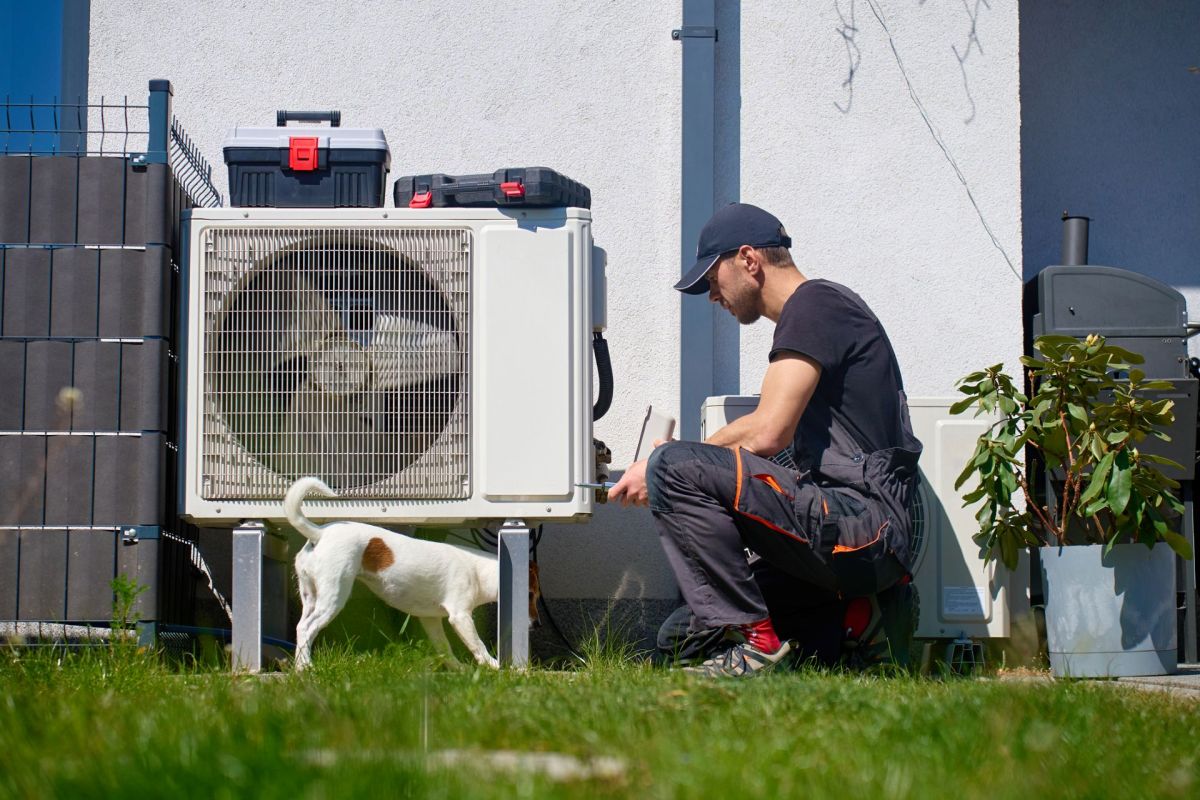
Heat pumps are gaining serious traction in the United States — and not just among climate-minded homeowners.
New data suggests these all-in-one heating and cooling systems are moving closer to the mainstream, both in newly built homes and across the broader HVAC market.
What's happening?
In 2024, heat pumps showed up in 46% of new housing, nearly matching forced-air furnaces at 47%. The Building Decarbonization Coalition's newest report finds U.S. sales have roughly doubled over the last decade and a half, and first-quarter shipments ran 32% ahead of fossil fuel furnaces.
What helps explain that rise is that a heat pump can cool a home as well as warm it, giving households one system for both jobs. Kevin Carbonnier, associate director of analytics at the Building Decarbonization Coalition, told Grist: "It's not just that heat pumps are better, more comfortable, more efficient than furnaces. But also, you get the two-in-one appliance."
New housing is helping speed up that shift: The coalition reported that roughly 75% of newly built U.S. apartments run on electric heat, making it easier for builders to avoid installing gas hookups altogether.
Why does it matter?
For homeowners, the appeal can show up in both comfort and cost: Heat pumps cover heating and cooling with a single unit, and they use energy more efficiently because they transfer heat instead of producing it. That can translate into lower monthly bills, long-term savings, and access to tax credits and rebates for eligible upgrades, and homeowners can compare options through EnergySage's Heat Pump Marketplace.
For people who only need a smaller upgrade, Merino offers single-room, ultra-efficient HVAC systems at a lower price point. The targeted heating and cooling option can be installed in under an hour, which could make efficiency improvements more accessible for renters or homeowners not ready for a whole-home project.
The efficiency difference can be dramatic. Resistance heating systems such as baseboards have a coefficient of performance of 1, while heat pumps typically fall between 2 and 4, meaning they can deliver at least twice as much heat for the same energy input.
Save $10,000 on solar panels without even sharing your phone number Want to go solar but not sure who to trust? EnergySage has your back with free and transparent quotes from fully vetted providers in your area. To get started, just answer a few questions about your home — no phone number required. Within a day or two, EnergySage will email you the best options for your needs, and their expert advisers can help you compare quotes and pick a winner. Solar panels can save you more than $50k over their 25-year lifespan, and EnergySage can help you save as much as $10k on installation. Which begs the question — isn't that worth an email or two? |

According to Grist, Kristin George Bagdanov, associate director of research at the coalition, said electrification is becoming "more of a common-sense measure to only build electric, especially with these new buildings, because the appliances are also so much more efficient."
What's being done?
Builders and utilities are both exploring ways to scale those savings. In apartment construction, heat pumps are gaining ground over older electric resistance systems, especially in multifamily housing, which could help cut pollution while also supporting the country's urgent need for more homes.
Utilities are also testing networked geothermal systems, which circulate liquid through underground pipes so heat pumps can tap into the steadier temperatures below the surface. Carbonnier said the transition could align with skills many utilities already have: "It's all the same skill sets: managing infrastructure systems, drilling, laying down pipe in the street. All the same stuff that the gas workers are already doing."
Homeowners looking to cut costs even further can also use EnergySage, which offers a free solar quotes comparison tool. With EnergySage's help, an average person can get nearly $10,000 in incentives for solar purchases and installations. For anyone considering efficient heating and cooling, EnergySage's Heat Pump Marketplace can help compare available systems.
"It's been four years in a row that there's more heat pumps being shipped out from manufacturers than fossil fuel furnaces," Carbonnier said, per Grist. "I think we are at a tipping point."

Get TCD's free newsletters for easy tips, smart advice, and a chance to earn $5,000 toward home upgrades. To see more stories like this one, change your Google preferences here.






