


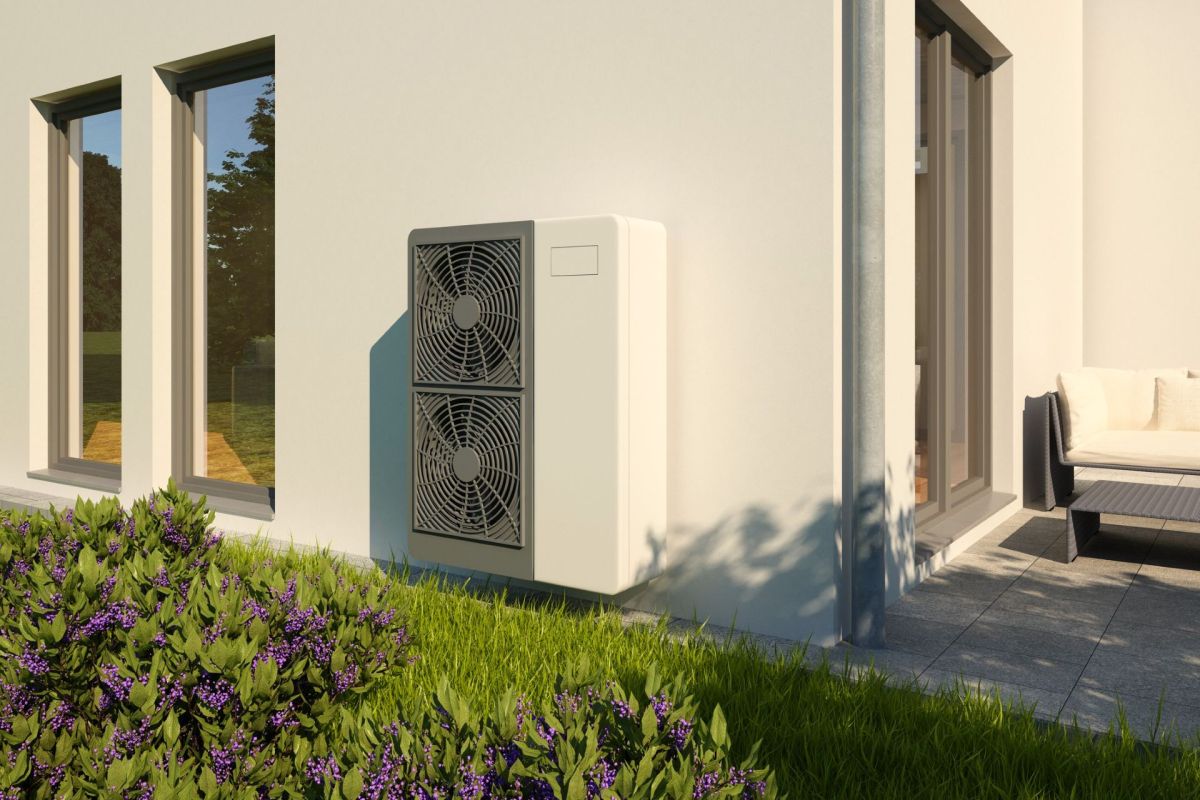
A federal tax break worth up to $2,000 for home heat pumps ended last year, removing a major incentive for U.S. buyers. So far, though, the first shipment numbers from 2026 suggest demand hasn't meaningfully budged.
What happened?
Between 2023 and 2025, households that installed a heat pump could claim a federal tax credit equal to 30% of the project cost, up to $2,000. Once that policy ended at the close of 2025, 2026 became an early test of whether the incentive had been a key reason people were buying the systems, the Energy Institute Blog reported.
Citing figures from the Air Conditioning, Heating, and Refrigeration Institute, a trade group that covers more than 90% of U.S. HVAC equipment sales, Lucas Davis, a faculty affiliate at the Energy Institute at Haas, said that monthly U.S. air-source heat pump shipments from September 2025 through April 2026 show no apparent decline.
He also noted that the credit's expiration didn't seem to trigger any clear last-minute buying wave as 2025 wound down. A professor at the University of California, Berkeley, Davis contrasted that with California's April 2023 rooftop solar subsidy phaseout, which he said caused a major spike in interconnection applications.
Why does it matter?
Heat pumps are far more energy-efficient than traditional HVAC systems, and they can both heat and cool a home with one piece of equipment. Even as federal tax credits change, buyers can still look for rebates and long-term savings, and tools like EnergySage's Heat Pump Marketplace can help homeowners compare heat pump options.
For people who don't need a whole-home upgrade, Merino offers single-room, ultra-efficient HVAC systems at a lower price point. The company's targeted heating and cooling option can be installed in under an hour.
If demand stays steady even without a federal credit, many households may be choosing the technology for comfort, efficiency, or fuel savings rather than simply for a tax-time bonus.
Davis also pointed out that millions of U.S. households still burn gas, propane, or heating oil to stay warm each winter, and that swapping those systems for electric heat pumps is widely seen as one of the most direct ways to cut pollution.
Save $10,000 on solar panels without even sharing your phone number Want to go solar but not sure who to trust? EnergySage has your back with free and transparent quotes from fully vetted providers in your area. To get started, just answer a few questions about your home — no phone number required. Within a day or two, EnergySage will email you the best options for your needs, and their expert advisers can help you compare quotes and pick a winner. Solar panels can save you more than $50k over their 25-year lifespan, and EnergySage can help you save as much as $10k on installation. Which begs the question — isn't that worth an email or two? |

What's being done?
One explanation Davis suggested is that many of the people buying heat pumps recently may have been "non-additional" customers — households that would have gone ahead with the purchase even if no tax credit had existed. He also said adoption may be shaped more by local conditions such as geography, climate, and electricity prices than by federal subsidies alone.
Homeowners interested in lowering their utility bills even further can also use EnergySage, which offers a free solar quotes comparison tool. With EnergySage's help, an average person can get nearly $10,000 in incentives for solar purchases and installations.
For anyone still weighing a heat pump, EnergySage's Heat Pump Marketplace is another place to compare options and pricing before committing.
As Davis put it, "There is no decrease. … I actually think this is good news for heat pumps."

Get TCD's free newsletters for easy tips, smart advice, and a chance to earn $5,000 toward home upgrades. To see more stories like this one, change your Google preferences here.






