


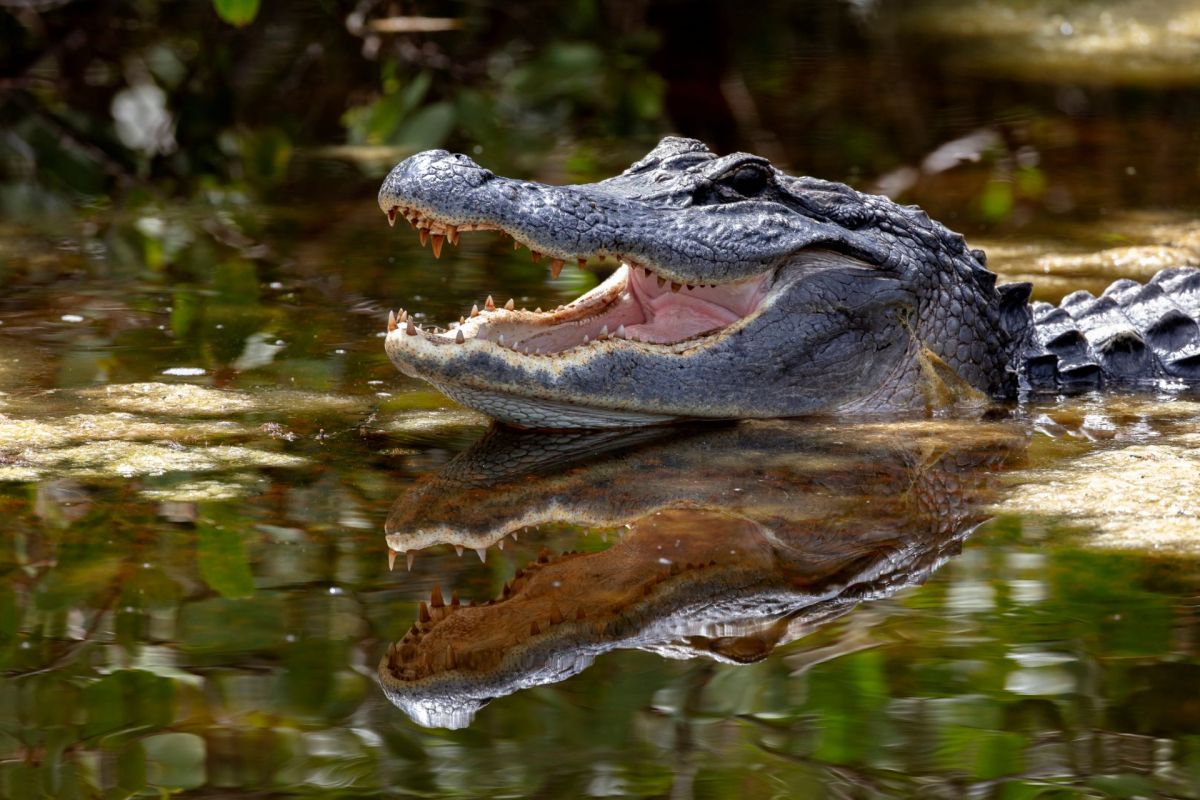
After four recent alligator attacks across Florida, residents and visitors have become unsettled, partly because the encounters happened in places people often see as ordinary, including a swimming area, a canal bank, and the edge of a creek.
But while gator attacks are far more likely to be fatal than shark attacks (nearly threefold), it appears that sharks inspire more public fear.
What happened?
After the four incidents occurred within roughly a two-week stretch in June, many are asking why gators aren't treated as being on the same level of dangerousness as sharks. The Florida Museum has even found that when given the option, people say they would rather have a gator encounter than a shark encounter.
Now, the Naples Daily News has reported that Floridians do seem to be more afraid of shark attacks when compared with their more dangerous gator counterparts.
The outlet spoke with David March, an associate psychology professor at Florida State University, who told the Naples Daily News that warning signs for gators may not be so much ignored as folded into the routines of daily life.
March said, "An alligator sign near a Florida pond or lake tells people something they likely already know — this is an alligator's habitat, so use caution."
TCD Picks » Quince Spotlight
💡These best-sellers from Quince deliver affordable, sustainable luxury for all




He went on to explain that "The issue is that alligators are not a rare, isolated hazard in Florida… So, for many Floridians, alligator risk becomes a familiar, managed background."
Sharks, on the other hand, may be treated more like a new and changing threat, rather than the familiar hazard of gators. The story also does not address whether people were thinking specifically of great white shark attacks or any shark attack, so implied size and movies such as "Jaws" and "Sharknado" may play a role in people's thinking.
March told the outlet that "A shark warning at the beach would probably be interpreted as a change to the situation. It says in no uncertain terms that there may be a shark nearby right now. … To people that feels acute and immediate, hence important. It is more like a tornado warning than a severe thunderstorm warning."
He added that how the media portrays sharks may inject more fear, as "the image of a shark attack is vivid, frightening, and culturally reinforced."
Why does it matter?
With an estimated 1.3 million alligators living across all 67 Florida counties, the animals are both a real danger and a familiar part of the environment for many people.
That familiarity can shape ordinary choices about swimming, fishing, walking pets, or spending time near water that also serves as alligator habitat.
The recent attacks show that encounters do not happen only in remote wetlands. Several occurred near canals, neighborhood waterways, and recreation areas created through human development and regular use.

Get TCD's free newsletters for easy tips, smart advice, and a chance to earn $5,000 toward home upgrades. To see more stories like this one, change your Google preferences here.







