


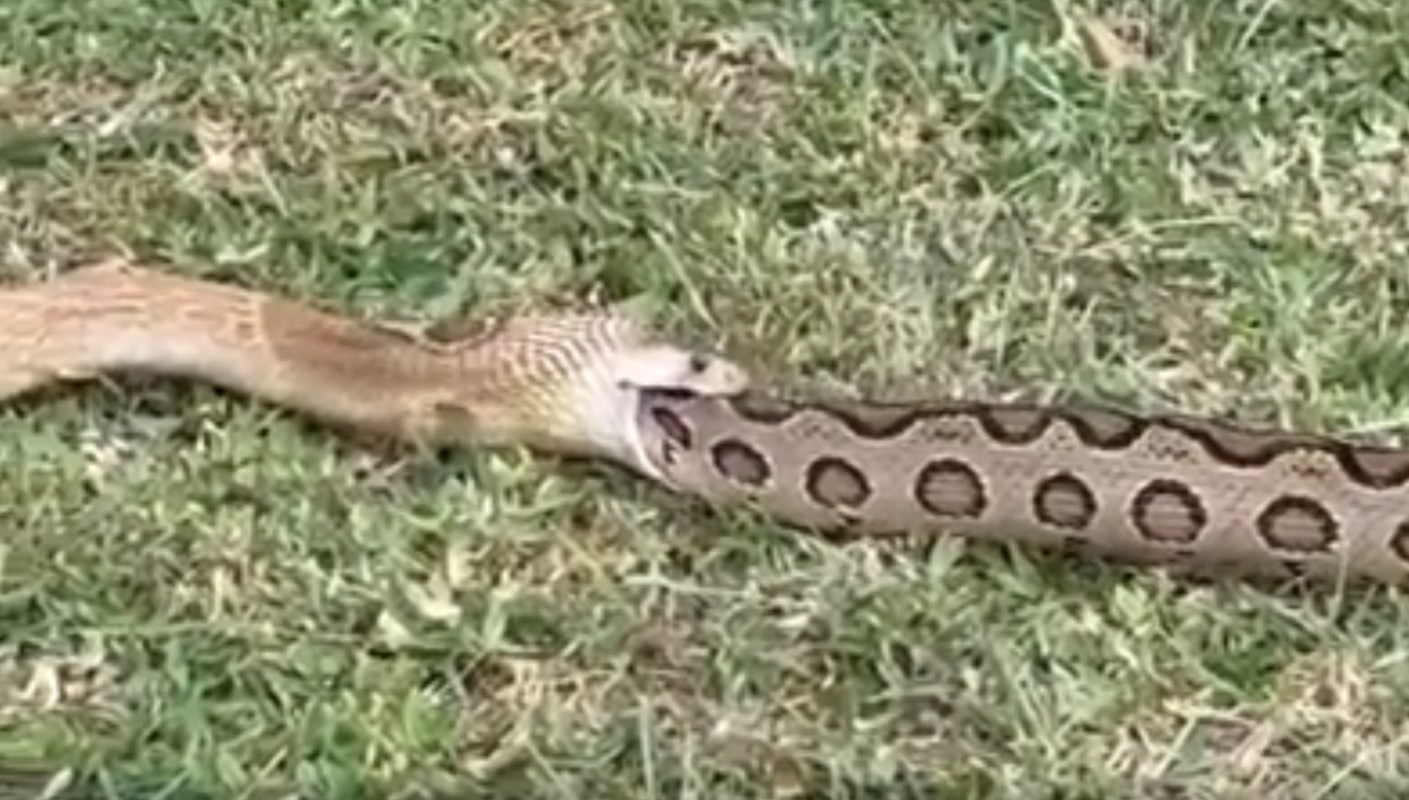
Reddit users are getting a vivid look at the food chain at work: a video shows an Indian cobra swallowing a viper whole.
The clip sparked both amazement and doubt, with some commenters fixated on how a snake could manage such a massive prey item and others questioning whether the meal would stay down.
What happened?
A Redditor recently shared footage in the r/herpetology forum showing an Indian cobra consuming a viper.
(Click here if the embedded video does not appear.)
The original poster also added context for viewers who might assume that only king cobras eat other snakes: "Smaller 'true cobras' (such as the Indian cobra) mainly eat rodents, frogs, lizards, birds, and occasionally other snakes. They can eat a viper, but it is much less common than in king cobras."
One skeptical viewer wrote, "Doubt the cobra could finish the meal without regurgitating sadly."
TCD Picks » Quince Spotlight
💡These best-sellers from Quince deliver affordable, sustainable luxury for all




Questions also came up about whether a snake that eats other snakes must be a king cobra. One commenter answered: "King Cobra is a different species. They are HUGE."
Why does it matter?
Indian cobras help control rodents and other small animals, while predation between snake species shows just how complex food webs can be.
Snakes such as cobras and vipers often overlap in agricultural areas and near settlements, where prey like rodents thrive around human activity.
When ecosystems are squeezed by expanding roads, farms, or housing, people are more likely to encounter snakes in yards, fields, and buildings.
What can I do?
If you encounter a snake, keep your distance and do not try to handle it. Venomous species can strike defensively, and even nonvenomous snakes are best left alone.
If a snake gets into a home, shed, or heavily used outdoor area, contact a trained local wildlife rescuer or animal control professional rather than attempting a DIY removal yourself.
Keeping grass trimmed, reducing rodent attractants, sealing gaps around structures, and removing clutter can also make properties less inviting to snakes and the prey that draw them in.
Supporting habitat protection and wildlife education can also help reduce chaotic encounters. When animals have healthier ecosystems and face fewer human-created pressures, they are less likely to end up in dangerous situations around people.
"Nothing fits in a snake, quite like another snake," one commenter wrote.
Another put it even more bluntly: "They are already snake shaped. It's meant to be."

Get TCD's free newsletters for easy tips, smart advice, and a chance to earn $5,000 toward home upgrades. To see more stories like this one, change your Google preferences here.







