


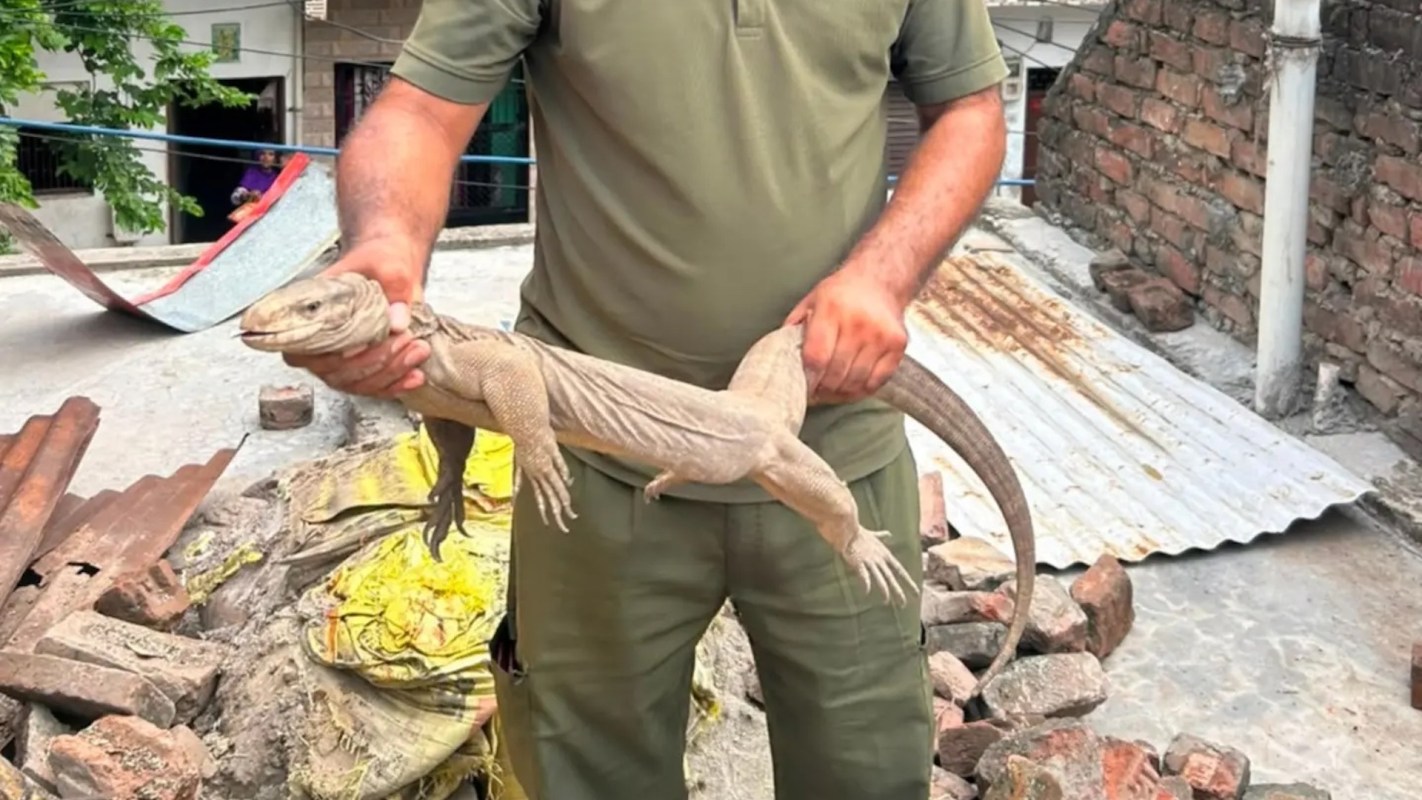
A family in Agra got an unusual monsoon-season visitor when a monitor lizard turned up inside their home. The episode ended safely, with the animal rescued, checked by veterinarians, and released back into the wild.
What happened?
The homeowner contacted nonprofit Wildlife SOS after spotting the reptile in the house. The group's Rapid Response Unit captured the lizard, had it medically examined, and later returned it to the wild, People reported.
According to Wildlife SOS, the group shared the rescue in an Instagram post on July 7: "When this monitor lizard wandered into a home in Agra, it wasn't looking for trouble. It was likely looking for shelter from the heavy rains."
Rescuers believed the frightened animal had come inside to escape India's monsoon weather. Veterinarians found no injuries from its time indoors, clearing the way to release it back into the wild.
Why does it matter?
Wildlife SOS said rescues like this happen more often once the rains set in. Flooding, saturated ground, and heavy rain can drive wildlife into garages, courtyards, and homes.
A reptile inside the house can rattle a homeowner, while the animal is often disoriented, frightened, and simply trying to find a safe place to wait out the storm.
TCD Picks » Quince Spotlight
💡These best-sellers from Quince deliver affordable, sustainable luxury for all




The rescue shows how weather-related disruptions can reshape daily life in unexpected ways. Human-wildlife encounters are not always signs of animals intruding without cause; in many cases, they are simply trying to survive rapidly changing conditions.
A rushed attempt to chase, trap, or handle a wild animal without training can increase the risk of injury and make the situation even more dangerous.
What's being done?
Rather than trying to handle the situation alone, the homeowner contacted trained responders. Wildlife SOS' Rapid Response Unit then secured the lizard, verified that it was healthy, and returned it to the wild.
Wildlife SOS also urged people not to approach animals displaced by natural disasters, a message that echoed a similar cobra rescue in Gujarat earlier this year, where residents were told to stay back and call a trained rescuer rather than intervene themselves.
In areas affected by heavy seasonal rains, securing entry points when possible, staying calm, and knowing who to call can make a stressful encounter easier to manage for both residents and the animals seeking temporary shelter.
"Here's hoping this little explorer finds its way back home, back to its family!" Wildlife SOS wrote.

Get TCD's free newsletters for easy tips, smart advice, and a chance to earn $5,000 toward home upgrades. To see more stories like this one, change your Google preferences here.







