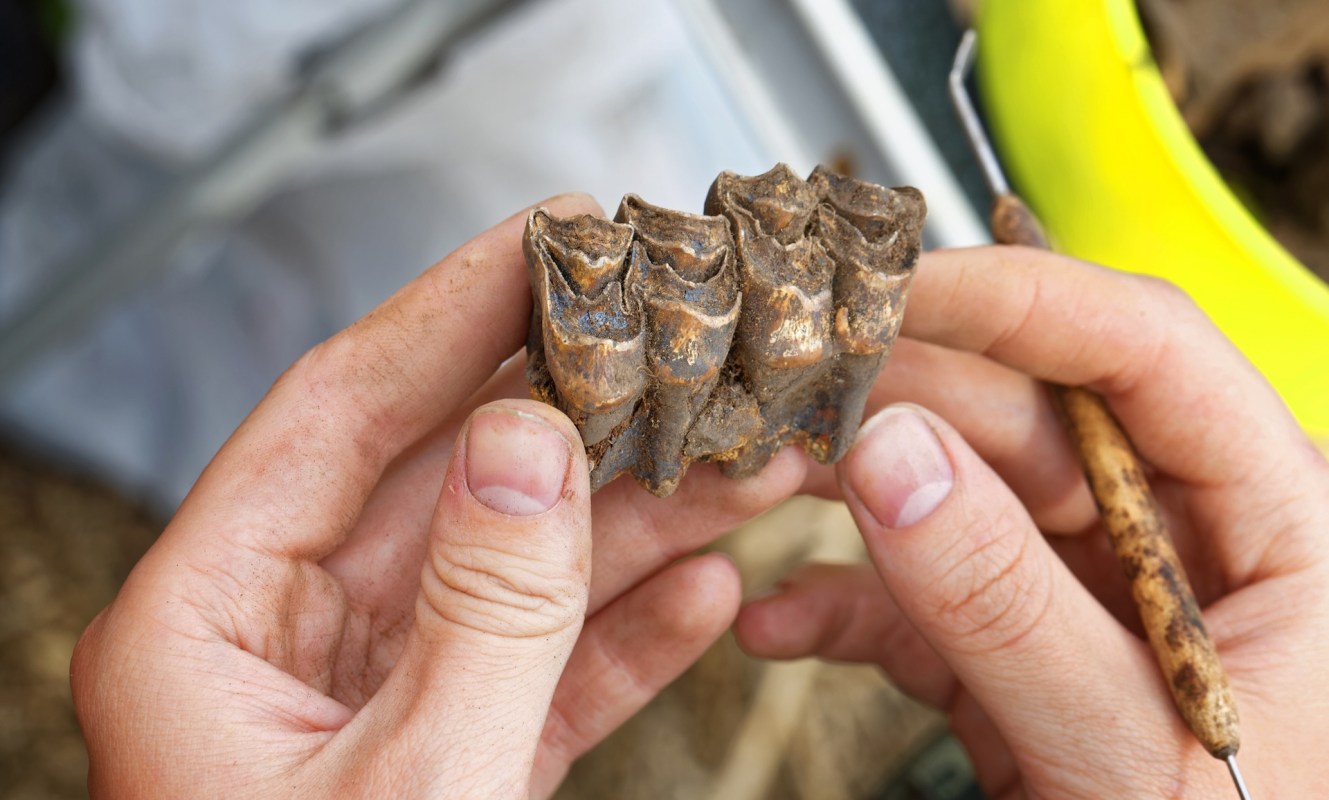
A 50,000-year-old antelope tooth discovered in South Africa has challenged long-held assumptions about DNA preservation in hot climates.
The finding suggested that in parts of sub-Saharan Africa, genetic samples could stay preserved for far longer than scientists once believed.
What happened?
According to Live Science, researchers dated DNA from a mountain reedbuck tooth to roughly 50,000 years ago, making it the oldest DNA yet recovered from sub-Saharan Africa.
That discovery was remarkable because heat normally destroys ancient DNA relatively fast.
Live Science noted that, before this finding, the oldest human DNA retrieved in sub-Saharan Africa was about 18,000 years old and the oldest animal DNA was around 9,300 years old.
In the study, published in the journal Quaternary Science Reviews on May 27, researchers screened more than 300 animal teeth from a range spanning about 110,000 years.
TCD Picks » Quince Spotlight
💡These best-sellers from Quince deliver affordable, sustainable luxury for all




They identified DNA specimens from dozens of younger bovid remains and from four much older Late Pleistocene specimens — including the mountain reedbuck tooth from Boomplaas Cave in southern South Africa and three extinct long-horned buffalo.
Deon de Jager, the study's main author and a University of Copenhagen paleogenomics expert, considered the result notable but emphasized that the findings warranted scrutiny.
"The 50,000-year-old DNA is exciting, but I am myself skeptical of it for two reasons," he said.
De Jager emphasized that the sample was unusually old compared with the others and that it contained some human contamination, which researchers removed.
Why is this important?
For years, sub-Saharan Africa's climate has been viewed as one of the biggest obstacles to ancient DNA research.
That has limited what scientists can learn about how animals — and potentially humans — evolved, moved, and adapted across the region over tens of thousands of years.
If more ancient DNA can be recovered, researchers may be able to trace evolutionary lineages, interbreeding, and gene flow between long-lost populations with far greater precision.
In turn, that could deepen understanding of how species responded to environmental shifts during and after the last ice age.
The discovery also had modern conservation implications.
Learning how animals survived previous climate shifts can help scientists better understand resilience, extinction risk, and habitat pressures today. The longer the genetic record, the clearer the picture of biodiversity change over time becomes.
Still, the finding did not mean every ancient fossil in Africa would suddenly yield DNA.
De Jager said the oldest sample remained an outlier, and very ancient human relatives such as Homo naledi were still considered highly unlikely candidates for successful DNA recovery.
What happens now?
Researchers are expanding the search.
This study showed that testing large numbers of fossils — even when many produce no results — can still yield valuable genetic material from unexpectedly old material.
The team also found clues about where preservation may be strongest. De Jager said: "There are certainly parts of Africa where DNA will be preserved even better than from the sites we have surveyed."
He pointed to "deep caves with stable, low temperatures" and "high-elevation sites where temperatures have been very low for a long time" as especially promising.
After the study appeared, the researchers also sequenced a 42,000-year-old wildebeest genome from Ethiopia, further supporting the idea that DNA in Africa can survive much longer than scientists had once believed, according to Live Science.
Discoveries like this depend just as much on careful preservation as on advanced sequencing technology.
"There is of course a limit to DNA preservation in Africa, but what it is, is not clear," de Jager said.
While "the chances of obtaining DNA from Homo naledi are very, very low, unfortunately," the new finding hinted that sub-Saharan Africa could still hold far more genetic history than scientists once expected.

Get TCD's free newsletters for easy tips, smart advice, and a chance to earn $5,000 toward home upgrades. To see more stories like this one, change your Google preferences here.