


Using optical fiber as a model black hole, physicists have, after decades of pursuit, observed two linked effects in the lab: "Hawking radiation" and a slight recoil from the source after that radiation is emitted.
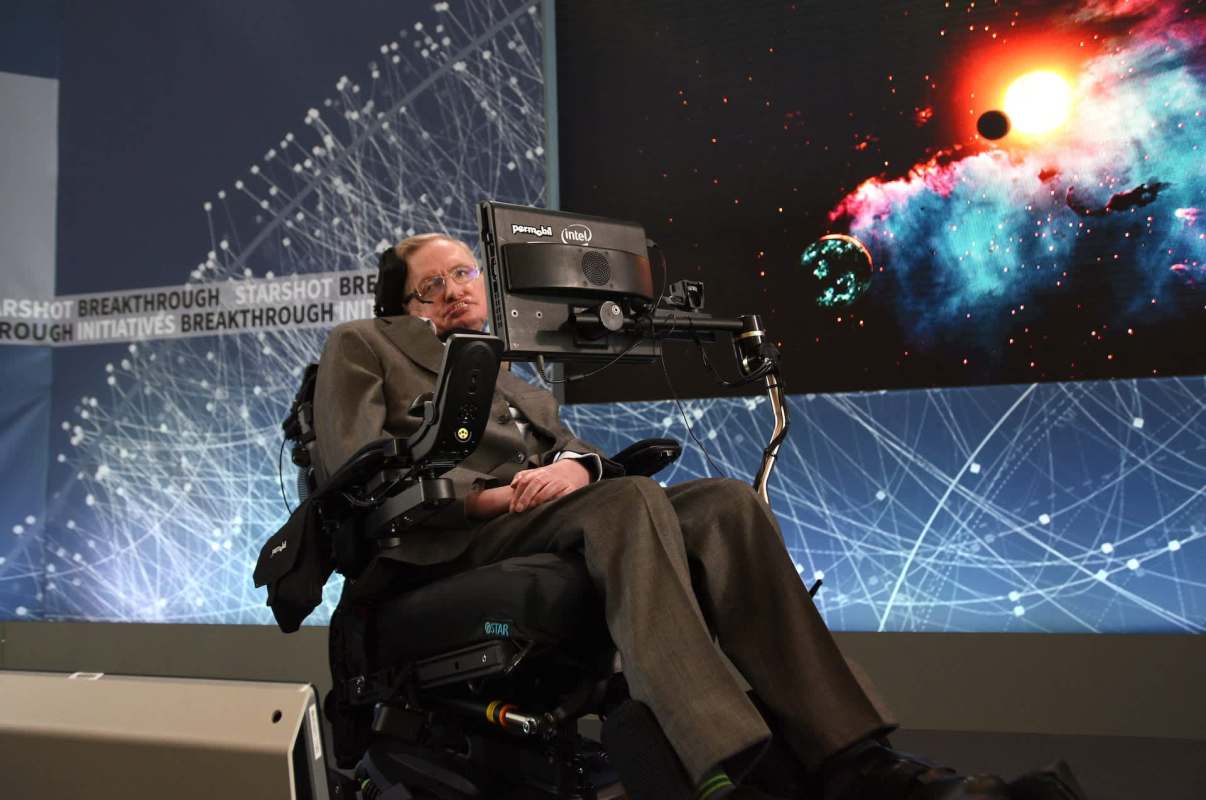
The result gives researchers an uncommon way to examine one of Stephen Hawking's best-known predictions in a controlled experiment while also shedding light on how black holes might slowly release energy over time.
What happened?
A July 1 study in Nature reported that an international team used carefully timed laser pulses inside a photonic crystal fiber to produce an artificial event horizon. The researchers then measured both the emitted radiation and the long-sought "back reaction" affecting the source itself.
As Live Science explained, the setup relied on an intense "pump" pulse that moved through the fiber, creating a traveling disturbance in the glass. A weaker "probe" pulse could not get past that disturbance, making the boundary act like a black hole horizon.
Ulf Leonhardt, a physicist at the Weizmann Institute of Science in Israel and co-author of the study, said: "In Hawking-Bekenstein radiation, quantum physics, general relativity, and thermodynamics come together — subjects that are normally in conflict with each other."
What the team recorded included an ultraviolet signal at about 0.0000092 inches (233 nanometers) that agreed with theory.
TCD Picks » Quince Spotlight
💡These best-sellers from Quince deliver affordable, sustainable luxury for all




The pump pulse also displayed the asymmetry scientists expected if the source were recoiling.
Why does it matter?
Because real Hawking radiation has never been directly observed from an actual black hole — and may be too faint to ever detect in space — experiments like this tabletop analogue are especially valuable.
The work also speaks to the trans-Planckian problem, a major unsolved issue in physics. When Hawking radiation is traced back to its origin, the math seems to rely on scales at which today's physics may no longer apply.
In this experiment, though, the radiation still appeared thermal even in that regime.
Research this fundamental can also feed into other areas, including photonics, precision measurement, and quantum science.
What's being done?
To study effects that are nearly impossible to probe around real black holes, scientists have increasingly built laboratory analogues using systems such as flowing water, ultracold atoms, and light. This study marks a significant advance by capturing the recoil effect for the first time.
Leonhardt described the key signal this way: "We counted photons in the ultraviolet that correspond to the Hawking partners beyond the horizon. They have a wavelength around 233 nanometers. This was our signal."
The team concluded that the radiation resulted from a direct interaction rather than a more complex chain of processes.
The researchers now want to move past standard laser behavior and look for stronger quantum effects.
Leonhardt said: "We will explore how to get into the quantum regime and observe quantum features such as entanglement" — a step that could bring black hole analogue experiments closer to the strange physics Hawking originally proposed.
"Any light getting away from the horizon is stretched out enormously," Leonhardt said. "So it must come from waves smaller than the tiniest scale in nature, where the physics is unknown."
For this experiment, he added: "That was the question, and we have answered it in our experiment."

Get TCD's free newsletters for easy tips, smart advice, and a chance to earn $5,000 toward home upgrades. To see more stories like this one, change your Google preferences here.






